An insurance company buys bitcoin. The surprising part is what has to happen before the purchase. Somebody must safeguard the keys, execute the trade, document the arrangement, and make the whole thing intelligible to people responsible for decades of future claims. In December 2020, MassMutual bought $100 million in bitcoin through NYDIG. It also bought a $5 million stake in NYDIG itself. The insurer was purchasing an asset and backing the machinery that made owning it practical.
- NYDIG built bitcoin custody, trading, and financing for institutions.
- Its current focus includes power and data centers for AI and high-performance computing.
- The advantage it is pursuing: control more of the chain between fuel and computation.
First, make the unfamiliar usable.
Founded in 2017 within Stone Ridge Holdings Group, NYDIG approached bitcoin through the habits of institutional finance. Founder Ross Stevens and co-founder Robert Gutmann built a business around customers whose problems extended beyond deciding whether bitcoin would rise. Banks, insurers, and investment managers needed execution, custody, financing, and systems they could put through an approval process.
The regulatory architecture mattered. New York granted NYDIG Execution its virtual currency and money transmitter licenses in November 2018; NYDIG Trust received a limited purpose trust charter that month. Those permissions belong to specific subsidiaries. Calling the entire group “regulated” erases a distinction its own disclosures carefully preserve.
NYDIG also worked behind other companies’ interfaces. In June 2021, Fiserv announced an integration enabling banks and credit unions to offer bitcoin buying, selling, and holding within digital banking. First Foundation Bank was an early participant. The proposition was pleasantly ordinary: let customers use a familiar banking screen while a specialist handles the unfamiliar asset underneath.
A billion dollars buys room. It does not buy demand.
In December 2021, NYDIG raised $1 billion in growth equity at a valuation above $7 billion. WestCap led; participants included Morgan Stanley, MassMutual, and New York Life. The company described plans for payments and other Bitcoin-network capabilities. For a business selling institutional confidence, the investor list was part of the product’s credibility.
Then came the contraction. Reporting in October 2022 put staff cuts at roughly 110 people, about a third of the workforce. Tejas Shah became CEO that month, while Gutmann remained at Stone Ridge. NYDIG’s announcement emphasized investment in mining solutions and platform technology. The public record shows a narrower emphasis, though it cannot supply a private moment of conversion.
The payments ambition left another visible seam. NYDIG acquired Bottlepay in 2021; contemporary reporting valued the stock consideration at roughly $280 million to $300 million. Bottlepay announced its consumer app would close in July 2023. That app closure is a concrete setback. It does not establish that all the acquired technology was abandoned. Useful infrastructure and a successful consumer habit are separate achievements.

The electricity bill becomes the story.
Bitcoin mining gives a financial company a reason to become unusually interested in energy. Computers compete to secure the network, and electricity is a recurring input. NYDIG’s mining business developed capabilities in generation, site operations, engineering, and finance. Those skills have a second potential customer: the expanding market for power-hungry AI infrastructure.
In March 2025, NYDIG announced an agreement to acquire Crusoe’s bitcoin mining operation. Its announcement described more than 270 megawatts of generation technology. Crusoe said approximately 135 employees would transfer and that deal terms were undisclosed. The seller wanted to concentrate on AI infrastructure; the buyer saw a fit with its existing energy and mining operations. Crusoe’s subsequent impact report describes the business as divested.
The acquired Digital Flare Mitigation technology captures natural gas that would otherwise be flared and generates electricity beside the well. Modular data centers consume it there. The economic idea is simple: move computation to fuel that has limited alternative outlets. The environmental case depends on the actual alternative, methane destruction, and operating conditions. Burning gas still produces emissions.
- 01MoleculesNatural gas and energy assets
- 02ElectronsGeneration and grid positions
- 03ComputeData centers and workloads
A business measured in megawatts.
“We own the power.”
NYDIG / Power & Compute
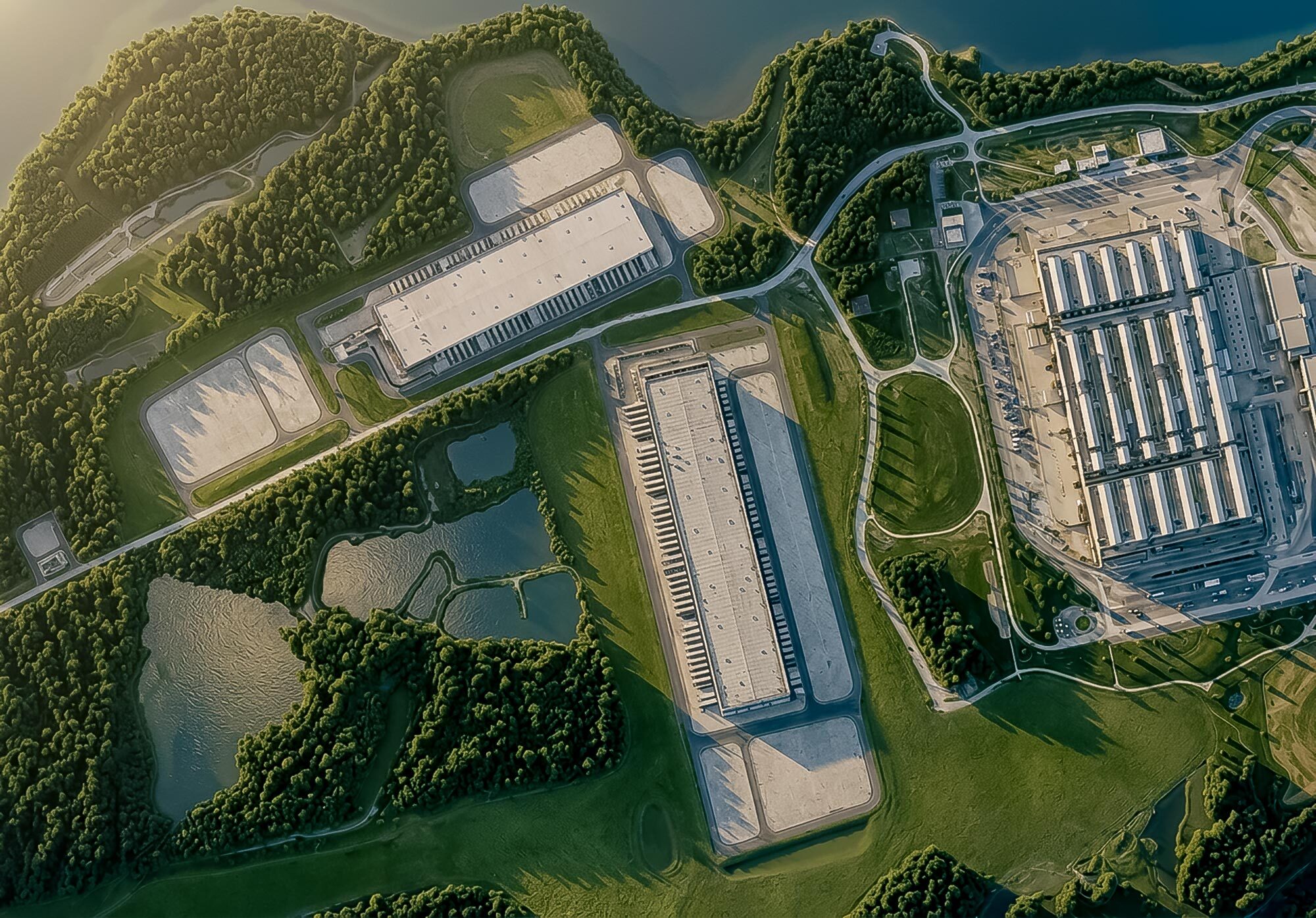
That four-word line on NYDIG’s current website explains its positioning. The company develops and operates high-density colocation infrastructure for AI training, inference, and other demanding workloads. It describes generation assets, grid positions, and data center halls under common ownership. Its energy affiliate, Stone Ridge Energy, supplies an additional operating foundation. This is a broader proposition than storing bitcoin.
By October 2026, NYDIG’s website reported a development pipeline exceeding three gigawatts, with more than one gigawatt deliverable in 2027 and 2028. Read the nouns closely. A pipeline is future development; deliverable capacity is a schedule claim. Neither number tells you how much AI capacity is operating today. The distinction becomes especially useful when nearly everybody is selling tomorrow’s megawatts.
Total power and compute pipeline
Deliverable in 2027 and 2028
The second figure is part of the pipeline, not additional capacity. Website reviewed October 2026.
A different counterparty at each end.
NYDIG’s business model now spans several activities: institutional financial services, mining, and developing and operating compute infrastructure, including campuses leased to investment-grade counterparties. Its historic financial offering includes custody, execution, derivatives, and financing. Different customers buy different pieces. A corporate treasury needs asset controls; a compute tenant needs dependable facilities and power.
That puts NYDIG in overlapping markets. Coinbase Prime and Fidelity Digital Assets offer institutional bitcoin alternatives; data center developers compete for compute projects. NYDIG’s distinctive argument is the combination of energy operations and financial structuring. Its leadership reflects that mixture: Shah brings trading experience, while its construction leadership brings experience building large computing facilities.
Copy the question before the balance sheet.
The transferable lesson is to ask which dependency stops a customer from using something valuable. For an insurer, it might be custody. For a compute tenant, it might be electricity and a building ready on time. NYDIG has repeatedly moved toward those dependencies. Copying that question is inexpensive. Owning generation and financing campuses requires patient capital.
The approach has limits. Cheap fuel alone cannot guarantee an AI-ready facility: connectivity, cooling, reliability, permits, and construction still matter. Bitcoin mining remains exposed to network economics and bitcoin prices. NYDIG’s story is interesting because its successive businesses reveal the practical work beneath a digital promise. First came the machinery for owning the money. Now comes the machinery for running the computers.