Breaking
Nick Mehta steps down as Gainsight CEO after 13 years - names Chuck Ganapathi successor Gainsight acquired by Vista Equity Partners for $1.1 billion in 2020 Nick Mehta joins Larridin Board of Directors - January 2026 Customer Success: from ~1,000 CSMs in 2013 to hundreds of thousands globally Nick Mehta holds Taylor Swift tattoo from Folklore's "August" - confirmed Gainsight's Pulse Conference draws 30,000+ attendees worldwide EY Entrepreneur of the Year - Northern California - 2020 Nick Mehta ranked #3 Top SaaS CEO 2018 - The Software Report Nick Mehta steps down as Gainsight CEO after 13 years - names Chuck Ganapathi successor Gainsight acquired by Vista Equity Partners for $1.1 billion in 2020 Nick Mehta joins Larridin Board of Directors - January 2026 Customer Success: from ~1,000 CSMs in 2013 to hundreds of thousands globally Nick Mehta holds Taylor Swift tattoo from Folklore's "August" - confirmed Gainsight's Pulse Conference draws 30,000+ attendees worldwide EY Entrepreneur of the Year - Northern California - 2020
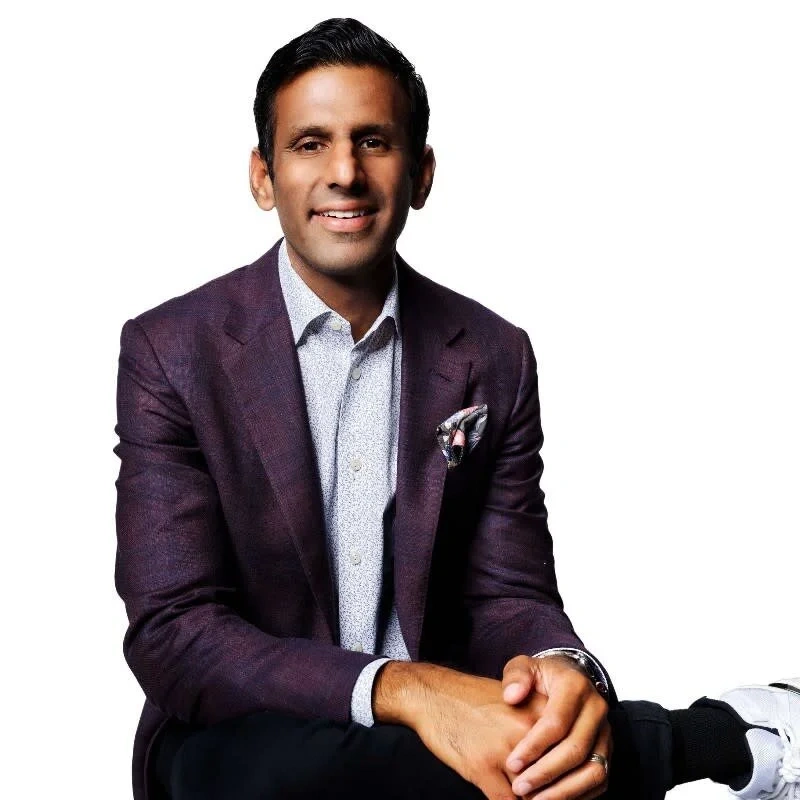
Nick Mehta - Gainsight Co-Founder and CEO
Cover Profile  •  Founder  •  Human-First CEO

Nick
Mehta

The Man Who Taught Silicon Valley to Care About Customers - Then Got a Tay-Tay Tattoo

He built a $1.1 billion unicorn, invented a job category from scratch, and still sends his entire staff a Sunday night email. In Pittsburgh Steelers gear.

Gainsight Co-Founder $1.1B Unicorn Harvard '98 EY Entrepreneur 2020 Customer Success Pioneer

Nick Mehta ate lunch alone every day of K-12. That singular fact does more to explain Gainsight than any pitch deck ever could.

The kid who grew up as one of two Indian-American students in his Pittsburgh high school, the one who found company in BASIC programming and rebuilt computers in his bedroom, spent 13 years building a company whose explicit mission was to ensure that no customer ever gets left alone at the table. He called it Customer Success. He turned it into a $1.1 billion company and a global profession held by hundreds of thousands of people who had no job title before he started.

That is not a narrative he shaped after the fact. That is cause and effect, playing out across two decades in enterprise software.

When Mehta stepped down as Gainsight CEO in August 2025, he had been at it for 13 years - longer than most marriages, longer than most SaaS companies survive at all. He had raised $187 million, navigated a unicorn acquisition by Vista Equity Partners, survived the SaaS winter of 2022-23, and built Pulse into the largest customer success conference on the planet. His Glassdoor CEO approval rating sat at 99%. His parody Taylor Swift rap videos were available on Spotify.

He considers these achievements roughly equivalent in importance.

I don't think companies exist for the bottom line. I think they are entities created by human beings for the greater good of other humans. - Nick Mehta

There is a specific kind of Silicon Valley leader who talks about culture and means catered lunch and ping-pong tables. Mehta is not that leader. He means it in the sense that he has a "Save our Saturdays" company policy prohibiting work emails on weekends, that he color-codes his own calendar so customers get red slots and prospects get blue, that he instituted walk-and-talk interviews because he found candidates harder to perform when moving. He means it in the sense that once a quarter he mentally fires himself and writes a fresh job description for what the company now needs - then decides whether he still fits it.

Twelve of those thirteen quarters, he did. The thirteenth, he handed over the keys.

Harvard Dorm to Sequoia Capital
in Two Years Flat

His father arrived in America in 1969. He had almost nothing. He eventually ran technology companies. Nick grew up watching that - a Gujarati immigrant making it work through sheer will and competence in an industry that barely knew what Gujarati meant.

At Harvard, Mehta studied Biochemical Sciences and Computer Science simultaneously - a dual degree that sounds like the origin story for a biotech CEO, which is actually what he originally planned. He arrived at Harvard wanting to build a biotech company. He left it building an online golf equipment retailer.

The pivot came because in 1996, his dorm suite happened to include two members of the Harvard golf team, and e-commerce was the frontier nobody had figured out yet. ChipShot.com launched from those dorm rooms and by graduation was doing $50,000 a month. Sequoia funded it. It grew to 250 people and $30 million in annual sales and cracked the top-20 online retailers list before the dot-com bubble dissolved everything.

Mehta does not romanticize this period. The company sold for minimal returns. The lesson he carried forward was about timing and market cycles - not about not swinging.

The Symantec Years: Learning to Run Something

After a brief stop at XDegrees (which was acquired by Microsoft), he joined VERITAS Software and discovered something that surprised him: he was good at the operator side of things. A manager named Mike Spicer - who would later become a legendary investor at Sutter Hill Ventures - gave him an unusual gift: the chance to run an acquired UK-based archiving business. When the engineering lead underperformed, Mehta absorbed that function too. The business succeeded. He got the GM title. He understood that he didn't just want to build products - he wanted to build companies.

LiveOffice followed. As CEO, he took the SaaS cloud archiving company through an Inc. 5000 ranking and sold it to Symantec in January 2012. Then spent some time as Entrepreneur-in-Residence at Trinity Ventures and Accel Partners, looking for what came next.

What came next was Gainsight.

Dorm Room to Unicorn

1996 - 2000
ChipShot.com - Co-founded from Harvard dorm; raised Sequoia Series A; 250 employees, $30M revenue; sold at dot-com bust
2002
XDegrees - Director of Product Management; company acquired by Microsoft
2002 - 2007
VERITAS / Symantec - Rose to VP/GM of Enterprise Vault archiving business; formative leadership years under mentor Mike Spicer
2008 - 2012
LiveOffice CEO - Took SaaS archiving company to Inc. 5000 ranking; sold to Symantec January 2012
2013
Gainsight Co-Founded - Series A from Battery Ventures; customer success category begins
2016
"Customer Success" book co-authored and published by Wiley - becomes the foundational text for the discipline
2020
Vista Equity acquires Gainsight for $1.1 billion; EY Entrepreneur of the Year, Northern California; second book published
2025
Steps down as CEO after 13 years; names hand-picked successor Chuck Ganapathi; transitions to Board and Special Advisor
2026
Joins Larridin Board; continues F5 and PubMatic board roles; focuses on writing, family, and reflection

He Didn't Build a Company.
He Built a Profession.

In 2013, there were roughly 500 to 1,000 Customer Success Managers in the world. The job title barely existed. SaaS companies knew they had churn problems - the subscription model had made customer departure catastrophically visible in the financials - but nobody had formalized the function charged with preventing it.

Mehta's insight was not that customer success software would be valuable. His insight was that Customer Success as a discipline needed to be invented, named, institutionalized, and evangelized - and that the company doing that would own the market for the software that enabled it. This is category creation, executed at full commitment.

Gainsight built conferences (Pulse), wrote books (two co-authored by Mehta, six total from the company), launched job boards, created training programs, and embedded itself so deeply in the identity of the emerging profession that a Customer Success Manager and a Gainsight user were nearly synonymous. By the time Mehta stepped down, there were hundreds of thousands of CSMs globally and the profession had its own certifications, career ladders, and labor market dynamics.

500
CSMs in 2013
When Gainsight launched, Customer Success Manager barely existed as a job title globally.
100K+
CSMs by 2025
Mehta helped build an entirely new professional category now held by hundreds of thousands.
80%
Market Share
Gainsight held approximately 80% revenue market share in customer success software at peak.

This is the move that made Gainsight difficult to compete with. By the time rivals arrived with comparable software, Gainsight owned the curriculum, the conference, the community, and the credentialing. It had been a market growth game, as Mehta noted, not a market share game - because Gainsight had grown the market it then dominated.

The $1.1 billion acquisition by Vista Equity Partners in November 2020 was the confirmation, not the peak. Vista had built its reputation buying enterprise software companies and making them more operationally rigorous. Mehta stayed on for five more years after the acquisition - outlasting the typical post-acquisition CEO tenure by a significant margin - before deliberately and carefully handing the company to his chosen successor.

Five Values.
None of Them Decorative.

Mehta set these at founding and enforced them with the kind of consistency that made them actually mean something inside Gainsight.

Golden Rule
Treat people with empathy and respect - always
🌟
Success for All
Drive success across every stakeholder, not just shareholders
🤪
Childlike Joy
Bring enthusiasm and playfulness to work every single day
🧠
Shoshin
The Japanese "beginner's mind" - stay curious, keep learning
🔥
Stay Thirsty
Internal drive and ambition - never satisfied, always reaching

The Systems Behind
"Human-First"

The phrase "human-first" can mean almost nothing in corporate communications. For Mehta, it came with a specific operating system attached.

He tracked his daily step counts and published them publicly, making wellness a leadership signal rather than a personal virtue. He targeted 5:30pm dinner with his family every night and treated it as a professional commitment, not a nice-to-have. He took each school drop-off when in town and built individual rituals with each of his three children - programming sessions with his youngest daughter, car time with his oldest, bedtime stories with his son.

"Save our Saturdays" was a real policy that prohibited work emails on weekends, enforced company-wide. His own digital detox on weekends removed work apps entirely. He conducted walk-and-talk interviews instead of sitting across a desk, finding that candidates on the move are less able to perform their polished interview persona.

The "backchannel reference" was a signature move: rather than asking references what they thought of the candidate, he would ask them what others thought of the candidate. The indirection produced more honest answers because people feel less personally implicated in third-party assessments.

The man color-codes his calendar. Red = customers. Blue = prospects. Green = interviews.

His "Gravity" Monday executive meetings and "Rhythm" cross-functional reviews gave the organization cadence rather than just urgency. Weekly Sunday night emails to all staff were personal, not corporate-communications-filtered. He ran anonymous leader surveys and actually changed behavior based on the results.

📊
The Quarterly Self-Firing
Once a quarter, Mehta imagined firing himself and wrote a fresh job description for what Gainsight now needed from a CEO. He then decided whether he still fit. Most quarters, he did. Eventually, he didn't - and handed the keys to Chuck Ganapathi.
🚶
Walk-and-Talk Interviews
No sitting across a desk. Candidates on the move can't hide behind posture and eye contact cues. Movement strips the performance layer.
📵
Save Our Saturdays
Company-wide policy: no work emails on weekends. Not a guideline. A rule, modeled from the top.

The Mehta Philosophy

If you put your heart out there, some people might find it authentic and interesting.
On vulnerability in leadership
I really try to learn from every single person I meet. It doesn't matter if they're a super experienced CEO or their first time.
On Shoshin - beginner's mind
Sometimes I feel really lonely. I think that's a common thing in the human condition, to feel like an "other," or that you don't belong.
On identity - at Pulse Conference
AI is the biggest change in the history of humanity. It's not just another trend; it's fundamentally reshaping how we work, communicate, and live.
On technology's future - 2025

The CEO Who Rapped
About Customer Success

At some point in the mid-2010s, someone at Gainsight decided that the best way to market customer success software was through elaborate parody music videos. That someone was Nick Mehta. He wrote all of them personally.

There are more than 50. There is a parody of Taylor Swift's "Blank Space" in which the blank space is about customer success metrics. There is a "Ned Saaso" Ted Lasso parody. There is a customer success rap on Spotify. These are not corporate skits produced by a marketing department - they are the creative output of a CEO who thinks the division between "serious business leader" and "person who makes rap videos about churn reduction" is artificial and probably unhelpful.

The Taylor Swift devotion runs deeper than the parodies. Mehta has a tattoo with a lyric from "August" off the Folklore album - a quiet, melancholy song about summer and what gets left behind. He attended multiple Eras Tour dates. His Instagram bio ends with "Tay-Tay." This is not positioning. This is a 40-something SaaS CEO who genuinely loves Taylor Swift and has decided that pretending otherwise for professional image reasons is exactly the kind of inauthenticity he spends his conference keynotes arguing against.

50+
Parody music and rap videos personally written by Mehta for Gainsight. Includes a Taylor Swift "Blank Space" parody and a full customer success rap on Spotify.
1
Taylor Swift tattoo, featuring a lyric from "August" (Folklore). Attended multiple Eras Tour stops. Not ironic. Completely sincere.
5:30
Target family dinner time, every night he is in town. Non-negotiable. Also: regular Denny's brunches with board games. Weekend ice cream outings. These are scheduled.
8+
Hours of sleep he targets nightly and publicly models - publishing step counts and wellness metrics as leadership signals, not personal branding.

His Instagram handle is @mehtaverse. His bio includes family, football, philosophy, physics, fashion, feminism, parody music videos, and "Tay-Tay." The Pittsburgh Steelers fandom is lifelong and transmitted deliberately to his three children, who live in the Bay Area but are being raised Steelers fans against their geographic inclinations.

His favorite poem is Shelley's "Ozymandias" - the one where the colossal ruins of a once-mighty king's statue lie half-sunk in the desert, bearing the inscription "Look on my Works, ye Mighty, and despair!" It is a poem about impermanence and the hubris of thinking anything you build will last. For someone who built a $1.1 billion company, choosing that poem as a favorite is either deeply self-aware or deeply prescient.

The Books That Built
a Discipline

Customer Success
Customer Success: How Innovative Companies Are Reducing Churn and Growing Recurring Revenue
Wiley, 2016  |  Co-authored with Dan Steinman, Lincoln Murphy, Maria Martinez
The foundational text of the customer success discipline. Required reading for anyone running a recurring-revenue business. Arrived before the category was widely understood and helped define it. Still in print and still assigned.
CS Economy
The Customer Success Economy: Why Every Aspect of Your Business Model Needs A Paradigm Shift
Wiley, April 2020  |  Co-authored with Allison Pickens (former Gainsight COO)
Expanded the argument beyond the CS team into every function of the organization. Published weeks into the pandemic - at a moment when every subscription business was renegotiating its relationship with customer retention.

The "Other" Who Built
a Room for Everyone

Mehta grew up as one of two Indian-American students in his Pittsburgh high school. He ate lunch alone. He has spoken publicly about the persistent feeling of being "other" - of not quite belonging to the dominant culture - and about how that experience shaped his leadership.

At Gainsight, he translated this personal history into structural commitments. He partnered with Athena Alliance to sponsor scholarships for five female executives in the customer success community. He created explicit pathways for underrepresented minorities into the profession. He participated in TrustRadius's "People of Color in Tech" conversations series and spoke plainly about the difference between performative diversity commitments and structural ones.

His position on the business case for diversity was characteristically direct: "It's the right thing to do. It shouldn't need any additional justification because of the economics."

He also warned specifically about customer success repeating the trajectory of computer science - a field that was female-dominated until it became prestigious, at which point representation collapsed. The warning was not abstract. He had built a new profession from scratch and was aware that the defaults he set early would compound.

It's the right thing to do. It shouldn't need any additional justification because of the economics. - Nick Mehta, on diversity
DEI Commitments
  • ▸  Athena Alliance scholarships for 5 female executives
  • ▸  Job boards for underrepresented groups in Customer Success
  • ▸  Featured in TrustRadius People of Color in Tech series
  • ▸  Training programs with inclusion pathways built in

The Record

2020
EY Entrepreneur of the Year
Northern California
2018
#3 Top SaaS CEO
The Software Report
2018
Top CEO
Comparably
Ongoing
99% CEO Approval
Glassdoor - Gainsight
Also Notable
Top 50 SaaS CEOs - The Software Report (2017, 2018, 2019, 2020)  •  Forbes Cloud 100 Company (five times)  •  Fast Company Executive Board Member  •  Inc. 5000 (LiveOffice)

After the Unicorn,
the Open Question

Mehta stepped down in August 2025. His stated plans - rest, learning, writing, family time, reflection - sound like a checklist anyone would write. What makes them credible in his case is the consistency between what he said he valued and how he ran Gainsight for 13 years. The dinner at 5:30. The disconnected vacations. The Denny's brunches.

He remains on four boards: Gainsight (as Special Advisor), F5 Networks, PubMatic, and Larridin. He has been exploring AI's implications on the future of work with the same open-curiosity posture that characterized his approach to customer success in 2013. In a late 2025 podcast, he talked about "the end of the pre-written story" - the sense that AI removes the predictable career arc and replaces it with something genuinely open-ended.

He recommended reading Three-Body Problem and Kurt Vonnegut's Player Piano - one about civilizational discontinuity, the other about humans displaced by machines. The book choices, like the Ozymandias poem, suggest someone who is comfortable sitting with the discomfort of impermanence. Thirteen years building something to $1.1 billion tends to clarify your relationship with legacy.

The only way to have a good culture is make it something you truly care about. - Nick Mehta

The customer success category he helped create is now large enough to generate its own historians and revisionists. Future practitioners may not know his name the way surgeons don't know the name of whoever first systematized antiseptic technique. That is, in the Ozymandias sense, probably fine with him.

He still sends emails. He still wears fashion-forward clothing. He is almost certainly, somewhere, writing a parody video about agentic AI.

Find Nick Mehta