The customer types a brand’s name into Google, clicks an advertisement, and buys a jacket. The dashboard celebrates. Somewhere, a marketing budget gets renewed. But consider the awkward possibility: the customer already wanted the jacket. The advertisement may have collected the credit for a decision made somewhere else.
That problem sits at the center of New Engen, a digital marketing agency whose work joins the people making advertisements to the people buying media and measuring results. Its most interesting promise is that these people can challenge one another’s assumptions before the next budget goes out the door.
- Creates ads, runs media, and manages creator and affiliate programs.
- Serves consumer brands, from outdoor apparel to groceries and ticketing.
- Tests whether marketing produces additional business, beyond the sales it claims.
The winner on the dashboard
For outdoor brand Cotopaxi, branded Google search looked attractive through last-click attribution, which credits the final interaction before purchase. New Engen’s marketing mix model suggested something different: branded search had the lowest modeled return. The apparent winner was absorbing too much investment.
A model alone was a reason to investigate. The team tested the budget change across geographic regions, comparing test and control markets, then moved spending toward Meta and Google Performance Max. New Engen reports an improvement of more than 20% in overall marketing efficiency ratio and a 25% reduction in ROAS over-attribution. These are agency-reported outcomes from this engagement, rather than a forecast for another brand.
The useful part is the sequence. Find the contradiction. Run an experiment. Change the allocation. A flattering report becomes a hypothesis someone is allowed to challenge.
A retailer’s problem, exported
New Engen’s founders had encountered the complications of growth inside Zulily. David Atchison, Justin Hayashi, and Jean-Guy Speton started the company in 2016, bringing marketing, customer acquisition, and engineering experience from the online retailer. When the business emerged from stealth in 2018, it had roughly 125 employees and customers including 1-800-Flowers, Hershey, and Universal Music Group.
“When you start to scale, marketing gets less efficient over time, not more efficient.”
David Atchison · GeekWire, 2018
The original pitch emphasized cross-channel software and in-house expertise. Today the company describes itself as a creative-led agency. That evolution matters: its offer now spans the advertisement, the distribution, and the argument about whether either worked. Clients can hire connected services instead of coordinating every specialist themselves.

Buying the missing pieces
Insignia Capital Group’s December 2021 equity investment supplied backing for a broader agency. Acorn Influence added influencer marketing in 2022. LT Partners brought affiliate expertise and its LIFT technology in 2023. Donut Digital followed in 2024, expanding production from social video to more polished streaming-television content.
The 2026 Grapevine deal sharpened that logic. Grapevine brought a network of more than 700 creators and a way to distribute their work through authorized creator accounts. Donut Studios supplies content from brand accounts; Grapevine adds another voice and another route to an audience. As platforms automate media buying, New Engen’s investment choices suggest it expects creative and distribution access to carry more weight.
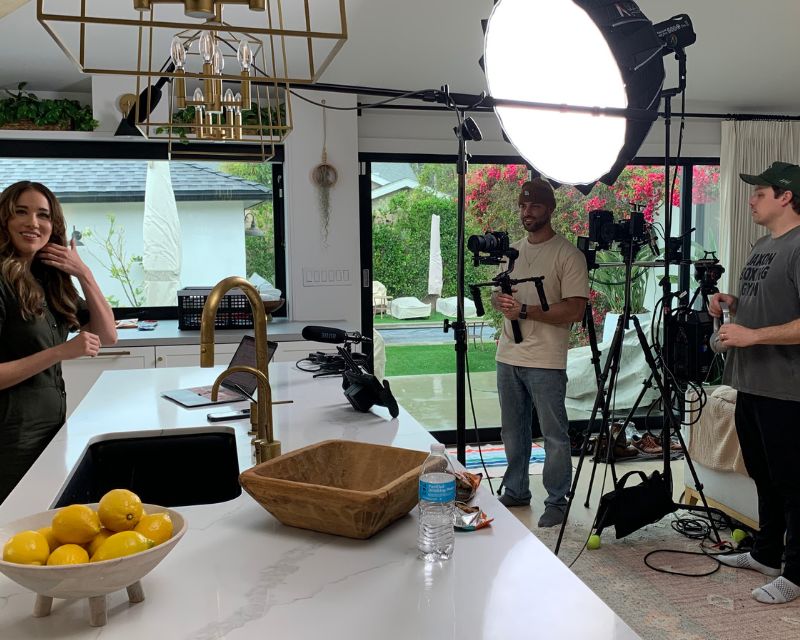
The result sits in a crowded market of integrated performance agencies, alongside alternatives such as Wpromote, Tinuiti, and Power Digital. New Engen’s particular combination is a production studio, creator relationships, affiliate operations, media execution, and shared measurement. A prospective client’s decision is whether that combination solves its coordination problem.
The million-dollar plumbing job
SeatGeek’s example is less glamorous than a shoot, and more revealing about costs. Its affiliate platform charged a percentage of program revenue and constrained commission design. New Engen helped migrate the program to impact.com, negotiated a flat monthly technology fee, and changed what different partners earned.
Content publishers received higher acquisition payments; lower-funnel partners received less. Transactions using unapproved codes received no commission. Over four months, the agency reports $1 million saved in technology fees and a 113% increase in affiliate-channel return on ad spend. The intervention combined software, contract terms, and incentives. The invoice was part of the marketing strategy.
New Engen itself sells services through client engagements, supported by technology. Its reported $1 billion-plus in annual managed advertising spend describes money deployed for clients. It should never be read as agency revenue.
A better question for the next budget
LIFT, the agency’s proprietary platform, connects creative performance, media data, and measurement. Its stated capabilities include marketing mix modeling and AI-assisted recommendations. The Measured partnership adds another measurement platform to its toolkit. The practical aim is to give the next production brief and the next spending decision evidence they can share.
For Colorescience, the initial warning was declining new-customer acquisition on Meta after iOS 14.5. New Engen tested upper-funnel investment and creative formats; it reports 47% higher new-customer growth after awareness media launched. That case makes a useful companion to Cotopaxi: improving efficiency can involve reaching people earlier, as well as reducing credit given to the final click.
A reader can copy the discipline: agree on the business outcome, inspect fees and attribution, and reserve room to test a competing explanation. This approach needs usable data, enough activity to distinguish a signal, and people willing to change spending. A tiny, volatile program may struggle to support a regional experiment. Treat that as a planning constraint.
By August 2026, New Engen reported more than 400 employees. October brought affiliate wins including STAUD, FORA, and Hedley & Bennett, plus work connecting publishers with AI-generated discovery. The channel keeps changing. The useful question survives: what happened because we spent the money?