Nathan Chan had secured an interview with Melanie Perkins, the co-founder of Canva. He was speaking from his parents’ basement, using Skype. About twenty minutes into the conversation, he discovered a small technical omission: he had forgotten to press record. Perkins started again. A business built around asking experienced people how they did it had acquired another lesson, this one concerning a button.
Chan still remembers her courtesy. It is a useful place to begin his story because the glamour of Foundr tends to arrive in a list of names: Richard Branson, Arianna Huffington, Mark Cuban, Tim Ferriss. The basement belongs in the picture too. Behind the access was somebody learning the work while doing it, occasionally with the microphone effectively switched off.
Today, Chan runs Foundr and hosts its podcast from a career based in Melbourne. His enterprise spans interviews, entrepreneurial education and a membership community. Its beginnings were considerably less tidy than the finished brand suggests. He had questions about business, a job in IT support and a suspicion that the people who had built companies might answer him.
A beginner’s question, with a magazine attached
Before Foundr, Chan completed a Master of Business at Victoria University. He wanted to move into marketing, but the qualification did not immediately produce the career change he wanted. At the travel company where he worked in IT, he liked the organisation and its culture. The work itself was the difficulty. Enjoying the office was insufficient compensation for wanting a different occupation.
He has resisted the flattering idea that he was always an overachiever awaiting his moment. Reading books including The 4-Hour Workweek helped make running a small online business seem conceivable. His first ambition was practical: get a project to pay its operating costs, then earn enough to replace his salary. He remembers the magazine’s first day bringing in about five dollars. Modest receipts can still be encouraging when they belong to you.
There had nearly been a horse-racing magazine with his housemate. When that plan fell away, Chan pursued the question that interested him: how were inexperienced people managing to start online businesses? In March 2013, he launched a digital magazine. He was learning publishing, design and distribution as he went. The audience he wanted to reach resembled the publisher: curious, early in the process and without a company to boast about.
Even the name required another attempt. The original publication, Key to Success, encountered a trademark lawsuit within its first few months. A new business had acquired a legal problem before it had acquired much room for mistakes. The rebrand produced Foundr. It is an unusually expensive way to improve a title.
The cover that opened another door
Branson was an early test of whether Chan could get anybody beyond his immediate circle to take the project seriously. He located the Virgin founder’s public-relations gatekeeper and pitched over the phone. By his own account, he stumbled. The response was an invitation to email, with a warning that a reply could take time.
He had asked for a Skype conversation. What came back was an offer of an email interview. He accepted, worked with the team on questions and photographs, and built a cover feature. The distinction matters. The opportunity that advanced his business arrived in a less convenient format than the one he had requested. He used it anyway.
The Branson cover gave him something concrete to show the next prospective guest. Each successful approach made the following approach easier. Seth Godin, for example, replied to an email by offering a conversation two hours later. Chan said yes. Access, in this version of the story, involved preparation and a willingness to rearrange the afternoon.
The names also helped at home. Chan has recalled his parents becoming more enthusiastic once Branson appeared in the magazine. A recognisable cover subject is a rather efficient explanation of what your child has been doing on the computer. By mid-2014, around fifteen months after launch, Chan was working on Foundr full time.
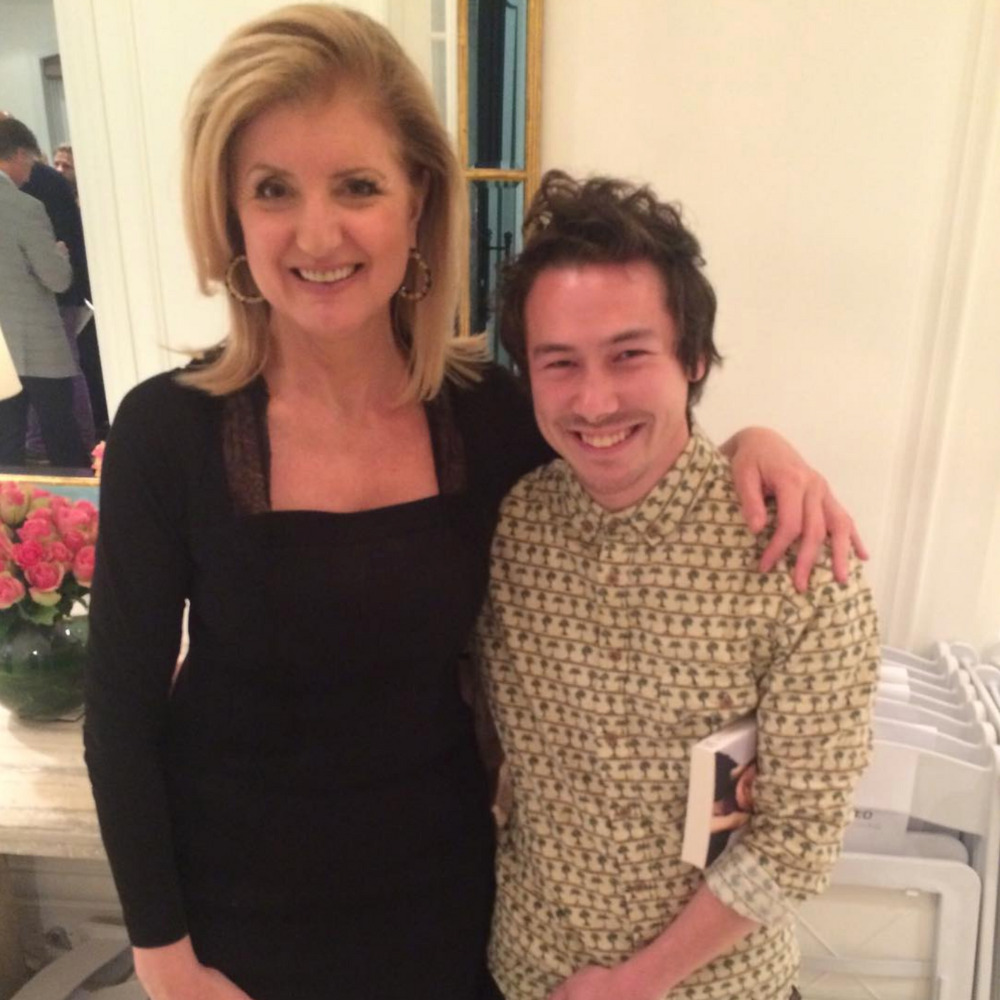
One conversation, several lives
Chan developed an opening question that makes accomplished founders pause: “How did you get your job?” It sounds almost impudent when addressed to somebody who created the company. That is part of its usefulness. It moves the conversation backwards, towards the decisions that preceded the title, the money and the polished account of how everything happened.
His early audience needed those decisions explained. A ranking of wealthy people could show the destination without making the route much clearer. Foundr’s opportunity lay in extracting usable detail: how a product was tested, how an audience appeared, how the first employees arrived. A reader who had yet to start needed a different conversation from an executive shopping for a flattering cover.
The business also learned to get more work out of each interview. A recording could become a magazine feature, podcast episode, blog post, email and social graphics. By 2017, Chan described a production process in which handing over the recording set the writing work in motion. The interview was the beginning of an editorial workflow, with other people responsible for turning it into things an audience would actually read.
A diagram of Foundr’s publishing process, as Chan described it in 2017. Formats, not audience totals.
He was initially unsure about putting the interviews into a freely accessible podcast. Would listeners stop buying the magazine? Dave, then working on Foundr’s marketing, proposed trying it and reversing course if subscribers objected. Chan agreed. The experiment became a continuing part of the company. His retrospective verdict was admirably economical: “I think Dave won the bet.”
The publisher goes back to school
Chan’s willingness to seek help extended beyond booking guests. When the early lawsuit arrived, a supportive boss helped him work through it. Later he paid for guidance from Mitch Harper, a co-founder of BigCommerce, after discovering Harper’s writing online. The interviewer who sold access to other people’s experience was purchasing some for himself.
One example concerned building the education team. Chan wanted to work with Zack Kinslow, who had experience producing courses, but could not yet afford a full-time hire. Harper suggested a test project. They tried working together before making the larger commitment. It is a small, useful story about judgment: an apparent choice between hiring and waiting acquired a third option.
In his own writing on recruitment, Chan credited Harper with helping shape the process used to assemble Foundr’s team. He also acknowledged that hiring techniques change. There is something appealing about a business educator allowing the method an expiry date. A formula is easier to sell when presented as permanent; managing people rarely grants that convenience.
“Every single problem that you’re experiencing in your business today, there’s somebody out there that has solved it.”
Nathan Chan, 40 Minute Mentor, 2022
His ambition grew with the company. He spoke of wanting Foundr to become a household entrepreneurial brand. That meant creating an organisation able to produce useful material through a team, with the founder paying attention to how the company itself worked. Interviewing capable people gave him examples. Employing capable people gave those examples somewhere to go.
A book has to survive the printer
The coffee-table book Foundr V1.0 tested that organisation in physical form. The team planned a volume that arranged lessons from the magazine around business questions. Crowdfunding would help establish whether readers wanted it before the company committed to producing it. A digital publisher was asking its audience to make room on an actual table.
The resulting campaign raised A$200,589 against a target of A$50,000. Chan’s later account described the less photogenic work behind that figure: editorial production, budgeting, finding a printer and coordinating the launch. The team spoke to at least thirty printers. Paper, evidently, had its own opinions about a media company’s expansion plans.
pledged against an A$50,000 goal
Campaign reported by Chan in April 2017. Pledges are not profit.The launch also brought the network into a room. Nearly a hundred people gathered at the Melbourne coworking space Revolver Creative, with Darren Rowse among the speakers. The evening made visible what a subscriber count leaves out: friends, collaborators and readers willing to help a project happen. Foundr had begun by requesting strangers’ attention. Now it could invite a community.
The next question is about the founder
In July 2022, Chan introduced Foundr+, a membership bringing courses and community together. His launch letter described removing barriers to entrepreneurial education. The progression made sense: interviews introduced an experienced founder’s thinking; courses offered more room to work through a method. Membership gave that learning an ongoing setting.
By April 2026, Chan was discussing another adjustment on the FlowZone podcast: becoming more visible himself after years of building behind the Foundr name. He talked about founder-led content, documenting work and using AI tools. For somebody whose career had depended on drawing other people out, appearing more prominently in his own company’s story presented a fresh assignment.
The continuity is his appetite for asking. He began without the experience his readers wanted, then built a reason for experienced people to speak to him. The business changed as he learned what else those readers needed. That leaves a rather human picture of Nathan Chan: a publisher, an interviewer, an employer and a student, still finding people who can help him answer the next question. Presumably, these days, the recording starts first.