Before Nathan Chan released the interviews, he worried about the people already paying for them. Foundr was a digital magazine. Audio conversations lived inside it. Put those conversations into a free podcast, and what exactly would subscribers be buying? It was a reasonable question for a young publisher with something to lose.
His marketing lead, Dave, proposed a small experiment: publish the podcast, wait six months, and take it down if readers complained. In his 2024 retrospective, Chan recalled the wager and delivered the verdict: “I think Dave won the bet.” The podcast had launched after roughly a year of magazine publishing. An asset already made could travel farther.
That decision explains Foundr better than its celebrity guest list does. The company gathers entrepreneurial experience, packages it in several formats, and lets people choose how deeply to engage. The interview is accessible. The structured instruction costs money. Listening and doing occupy different parts of the business.
- Free founder interviews hosted by Nathan Chan.
- A paid education business built around practical instruction.
- The copyable move: test demand before building more.
“I think Dave won the bet.”Nathan Chan, recalling the podcast experiment
The first thing to break was the name
Foundr began in March 2013, while Chan still worked in IT. His first publishing idea involved horse racing and a housemate. When the housemate took a racing job, that plan evaporated. Chan turned toward entrepreneurs instead. He was curious about people building online businesses without the conventional credentials.
The first magazine took eight or nine months to prepare. Chan later admitted he knew little about publishing, apps, editorial work or design. His inexperience was useful to the eventual interview format: he needed explanations that a beginner could follow. It was less useful when choosing a business name.
The magazine originally appeared as Key to Success. Within its first four months, Chan says, a major American business magazine pursued him over trademark infringement. He changed the name. The missing vowel in Foundr therefore belongs to a story with lawyers in it, rather than merely to the internet’s long affection for missing vowels.
The early economics were modest. In a 2015 interview, Chan remembered 70 downloads and about $5 on launch day. He kept his salary while building the publication and went full-time around 15 months after launch. Foundr describes itself as completely bootstrapped. The lesson is narrower than “quit your job”: maintain income while testing whether strangers will pay.
An audience asks for the next product
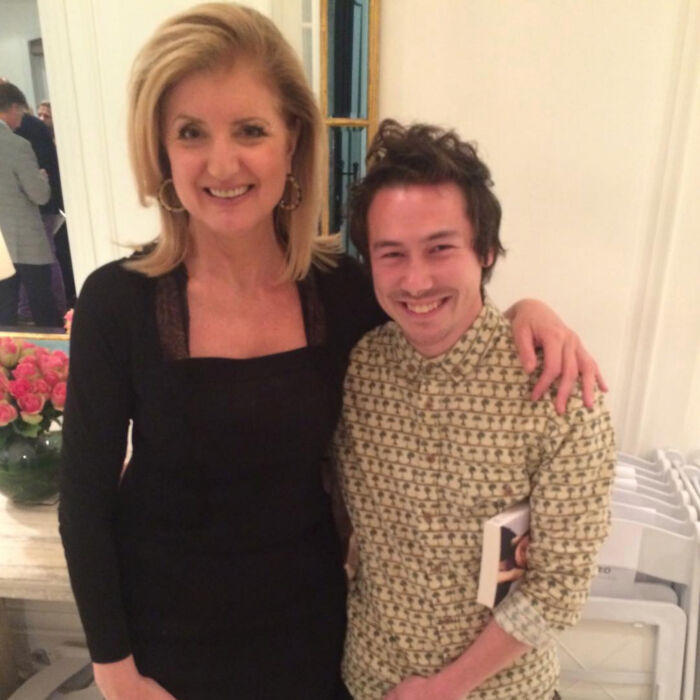
Richard Branson became an early interview subject. Arianna Huffington, Seth Godin and others followed. Famous names helped a small publication earn attention, but attention alone did not specify what to sell. A more revealing clue came from readers asking Chan how Foundr was growing on Instagram.
In an interview with Yaro Starak, Chan described emailing a list of roughly 3,000 to 4,000 people to test interest in an Instagram course. More than 150 replied. He put up a sales page, charged $97, and recalled selling around 100 places. These were early figures, not current prices. The sequence matters: demonstrate a skill, hear a repeated question, then offer instruction.
For a reader building a business, this is a useful experiment to copy. Write down the questions customers already ask. Offer a clearly described solution to one question. Measure purchases before expanding the catalogue. You need an audience with a shared problem and evidence that you can solve it; a large following by itself supplies neither.
The free conversation, the paid classroom
The Foundr Podcast with Nathan Chan serves aspiring founders, working entrepreneurs and people considering a first business. Its advertised guests include Mark Cuban, Tim Ferriss and Barbara Corcoran. A companion series, From Zero to Foundr, shifts attention toward students building their own businesses. It gives the brand another kind of protagonist besides the familiar billionaire.
Foundr’s wider offering includes a magazine, articles, online courses, membership and coaching. Its current Foundr+ membership page concentrates on ecommerce: product selection, sourcing, branding, advertising and growth. Named instructors include Gretta van Riel, Kian Golzari and Nick Shackelford. The expertise being sold is experience with specific business tasks.
The advertised entry offer, checked in October 2026, is $1 for 14 days, followed by $99 per month, with possible VAT. That offer specifies seven course previews, community access, the magazine library and an AI ecommerce coach. Readers should distinguish the trial’s listed access from the wider catalogue of courses. The recurring payment is the decision, however small the opening price looks.
Foundr reports more than 30,000 students and three million followers on that page. Those are company-wide marketing figures, not counts of paying podcast listeners. Its editorial policy says revenue comes from digital educational products and magazine subscriptions. Recent podcast listings also carry sponsor offers, including Omnisend. The free audience has several routes into commercial relationships.
Ask for the awkward part
In a crowded entrepreneurship market, Foundr sits between founder-interview media and practical online education. How I Built This is an alternative for business origin stories; Masters of Scale is another place to hear founders discuss growth. Foundr’s particular proposition is the nearby classroom: a listener can move from a conversation into instruction on an operating problem.
A listener shopping for help can make this distinction concrete: choose an interview to understand a decision, then choose instruction only when a defined task remains. If your question is vague, adding a course may simply give the vagueness a timetable.
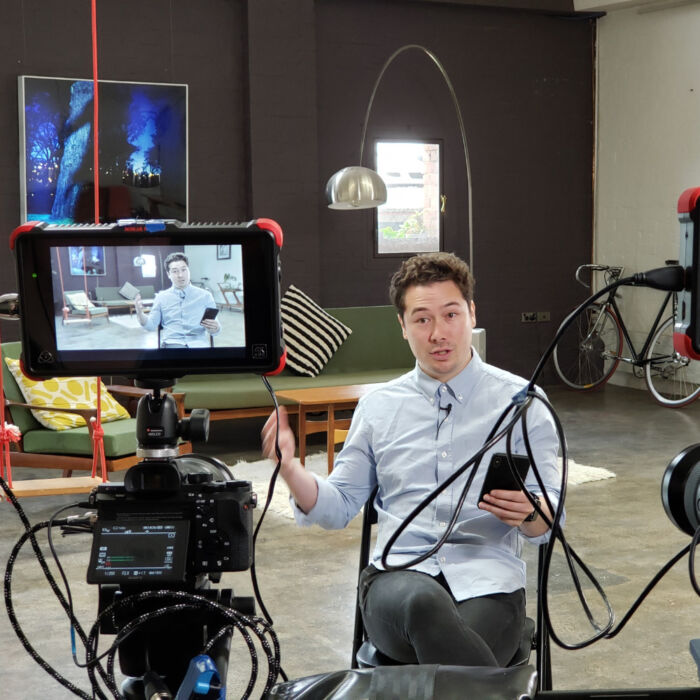
The company’s usefulness depends on how far an interview gets beyond the polished biography. Chan has described reluctant guests who give brief answers and seem present only because their publicists arranged it. A recognisable face cannot guarantee a revealing conversation. For listeners, the productive question is what happened before the tidy ending.
There is also the selection problem. Successful guests are visible because something worked. Their methods may depend on timing, capital, distribution or an audience a beginner lacks. Foundr’s own sales terms acknowledge that showcased financial results are exceptional. Treat an episode as a source of testable ideas; matching a guest’s confidence will not reproduce their market conditions.
Try this while listening: capture one action, its cost, the assumption behind it and the first sign that it failed. Then choose a small test in your own business. Chan’s original podcast wager provides a fitting example. He had interviews, a distribution opportunity and a reversible experiment. He could learn by releasing something he had already made. The rest of us can start by finding our equivalent.
Keep the conversation going
Listen to the Foundr Podcast, explore the courses, or browse the blog. Watch Chan’s tenth-anniversary interview and more interviews on YouTube.