The smiling students seemed a reasonable bet. Microsoft wanted college students to download Office 365, and the advertising showed young people looking cheerful and industrious in collegiate surroundings. Then the tests began. Images, words and calls to action competed. The winning ad had a single-color background and a simple invitation to act. The photograph had become expendable.
For Mitchell Weisman, this was an unusually tidy demonstration of a problem he had spent years pursuing. An advertisement could look appropriate, address the right audience and still leave money on the table. Finding a better version required the freedom to question the first version while the campaign was running. Taste could nominate a candidate. Customers would cast the votes.
In 2015, his company RevJet introduced a platform intended to make that contest routine. Microsoft was an early user. Its team reported better conversions from creative experiments, including the discovery that the plain treatment could outperform the student photographs. A business proposition was tucked into that small reversal: the people commissioning an ad cannot reliably predict every response to it.
“Media space is just an empty box,” Weisman said at the launch. Buying access to that box had attracted an enormous amount of technology. He wanted more attention paid to its contents. It is a useful place to begin his story, because the box keeps changing shape while his interest in what fills it remains remarkably consistent.
“Media space is just an empty box.”
Mitchell Weisman · RevJet launch, 2015
Before the box, a balance sheet
Weisman's route into advertising technology ran through finance. He earned a bachelor of science degree at the University of Pennsylvania's Wharton School. In 1993, he worked as an investment professional at Starwood Capital Group, helping with its early hotel-related investments. From July 1994 through September 1999, his career included businesses associated with William Farley, among them Farley Industries, Fruit of the Loom and Farley West Ventures.
He joined Claria in October 1999. By its 2004 registration filing, his responsibilities covered corporate development and business development; he had also overseen finance from 2002 through February 2004. These were jobs involving partnerships, capital and distribution. The later founder's preoccupation with the economics of a creative decision had a fairly literal financial apprenticeship.
A former colleague, Jeff McFadden, remembered someone particularly quick with numbers, inventive and willing to work hard. His recommendation also supplied a pleasingly uncorporate qualification: Weisman's “continuing faith in the Chicago Cubs.” Even an enthusiast for measurement was apparently allowed one allegiance that a colleague could tease him about. The portrait is affectionate, and belongs to the colleague who drew it.
A testing engine gets its own company
Weisman co-founded LifeStreet in 2005, building a business around advertising inside social and mobile applications. Developers needed revenue; advertisers needed customers. LifeStreet worked on both sides of that exchange. By May 2012, it had attracted a $66 million investment from Nautic Partners. The business said it had already paid $100 million to developers and driven 200 million app installations.
Those figures describe LifeStreet at that moment, rather than a running score for Weisman's whole career. What mattered to his next move was the machinery underneath them. LifeStreet had developed an optimization platform called RevJet. In a 2012 interview, Weisman described testing choices as small as a background color or a call to action, alongside less visible decisions about when and how an advertisement should run.
His examples were cheerfully concrete: an image might contain a horse, a rider or two horses. Beneath the technical vocabulary was a question anyone could understand. Which version persuades more people? He said LifeStreet had invested more than $25 million in its platform. The intention was to make experimentation fast enough to become part of everyday operations.
The audience expanded as mobile advertising grew. In 2013, LifeStreet introduced a self-service publisher portal beyond its existing Facebook developer offering. Weisman emphasized giving developers control over placements and making it easier to earn revenue. Testing, in this telling, had to work within the tools publishers already used. Integration was already part of the sales pitch.
- 2005LifeStreet
In-app advertising - 2014RevJet
Independent venture - 2023Innervate
Dynamic orchestration
In October 2014, he stepped away from LifeStreet's daily operations to launch RevJet as a separate business, remaining chairman while co-founder Paul Kennedy became president. LifeStreet announced its seventh consecutive profitable fiscal year. Kennedy also described the business as RevJet's first customer. The new venture began with an existing proving ground, rather than a product searching for its first practical assignment.
RevJet's public product launch followed in October 2015. Its name for the offering, Creative Side Platform, added another acronym to an industry that was hardly going hungry. Weisman described a system for building, serving, measuring and improving creative. His wager was that advertisers would pay for a more continuous way to learn what their own messages could accomplish.
Twenty employees, and a different kind of move
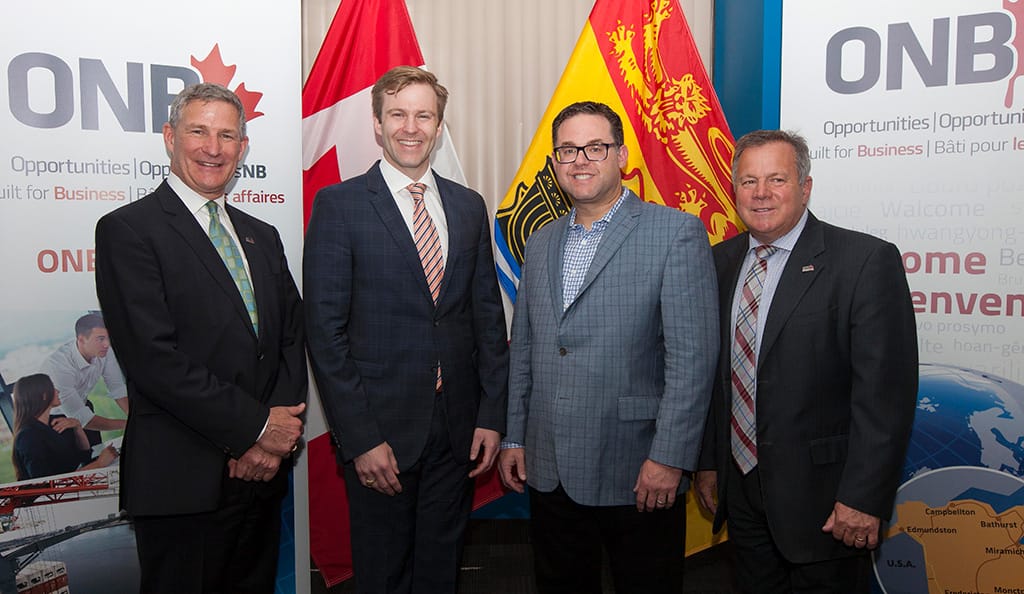
The next chapter belongs on a map. In 2016, RevJet moved its research and development office from Ukraine to Saint John, New Brunswick. Unrest in Ukraine and limited United States visa openings helped direct the search toward Canada. Twenty employees relocated, accompanied by spouses and children. The provincial announcement counted 48 new arrivals in all.
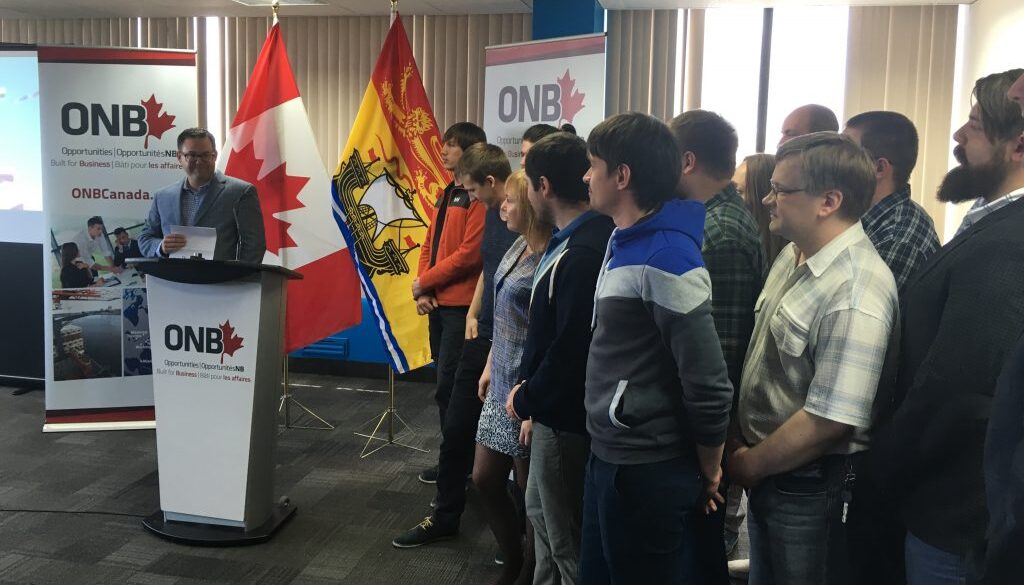
The move required cooperation with Opportunities NB, provincial officials and Saint John's newcomer resource centre. New Brunswick offered up to $400,000 in payroll rebates tied to creating and maintaining 20 full-time jobs for three years. Here the company's operating requirements were inseparable from the practical business of settling families in a new city.
Weisman said other American and Canadian locations had been considered. He credited New Brunswick's follow-through with helping settle the decision. The office would undertake software development and quality assurance, and the company hired a full-time recruiter locally. A founder associated with rapid digital experiments was now talking about a place, its institutions and whether people did what they promised.
The shoes that would not go away
By 2018, Weisman's diagnosis had widened. He wrote about an ordinary irritation: a shoe advertisement following someone around the internet after the shoes had already been bought. The example made the gap between personalization's promise and its execution difficult to miss. A message could be related to a customer's interests and still arrive after it had ceased to be useful.
That August, RevJet announced a $21 million Series A led by Nautic Partners, bringing total funding to $30 million at the time. The company planned investment in engineering, artificial intelligence and machine learning. Its offering had grown beyond the original creative-testing emphasis to encompass more of the customer experience, with an exchange of more than 60 applications.
Weisman described marketers dealing with multiple technologies and stakeholders on a single impression. His product ambitions included automating operational tasks, quality assurance and campaign simulation. There is a recognizable escalation here: once better creative can be tested, the surrounding work becomes the next constraint. Someone still has to assemble it, check it, route it and make the findings useful.
A new name for the connections
On May 23, 2023, Weisman announced that RevJet had relaunched as Innervate. He and co-founder Serge Ioffe had been working on digital creative's unrealized potential for nearly two decades, he wrote. Their time as LifeStreet's CEO and CTO had supplied the foundation. The name changed as the business broadened its account of what customers needed.
The proposed solution connected existing systems, data and teams so that companies could coordinate changing customer experiences across channels. Weisman reached for everyday comparisons: adding something to a Wi-Fi network or downloading an app. These analogies carried an aspiration for simplicity. The systems behind an advertising message might be complicated; connecting them should demand less ceremony.
Innervate's current leadership page still lists him as founder and CEO, alongside Ioffe as co-founder and CTO. The continuity matters. This is a story of an extended working partnership and a recurring commercial problem, carried through different products and company identities. The question has expanded from which ad wins to how an organization can keep putting useful variations into the world.
creative options→Test
audience response→Learn
what to change
More possibilities, and a reason to choose
Weisman's recent writing brings artificial intelligence into that same argument. In December 2024, he described programmatic creativity through modular ingredients: headlines, pictures and calls to action that can be recombined for different contexts. The attraction was greater scope for experimentation, with automation reducing the effort required to produce and manage alternatives.
In April 2025, he returned to resources retailers already possessed, especially first-party information about browsing, purchases and engagement. In July, he outlined potential uses for AI agents and better coordination between marketing, sales and inventory. Those examples were proposals for how retailers might work. They reveal his priorities without requiring a prediction that every proposal will come true.
His October 2025 writing concentrated on the mechanics of learning: generate variations, establish success criteria, run experiments and act on the results. Faster production creates more candidates. Useful experimentation still needs a definition of success. The relationship between those two ideas has followed him from the early testing engine to his current writing about AI.
Return to the students who disappeared from the Microsoft ad. Their absence was an answer to a question the team had been willing to ask. Weisman's career has repeatedly made room for that question, in software, financing decisions and the way he describes his work. An empty advertising box offers plenty of room for an opinion. He has spent years building ways to put the opinion to a test.
Keep following the experiment
Company, profile and further reading.