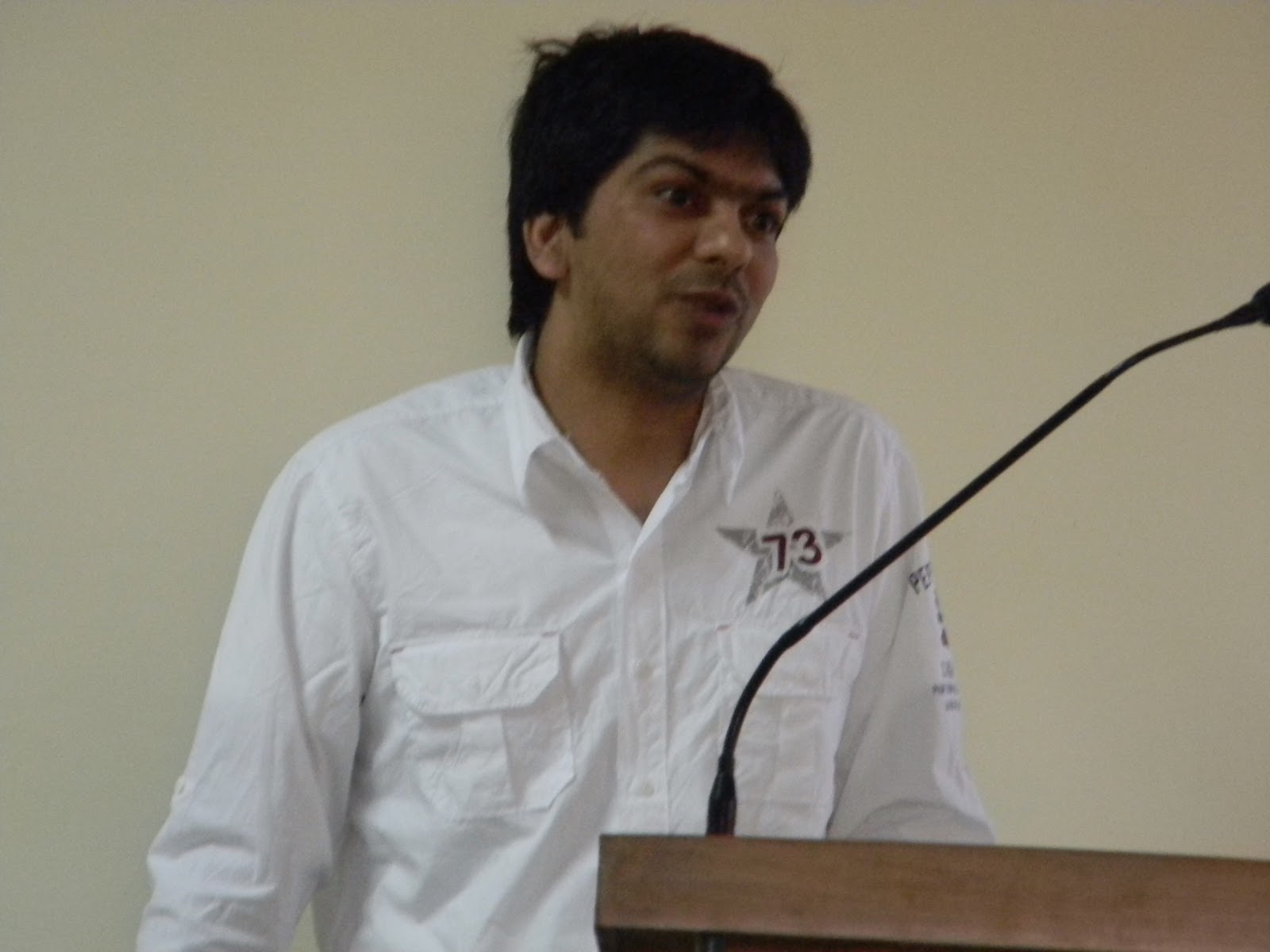
In January 2012, Ravi Kabra stood before management students and offered a compact piece of career advice: “Be the pilot and not the passenger.” The session ranged across customers, partnerships and the responsibility of choosing your own direction. It is a useful place to meet a future advertising technology founder. Before the platform, before the product demonstrations, there was the question of who was actually in control.
Advertising provides that question with an unusually crowded cockpit. A campaign can run across search, social media, display and video. Each channel produces its own account of events. Money leaves, impressions arrive, customers wander between screens. Everyone has a dashboard. The dashboard, alas, is rarely the customer.
Kabra would co-found DeltaX with Akshay Surve, bringing a buyer’s experience to a business built around connecting those pieces. Kabra is the CEO; Surve is the CTO. Their company now describes its work through three connected activities: understanding performance, producing creative variations and measuring what happened. The interesting part of Kabra’s story is the experience that made such a combination seem necessary.
The buyer’s side of the screen
His route into software passed through quantitative market research and digital agency work. By 2010, he had been involved in online marketing since 1999. That is a long view of an industry whose preferred unit of historical measurement is the last product launch.
At Havas, Kabra led Ecselis, the search marketing operation associated with Media Contacts. In 2010 he was appointed director of new business for South and Southeast Asia. His work also included building and running a global center of excellence, bringing together services that ranged from media buying and analytics to creative and technology.
There is an operational education inside that list. Search campaigns need attention to bids and intent. Analytics asks what an interaction means. Creative work asks what to say. Serving agencies across markets adds the practical business of delivering all of it to other people. Kabra’s jobs placed these disciplines close enough to expose their dependence on one another.
He also worked at Directi as a general manager and business head, with responsibilities involving hosting expansion, online marketing and domain monetization. The perspective widened from serving an advertiser to helping operate online businesses. His eventual product would address a recurring difficulty familiar from both positions: useful information can exist in several places without forming a useful account of the whole.
Read that career as preparation and the choice of DeltaX becomes easier to understand. A person who has bought media knows the consequences of scattered tools. Someone still has to assemble the figures, reconcile the activity and decide what to do next. Integration sounds dry until you are the person doing the assembling.
A product with a passport
By 2015, Kabra was talking explicitly about taking the business abroad. DeltaX had been selected for Blackbox Connect’s winter program in Silicon Valley, sponsored by Google for Entrepreneurs. “We were planning to expand to the US,” he said. The attraction included learning from startups elsewhere and understanding the environment in which a global product would have to compete.
The selection process supplied another lesson. Early interviews examined the business and its traction. Later rounds focused more closely on the people. Kabra’s explanation was straightforward: “it is always important to have the right set of people.” For a company selling automation, that was a pleasingly human observation.
The program was scheduled for February 9 to 20 in Palo Alto. DeltaX was described as the only Indian company selected for that edition. Its ambition was already visible in the product’s accommodation of different languages, currencies and time zones. International work creates administrative details as well as grand plans; software must cope with both.
A concrete international agreement followed in January 2016. Digilant announced a perpetual license to DeltaX’s dynamic creative optimization technology. The agreement concerned software that could adapt creative messages using campaign data and context. DeltaX technology would become part of Digilant’s own advertising platform.
The distinction matters. This was a license to technology, with a defined job inside somebody else’s system. The work was to make messages more relevant as a customer moved between devices and interactions. Kabra’s emphasis was on tailoring the message across devices, extending the original integration problem into the advertisement itself.
“it is always important to have the right set of people.”
Ravi Kabra, discussing Blackbox Connect selection, 2015
The celebrity and the shopkeeper
Advertising technology can sound as though its natural habitat is a server room. Some of DeltaX’s work has taken it into the much more recognizable world of local businesses. Kabra shared the company’s role in the technology behind Not Just a Cadbury Ad, the campaign that received a Cannes bronze in 2021. The collaboration brought together DeltaX with Ogilvy, Wavemaker, Facebook, Google and Mondelez.
That list is a useful corrective to the solitary-founder portrait. The work depended on creative, media, brand and technology partners. Kabra’s company supplied part of the machinery; the campaign took shape through the combined effort. A founder’s achievement can include building something that other specialists can put to use.
Tokopedia’s Ramadan 2022 campaign makes the practical demands particularly clear. The Indonesian marketplace wanted merchants to promote their stores through personalized videos featuring celebrity Ayu Dewi. DeltaX built a microsite where sellers could customize offers, choosing from nine types, and receive co-branded videos for their own promotion.
More than 50,000 merchants participated. Think about the production task contained in that number. A campaign must preserve its shared identity while making room for each seller’s information. The system must accept input, create the variation and deliver something a merchant can actually share. At that scale, the workflow becomes part of the creative idea.
For Kabra’s story, the example brings the business into focus. The buyer’s problem of managing complexity has become the seller’s opportunity to use a personalized piece of advertising. The technology earns its place by carrying a specific message through a process that would otherwise involve a formidable amount of repetitive work.
merchants participated in the personalized-video campaign supported by DeltaX.
Who gets the credit?
The creative message is only one part of the account. After an advertisement runs, somebody wants to know whether it helped. A customer can encounter a brand several times before taking action. Giving credit to those interactions requires a method, and changing the method can change the picture.
This is the problem of attribution. DeltaX’s measurement tools allow advertisers to examine customer journeys and compare attribution models. The platform can connect advertising costs with tracking information and bring in customer relationship management data. That makes it possible to look beyond an initial response toward later business outcomes.
The distinction is practical. Counting a response and understanding its value are different tasks. A lead can look promising at the point of collection and less useful further along. Connecting those stages gives a team more to examine than the first attractive number. It also creates a reason for the people running campaigns to talk to the people following up.
DeltaX’s insights offering tackles another everyday task: bringing media, analytics and customer information together. It lists more than 100 built-in channel integrations, alongside reporting, budget pacing and alerts. These capabilities describe the less glamorous side of a connected platform. Somebody needs to know whether the campaign is spending as planned before the month is over.
On the creative side, the platform supports bulk variations, localized messages and deployment across channels. DeltaX puts its global advertiser base at more than 1,000. The breadth of those tools shows how many practical tasks have grown out of the original problem: assembling information so that somebody can put it to work.
Back to the pilot’s seat
Kabra’s earlier public-speaking experience adds a small, revealing detail: his career includes being founder president of Mumbai Toastmasters. The university session belongs to that same public thread, a working professional translating experience for people preparing to enter business themselves.
His classroom discussion included the difficulties of going into business with friends and the need to establish expectations. Put beside the later emphasis on teams at Blackbox Connect, the discussion suggests a consistent subject of interest: how people make shared work function. Both episodes return to the expectations that sit behind any joint undertaking.
The same restraint helps when reading the company. Its software can assemble information, support different creative messages and compare ways of measuring performance. The people using it still have to decide what a useful outcome looks like. A connected view gives them a better place to ask the question.
Kabra’s career has moved from studying markets to serving advertisers, operating businesses and building a platform. Across those jobs, the recurring issue is how to turn information into a decision that somebody can act on. The student audience heard a version of that responsibility in 2012. The advertising customer encounters it in a different form today.
The pilot needs instruments, of course. Preferably instruments that agree about which aircraft they are in.
Follow the work
- DeltaX: the company and its founders ↗
- Ravi Kabra on LinkedIn ↗ · Twitter / X ↗ · Facebook ↗
- Personal website ↗
- The 2012 university career talk ↗
- DeltaX’s Blackbox Connect selection ↗
- Digilant’s 2016 technology license announcement ↗
- Tokopedia’s personalized-video campaign ↗
- Watch: Tokopedia campaign example on DeltaX’s YouTube channel ↗
- Watch: a second Tokopedia video variation ↗