An expired coupon is a peculiar little disappointment. The food still exists. The shopper still wants it. The discount has simply crossed an invisible line on a calendar. For a brand that sells bags designed to keep things from expiring, this presented an unusually tidy opportunity. Ziploc could preserve something else: the offer.
- VML Commerce connects creative ideas with the systems that turn interest into purchases.
- Its work ranges from Ziploc promotions to grocery platforms and marketplace operations.
- The useful lesson: find a shopping frustration your brand has a credible reason to fix.
With VML, Ziploc created Preserved Promos. Shoppers uploaded an expired food promotion and could unlock a renewed offer by adding Ziploc products to their basket. The reward arrived inside the act of buying. A familiar product benefit had become a shopping rule.
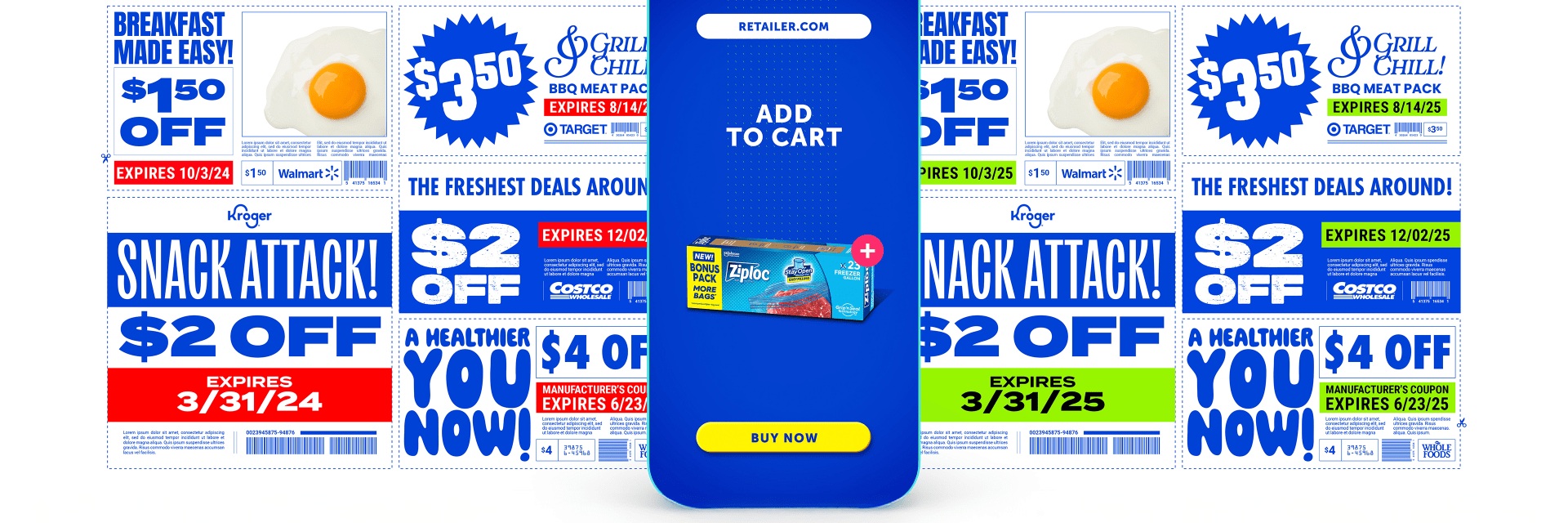
A brand promise with a checkout attached
This is a useful introduction to VML Commerce, the commerce practice inside WPP-owned VML. Its territory includes the ad that attracts attention, the marketplace listing that answers a question, the offer that prompts a purchase and the technology behind the transaction. The pitch is that these pieces should be designed together.
Preserved Promos won the Creative Commerce Grand Prix at Cannes Lions in 2025. The festival’s account described a mobile experience supported by influencers. Jury president Gabriel Schmitt called the selection “a unanimous decision.” The attraction is easy to understand: the product’s purpose explained the promotion, and the promotion supplied a reason to buy the product.
“It was a unanimous decision.”Gabriel Schmitt · Creative Commerce jury president, 2025
VML reports a 5% sales lift and 14% growth in new buyers. Those are agency-reported outcomes. They make the case interesting; they do not, by themselves, tell a buyer how much incremental profit the promotion produced.
Campaign outcomes reported by VML. Different measures, not a like-for-like comparison.
The agency assembled around the purchase
VML Commerce’s origins help explain its range. In November 2020, WPP announced that Geometry and VMLY&R would combine their commerce capabilities. The venture became operational in January 2021, led by launch CEO Beth Ann Kaminkow. It joined Geometry’s shopper and experiential knowledge to a wider brand and customer-experience network.
The pandemic supplied the urgency. In its launch announcement, WPP pointed to rapid ecommerce growth and changing buying habits. Brands needed help across channels, and clients wanted simpler relationships with their marketing partners. The response was an organizational combination, backed by an existing holding company.
Another combination followed. WPP announced the merger of Wunderman Thompson and VMLY&R in October 2023; the resulting VML began operating in January 2024. Today’s commerce offer therefore carries several agencies’ accumulated capabilities. Treating it as a small venture founded from scratch in 2021 would miss the machinery behind it.
Then the supermarket complicates everything
A second example comes from VML’s inherited portfolio. PLUS Retail, the Dutch grocery cooperative, initially wanted an informative, inspiring website that would encourage online orders. Its operational reality was more demanding: ecommerce across 240 locations, plus 90 affiliated local webshops. A neat sequence of requirements and delivery dates needed more flexibility.
The team replaced its waterfall approach with two-week Scrum sprints, testing and revising against real usage. The Intershop platform later connected customer-facing sales and picking systems through APIs, supporting two-hour delivery. The case records a popular-grocery-site award in 2020, before the Commerce venture’s launch. Its lesson concerns delivery: let operational complexity change the development method.

Plan → build → release↘Two-week cycles
Build → test → revise ↻
Conceptual diagram of the delivery-method change described in VML’s case.
What the client is actually buying
VML Commerce sells expertise and execution to businesses: creative development, commerce strategy, content operations, media and technology delivery. Brands and retailers are the customers. Consumers encounter the results as offers, listings, apps and shopping experiences. This is a professional-services relationship, with work extending from individual projects into continuing operations.
Its marketplace offer covers Amazon, Walmart, Instacart, TikTok and other channels. The work combines content, media, operations and platform connections. Its current commerce page describes more than 5,000 practitioners. That figure describes the practice’s capability base; it should not be confused with an independently reported payroll for a standalone company.
The market is crowded. Accenture Song, Publicis Sapient, Deloitte Digital and Valtech occupy overlapping commerce and experience territory. VML’s case rests on the combination of brand creativity and technical implementation. A prospective client should judge that combination by the actual team and scope: who owns the offer, the integration and the ongoing improvements?
There is also a practical technology ecosystem behind the proposition. VML’s current enterprise page describes access to WPP Enterprise Solutions, including engineering, consulting, CRM and commerce capabilities, with partners such as Adobe, Microsoft, Salesforce and Shopify. For a client, the useful question is how those resources connect to its existing systems. The work can include improving what is already installed, linking separate tools or replacing infrastructure. Each choice changes the project’s effort and the responsibilities that remain after launch.
Woolworths supplies a different illustration of the need. Its Metro60 brief concerned sub-60-minute grocery delivery and a connected customer experience across channels. VML’s published case describes a requirement to understand customer behavior in real time and support more personalized engagement. A fast delivery promise reaches into customer data and communications as well as transport. Once the offer is made, several teams have to keep it.
The idea is copyable. The economics need homework.
Start with a purchase that nearly happens. Identify the obstacle, connect its removal to something the brand can credibly promise, and make the next step easy. Preserved Promos offers that pattern. PLUS offers another: shorten the feedback cycle when the organization is too complicated for the original plan.
Find the friction→02
Make it relevant→03
Enable purchase
For a buyer, the budget conversation should include creative fees, engineering, media, licenses, maintenance and any promotional subsidy. Those are separate costs with different owners. Sales growth becomes more meaningful when measured alongside additional purchases, margin and repeat buying. An attractive headline number cannot do all that accounting.
A useful first engagement would define one purchase problem and an observable result before expanding the scope. It would also name the people authorized to change the offer and the software. That is an editorial recommendation drawn from these examples, rather than a published VML package. It gives a buyer something concrete to evaluate: whether the proposed team can carry one idea all the way through.
The approach depends on practical permission. Retailers must support the offer; systems must recognize it; inventory and fulfillment must keep pace. Thin margins can make a discount expensive, and a simple single-store business may need far less coordination. VML’s 2026 commerce outlook adds agentic AI to the discussion alongside demand for human connection. Whatever changes about the shopper, the purchase still has to work.