A toothbrush can be beautifully designed, competitively priced and entirely absent from the store where someone wants to buy it. That small inconvenience contains a large business problem. Someone has to persuade a merchant, manage the account, prepare the product page and work out whether the launch is paying off. The Stable built an agency around those connected jobs. The shopper usually sees none of them.
- Helps consumer brands get into retailers and run the business once they arrive.
- Added commerce technology and Shopify expertise through acquisitions.
- Joined Accenture Song in 2022; its current pitch centers on retail growth.
The distance between a product and a purchase
Founded in 2015 by Chad Hetherington and Nik Larsen, The Stable grew from Minneapolis retail roots. Its current website names Target, Walmart, Amazon, Kroger and Meijer as the retailers where it helps brands grow. The offering includes merchant access, operations, category analysis and digital visibility. One detail supplies the geography: the agency describes its offices as 100 steps from Target headquarters.
Proximity makes a memorable pitch. The harder proposition is continuity. A brand needs help before the buyer meeting and after the order arrives. The Stable positions itself as an extension of that brand’s team, connecting the people who sell with the people who operate and measure. Its website reports more than $2 billion in annual retail sales driven. That is a claim about supported retail activity, not the agency’s own revenue.
The Stable’s current website claim. Client retail sales and agency revenue measure different things.
Historical customers make the proposition easier to picture. Public announcements name quip, Ring, Califia Farms and Cora. These are consumer products whose route to a buyer can cross a brand website, a marketplace and a physical aisle. The relationship with quip, for example, included helping the oral-care brand reach Target. The interesting work happens where those routes meet.
The missing aisle was Walmart
The expansion was unusually explicit about a gap. In April 2020, The Stable announced a merger with Kreative Sales & Marketing, a Bentonville agency serving brands at Walmart, Sam’s Club and Costco. Growth Catalyst Partners backed the combination. The Stable already had sales, operations, media and creative capabilities. Yet its own CEO identified a major omission.
“But with that, we found ourselves missing one crucial channel in that strategy for our brand partners: Walmart.”
Chad Hetherington · April 2020 merger announcement
The distinction matters. Expansion can mean selling more of the same service. Here it meant adding knowledge attached to a particular retailer. The combined business counted more than 100 employees at the time. Its growth plan joined capital with specialist experience: acquire the missing capability, then make it available to brands already working with the agency.
Buying the pieces between channels
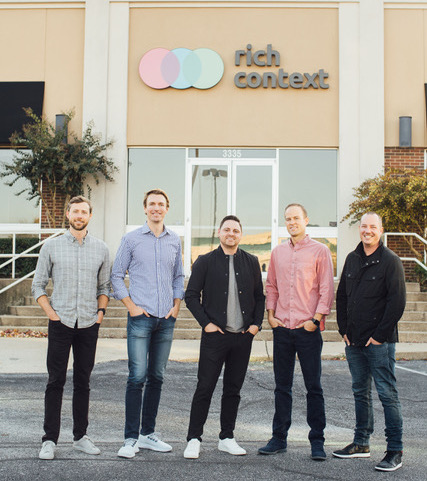
Later in 2020, The Stable acquired RichContext. The Arkansas company brought engineering, data and shopping technology, including Hyphen, a platform launched in 2019 for creating online shopping destinations. The acquisition broadened what the agency could build, alongside where it could help brands sell. Jacobs Marketing joined that year too.
The Retail Firm added Walmart analytics, sales support and supply-chain services in 2021. That December, The Stable acquired BVA and Zehner, bringing Shopify storefront design, development and optimization into the group. The logic was visible: a retail relationship cannot build a checkout, and a checkout cannot run a retail account. Connecting those capabilities gave brands a broader partner.
Selected acquisitions, grouped by the capabilities they added.
This is a services business sold to businesses. Brands engage expertise and execution across representation, operations, creative work and technology. Depending on the assignment, alternatives include a retail representative, a specialist development shop or an internal team. The Stable’s distinction is the breadth assembled around commerce. A prospective client should evaluate the actual team and scope against the particular problem.
Then the dashboard needed explaining
A revealing operational problem appeared in Count’s 2025 account of The Stable’s data team. More than 30 sources and 400 dbt models fed reporting for hundreds of customers. The tools were capable. Understanding and collaborating across them created overhead.
Justin Freels, then senior manager of data engineering, described a workflow in which screenshots and screen sharing offered limited collaboration. A shared Count canvas let engineers expose transformations and results, invite business feedback, and prototype reports before building them in dbt and Power BI. The vendor case study reported outputs delivered three times faster. That measures a team workflow, rather than a guaranteed improvement in client sales.
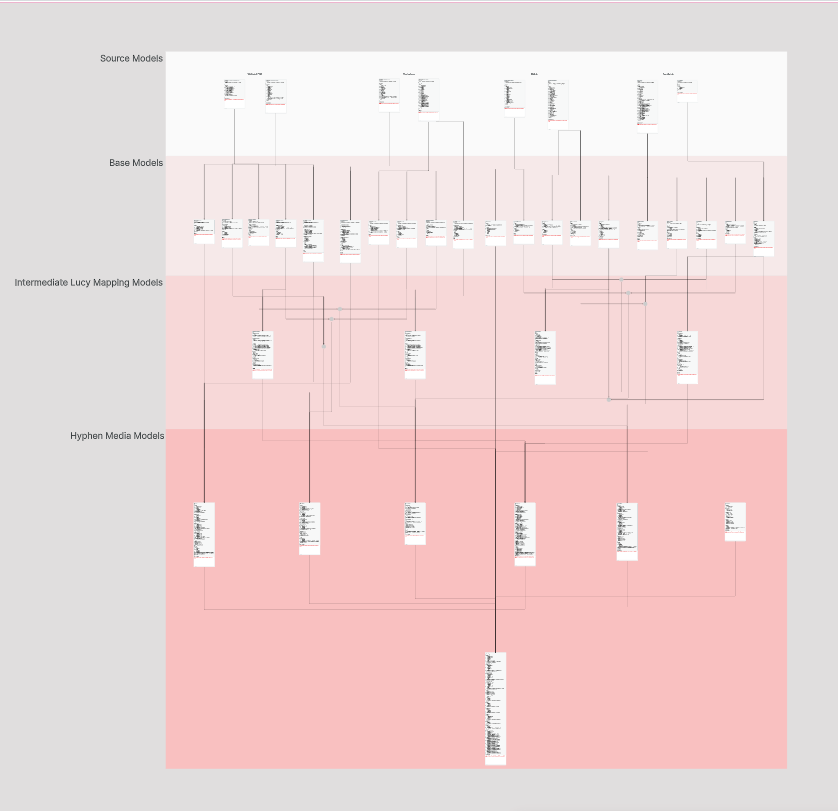
The lesson is practical: agree on definitions while the work is still easy to change. A business stakeholder can question the calculation before a finished dashboard gives it the appearance of certainty.
A bigger parent, the same commercial question
Accenture completed its acquisition on August 16, 2022, adding more than 400 people to its commerce capabilities. Financial terms were undisclosed. The deal placed The Stable inside Accenture Song, extending the setting for a business built around consumer brands and North American retail.
There is also a useful distinction in the recent history. Hetherington went on to lead Third, a separate social-commerce company formed in March 2026. That venture is not a new name for The Stable. The Stable’s current public offering continues to emphasize retail relationships, operations and digital shelf performance.
For a brand considering this model, the question is where coordination is costing money. A broader agency can make sense when retailer requirements, storefront work and reporting keep colliding. It still needs viable product margins, dependable supply and a retailer willing to participate. Adding channels creates more work as well as more opportunity. The purchase is where the shopper finishes. For the brand, it is evidence that the connected work has begun to hold together.