In the summer of 2023, Pepsi acquired an unlikely accessory: ketchup. Not ketchup to sit politely beside a can of cola. Ketchup with Pepsi in it. Tracy-Locke helped turn that small culinary provocation into Colachup, a condiment sampled at four baseball stadiums on July 4. The campaign’s award entry describes five gallons. You could fit the physical idea in a bucket. The conversation was rather harder to contain.
- Tracy-Locke connects brand storytelling with the moment someone decides to buy.
- Its customers include Pepsi, Diageo and other consumer brands with complicated retail lives.
- Colachup paired a talking point with a purchase offer; today, an AI brief generator starts the agency conversation.
This is a useful place to begin with an advertising agency founded in 1913. A company can accumulate a century of history and still struggle to explain what it does. Colachup makes the explanation unusually edible. Tracy-Locke finds something a brand wants people to believe, gives that belief a physical or digital expression, and builds a route from interest to action.
A merchant walks into an ad agency
The founding partnership contains the argument. Shelley Tracy brought a grocery merchant’s background; Raymond Locke brought advertising creativity. One understood the business of selling things. The other understood how to make people notice. Together, they established the firm that a 1938 trade report identifies as the Southwestern Advertising Agency, originally in Oklahoma City.
That pairing helps explain the agency’s continuing preoccupation with shopping. A supermarket shelf is an unforgiving editor. It compresses an elaborate brand strategy into a few seconds of attention, a price, a competing package and an immediate decision. Advertising that entertains without helping that decision leaves an awkward gap. Tracy-Locke has made that gap its territory.
There is even a punctuation mark for the partnership. In 2022, the agency restored the hyphen to its name, presenting it as a symbol of employees helping shape the company’s future. The rebrand made a modest piece of typography carry a fairly large cultural assignment: connect different kinds of people and expertise.
The ketchup had a job
Pepsi’s assignment was specific: reinforce the idea that hot dogs taste better with Pepsi. The Culinary Institute of America helped develop the condiment. Joey Chestnut supplied a recognizable advocate. Four ballparks supplied a setting where a hot dog already made sense. Nobody needed to manufacture a new eating occasion.
Campaign figures from the Gold-winning REGGIE entry. Budget is a ceiling, not an exact invoice.
The useful detail came after the joke. Pepsi also offered to reimburse a qualifying Pepsi purchase when customers bought a hot dog and Pepsi and uploaded their receipt. Someone outside the sampling locations could participate. The condiment made the proposition memorable; the offer gave that memory somewhere to go.
The REGGIE entry places the campaign below $500,000, including minimal paid media, and records a Gold award. Tracy-Locke’s case study reports more than six billion impressions. Treat that last number carefully: impressions can count repeated exposure and are not six billion individual customers. The strategic lesson survives without confusing publicity with a cash register.
The condiment made the proposition memorable; the offer gave that memory somewhere to go.THE COLACHUP MECHANISM
What can another marketer copy? Choose an occasion people already understand. Make the central idea easy to repeat. Give interested people a practical next step. But the arithmetic depends on access: recognizable talent, distribution partners and a product people can actually find. A charming stunt cannot reimburse a purchase that never becomes possible.
Detroit supplied the soul
A different Pepsi assignment shows the same commercial instinct with a different temperament. Full of Detroit Soul put local creative people and Black-owned restaurants into the work. Production collaborator Woodward Original’s films featured artists including Sydney James, Desiree Kelly and Ndubisi Okoye. The city supplied people worth paying attention to.
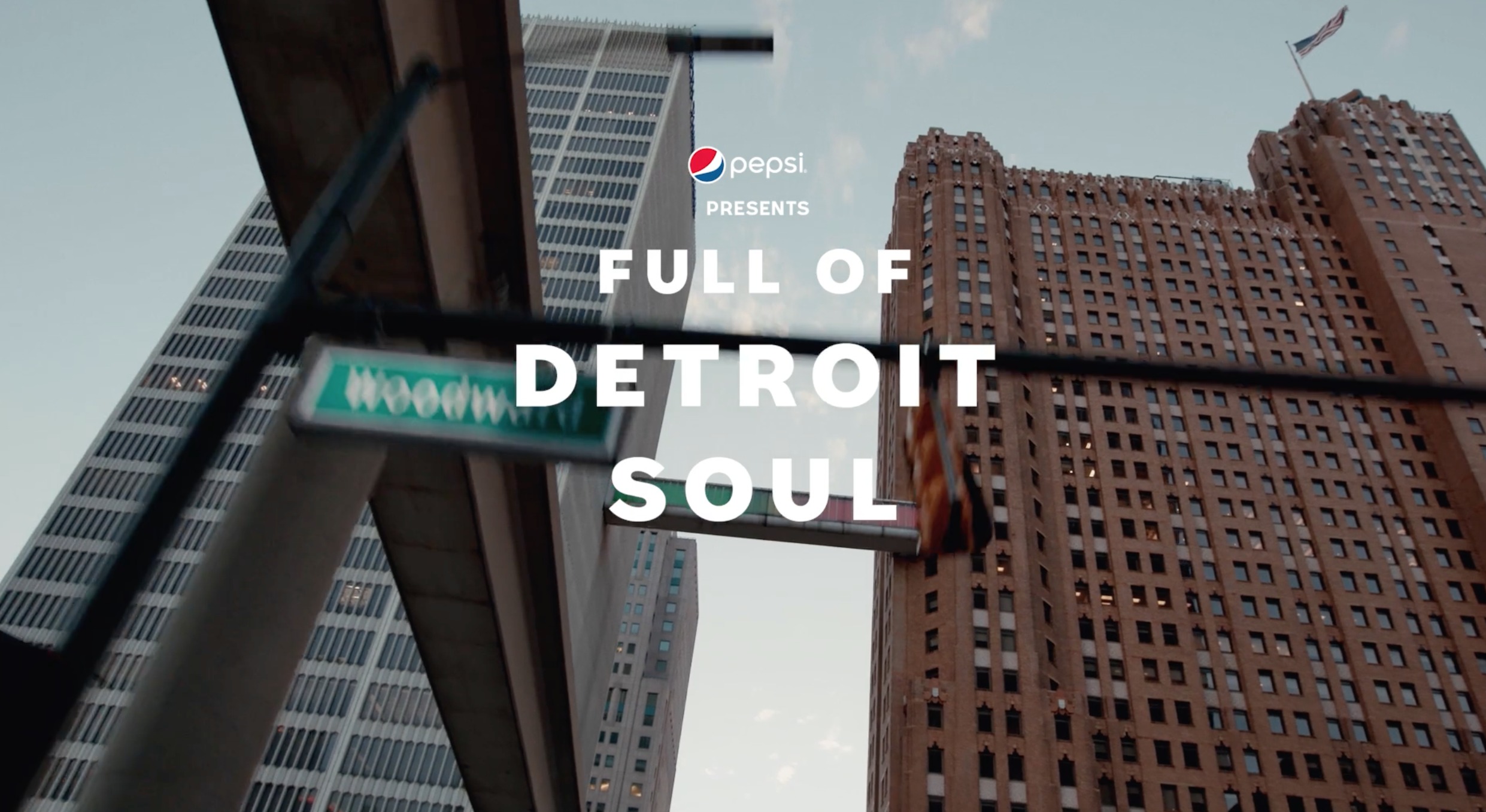
During the 2021 Detroit Black Restaurant Week program, Pepsi promoted participating restaurants on billboards and provided $15,000 to Joe Louis Southern Kitchen for flood repairs. That amount was restaurant support, not the campaign’s total budget. The distinction matters. Here, the commercial setting was a community of businesses with actual doors to walk through.
The broader campaign earned a Gold Effie in the omnichannel shopper category. Its transferable idea is participation: a local campaign gains substance when local people have something meaningful to contribute. Borrowing a city’s name is easy. Giving its restaurants customers and its artists space requires more deliberate work.
The buyer behind the brief
Tracy-Locke sells agency services to businesses: strategy, creative development, content and commerce activation. Its published client roster includes Quaker, Diageo, P&G, LEGO, Pizza Hut and Boar’s Head. These are brands navigating retailers, seasons, shopping habits and many competing ways to spend a marketing budget.
That puts the agency in the commerce and shopper marketing market, alongside alternatives such as VML, Arc Worldwide and Saatchi & Saatchi X. Its position centers on making brand ideas work inside shopping environments. The 2025 US Effies awarded Bronze to Baileys ’N Brunch, crediting Tracy-Locke and adm Group, another example of work organized around an occasion.
The portfolio becomes a prompt
Visit the agency’s current website and the opening gesture is a request for your problem. Its AI Creative Brief Generator offers a structured starting point for a business challenge. Tracy-Locke describes a workflow of intake, creation and activation, supported by AI tools and human teams.
- 01 / IntakeFrame the challenge.
- 02 / CreateDevelop the idea.
- 03 / ActivateGive it a place to work.
CEO Michael Lovegrove’s explanation is revealing. In an AdChat DFW interview, he called conventional agency websites “digital trophy cases.” The objection was to looking backward while clients needed to make decisions now. The new interface lets a prospective client begin with a task rather than a tour.
A generated brief still needs accurate facts, judgment and an executable plan. Its value is a clearer beginning. The old grocery merchant’s question remains waiting at the other end: when someone encounters this idea, what makes them buy? Even with AI at the front door, Tracy-Locke’s most useful answer may still involve a hot dog.