A grocery receipt has a short and undistinguished social life. It emerges from a machine, gets folded into a pocket, and waits to be mistaken for something useful. Chris Tiffin has built a company around giving it another appointment. At Aisle, that scrap of paper can help a brand meet the person who bought its product.
The idea came from a familiar frustration with an unfamiliar consequence. Tiffin had been selling coffee online. He understood the possibilities of a purchase that came with a customer relationship. Then there was the store: products went onto shelves, shoppers took them home, and the brand knew much less about the encounter. A sale had occurred. An introduction often had not.
That gap gives his career a particular shape. The interesting object changes from coffee to receipts, but the question stays close to the customer. Who chose the product? What persuaded them? What would give them a reason to come back? Tiffin’s answer involves a phone, a photograph and money returned to the shopper. The elegance is in how ordinary the ingredients are.
The coffee came first
Before Aisle, Tiffin worked at Super Coffee, starting as an intern and moving into direct-to-consumer growth. He helped grow its online revenue from roughly $700,000 to more than $5 million. Those are online sales figures, a distinction that matters in a story about a business selling through several kinds of checkout.
The early connection was personal and direct. He reached out to a Super Coffee founder through social media and ended up living on the founders’ couch. He had attended Loyola University Maryland; in his later account, he left college for the opportunity. A couch is a rather intimate seat from which to observe a company learning how to grow.
It also offers a different sort of business education. A classroom can arrange a decision neatly on a page. Working inside a young company means encountering the decision while customers, colleagues and tomorrow’s work are still attached. Tiffin’s subsequent business stayed close to that practical world: a specific inconvenience, experienced by someone trying to sell a specific product.
The Super Coffee connection continued after he left. Its founders became part of Aisle’s advisory and investment circle. The earlier job had supplied both a problem to pursue and people who knew the person pursuing it. In that sense, the distance between the coffee company and the receipt company was shorter than it first appeared.
A company learns to step aside
Aisle’s early consumer service was built around text messages and cash back. Its soft rollout began in April 2021. By its August launch announcement, it had paid shoppers more than $150,000. A person could send a photograph of a receipt and receive a qualifying reward through Venmo. There was no required app download to stand between the shopper and the offer.
Tiffin put the ambition plainly: “Aisle is all about making grocery store shopping more affordable, fun and connected.” Each word creates its own obligation. Affordable requires a worthwhile reward. Fun asks for an experience people tolerate or enjoy. Connected requires something to survive after the payment arrives.
The route through those obligations was untidy. Early consumer experiments used up money, and a later account of the business described a decisive request from Nuggs: could the brand use the technology itself? The request helped push Aisle toward a service brands could put their own names on. Tiffin co-founded the company with Bridget Stanton, its COO.
There is a quiet change in perspective inside that decision. A founder usually spends considerable energy making the company visible. Here, value could also come from letting another brand stand in front. The shopper would encounter an offer from a product they might want; Aisle would supply the workings that made the interaction possible.
From a rewards destination to technology a brand could use in its own voice.
Seen this way, the customer request changed where Aisle belonged in the transaction. It could help manage the relationship without insisting on being the relationship’s most conspicuous participant. For a business trying to make life easier for other businesses, knowing when to step aside can be useful product judgment.
The coupon gets a second conversation
By November 2022, Aisle’s brand-focused platform was working with 128 consumer packaged goods startups. Its customers included Swoon, Aura Bora and Haven’s Kitchen. Offers could travel through channels a brand already used, including social posts and messages to its audience. A shopper bought the product, photographed the receipt and received the qualifying reimbursement.
“We handle the backend and payments,” Tiffin explained. It is a compact description of a job with several moving parts. The brand needs a campaign. The shopper needs instructions. The purchase needs checking. The money needs to arrive. A missed step can turn a small pleasure into a customer-service conversation nobody had planned to have.
- 01Brand shares
An offer - 02Shopper sends
A receipt - 03Purchase checked
A reward - 04Brand can continue
The conversation
One purchase can become the start of a relationship.
The follow-up makes the proposition more interesting than a discount alone. Aisle could send a later message asking about repurchase. That gives a brand another opportunity to hear from a shopper after the first incentive has done its work. A free product may persuade somebody to try; the next purchase asks a harder question about whether they liked it.
For Tiffin, this places the business close to the original Super Coffee problem. Online, the brand could ask questions after a sale. In physical retail, the receipt and the message provided a way back into the discussion. The purchase remained in the store. The relationship had somewhere else to go.
In October 2022, investor Ben Jabbawy’s published Aisle memo listed monthly revenue of $38,000 at the time of investment. His argument centered on the difficulty brands faced learning about retail customers and measuring marketing. The number is an early snapshot, rather than a description of the company today. It catches Aisle while the practical argument was becoming a business.
A serious business, delivered with a wink
Tiffin’s public manner does little to suggest an attachment to solemn corporate language. One messaging feature received the name GPTiffin. In the same product announcement, he described shopper analysis across different Aisle programs. The joke and the feature sat next to each other, apparently on perfectly good terms.
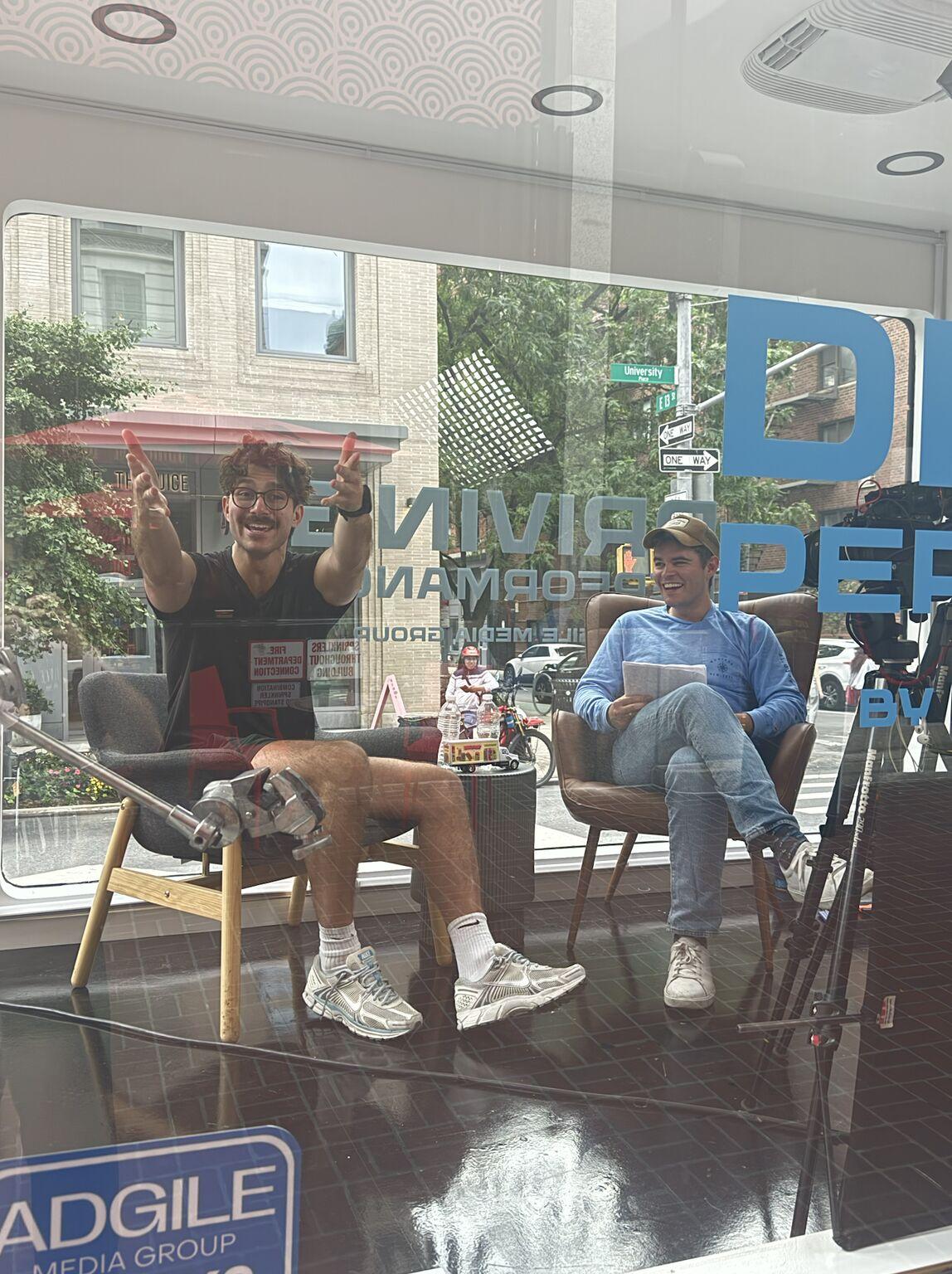
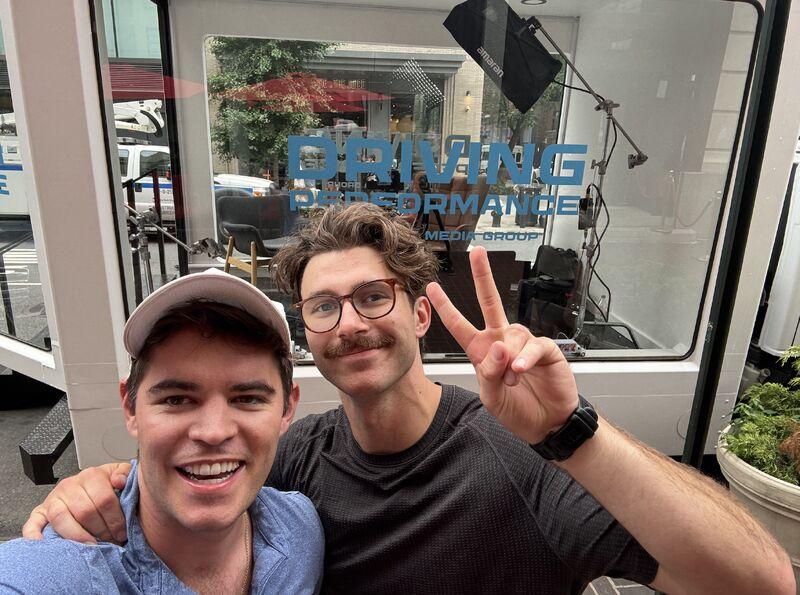
His introduction to the Driving Performance interview followed a similar pattern. He thanked Tom Shea and the Adgile team for risking their show’s credibility by inviting him. It was self-deprecation deployed before anybody else could get a turn. The accompanying photographs show him gesturing beside Shea inside the show’s glass-sided recording truck.
“We handle the backend and payments.”
Chris Tiffin, on Aisle’s role
That voice gives the technical discussion a recognizable speaker. There are plenty of necessary nouns in retail marketing: verification, attribution, retention. They can explain a service while making the person explaining it disappear. Tiffin’s naming and jokes keep interrupting that process. Even shopper analysis arrives with evidence that someone enjoyed writing the announcement.
He also participates in the more conventional settings of his industry. In June 2024, he was listed for a Summer Fancy Food Show session on retail velocity alongside Sircle Media’s Adam Brown, Elite Commerce Group’s Eric Martindale and Actual Veggies co-founder Hailey Swartz. A Rose Street Capital event paired him with August co-founder Nick Jain to discuss technology and consumer brands expanding in retail.
These are useful connections because the problem crosses several jobs. A founder needs a product to sell. A marketer needs people to notice it. Retail distribution creates the opportunity to buy. Tiffin’s work concerns the handoffs between those responsibilities, where a perfectly reasonable campaign can otherwise end with an unanswered question about what happened next.
After the reward
In January 2026, the Driving Performance episode described Aisle as serving nearly 750 brands and having facilitated more than $20 million in shopper rewards. Those are reported company milestones. More revealing for the shape of the business was the discussion around newer consumer tools, including a store locator and a virtual punch-card-style app.
The company’s website now links to its shopper app while continuing to offer brands campaigns built around text messages. The two can coexist: different ways into the same practical sequence of finding a product, choosing it and having a reason to return. The business has continued adjusting the experience around that sequence.
Tiffin’s story leaves the reader with a small, useful adjustment of attention. The checkout line looks like an ending when the task is to make a sale. For a brand hoping to understand its customers, there is still work to do. Somewhere in a pocket, the receipt is waiting. Tiffin has given it a reason to stay out of the bin.