At his tenth-year Wharton reunion in 2003, Perry Steiner had a compact explanation for the appeal of his working life: “I have the best of both worlds - banking and management.” He had already been president of an internet company and returned to private equity. Some people choose a side of the table. Steiner seemed to enjoy having a reason to walk around it.
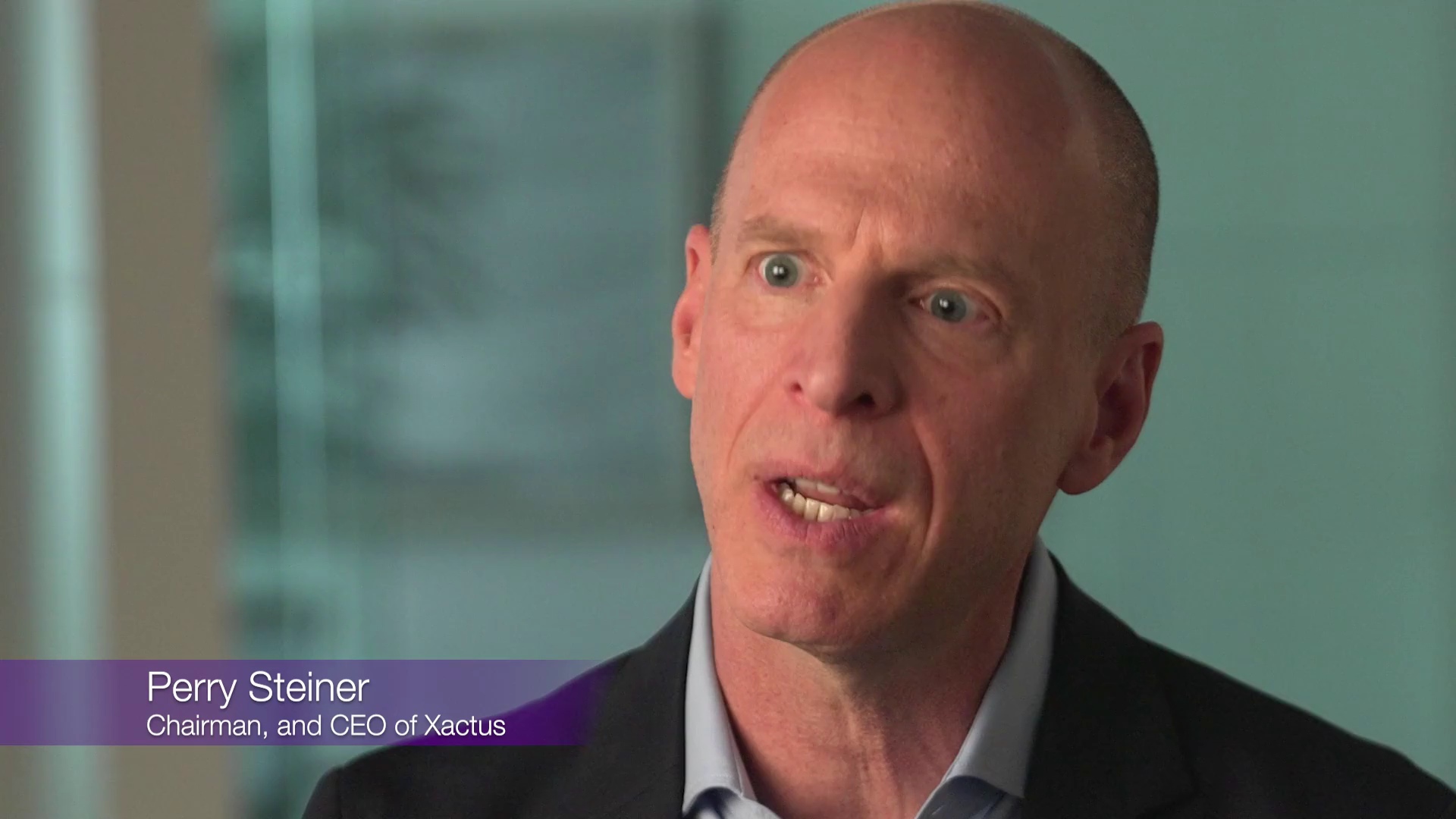
More than two decades later, he is chairman and CEO of Xactus, the mortgage verification business he began assembling with an acquisition in 2018. The job brings those two worlds into the same room. Buying a company requires a view of what its parts might become. Running it requires the parts to cooperate on Monday morning.
His career has moved through e-commerce, private equity, business information, and mortgage data. The industries change; the recurring task is combination. At Xactus, that task has included giving established businesses a shared identity and connecting capabilities that lenders use to check the information behind a loan. The paperwork has paperwork.
A detour through the internet
Steiner studied history at the University of Michigan and earned his MBA at Wharton. His early career took him to Goldman Sachs, TCW Capital, and Wasserstein Perella Ventures. Then came Digital River, the Minneapolis e-commerce company where he became president in 1998. He later called that chapter a “wild Internet ride.” The phrase has the advantage of requiring very little explanation to anyone who remembers internet stocks.
He helped lead Digital River through its IPO and the acquisition of eight competitors. By the end of February 2001, he was leaving the presidency to return to private equity at Arlington Capital Partners, while remaining on the board. The move mattered: he had experienced the operating side of a technology company before resuming the work of investing in businesses.
There is a useful restraint to keeping those chapters in sequence. Digital River’s later scale belongs to the company’s longer history, including the years after his presidency. His own next assignment was in Washington’s private equity world. He could bring operating experience to it without pretending that an executive’s departure stops the corporate clock.
“I have the best of both worlds - banking and management.”
Perry Steiner, 2003
The investor who kept an operating vocabulary
At Arlington, the work included companies whose business was organizing information and audiences. Virgo is a revealing example. Arlington acquired it in 2008 and sold it to Informa in August 2014. Its activities included business publications, websites, conferences, and trade shows: different ways of bringing specialized knowledge to people willing to pay for it.
Discussing that sale, Steiner described work with management to accelerate digital media, increase online revenue by more than 400 percent, and nearly double trade-show revenue. These were figures about what happened inside the business during the investment. They give the transaction a little texture. A sale price can conclude a story while saying remarkably little about the work that preceded it.
That episode helps connect his investing years to Xactus without making the two businesses interchangeable. Business information and mortgage verification serve different customers and purposes. Both, however, make the arrangement and delivery of information commercially consequential. Steiner’s record repeatedly places him near that less theatrical machinery, where the usefulness of the service matters more than whether the customer admires the corporate structure.
One owner, several histories
In 2018, Steiner acquired CIS, the starting point for the modern Xactus business. Additional combinations brought established credit and verification providers into the group. UniversalCIS | Credit Plus adopted the Xactus name in March 2022. That distinction matters: the modern enterprise was being assembled from businesses with histories of their own.
The names in the combination included Credit Plus, Universal Credit Services, CIS Credit Solutions, Avantus, DataFacts Lending Solutions, and SharperLending. At the rebrand, the business described a customer base of more than 6,500, spanning banks, non-bank originators, credit unions, and mortgage brokers. A customer list of that breadth creates plenty of reasons to keep things working while changing how the company works.
Inside the group, there was another difficulty. Teams still identified with their earlier organizations. A common owner had arrived before a common identity. The branding assignment therefore had an internal audience as well as an external one: employees needed a name and direction they could share. Purple had an organizational job to do.
Steiner described the purpose as uniting the teams and signaling an intention to improve mortgage verification. The name nodded toward precision. The practical test would be whether the resulting company could make its combined capabilities easier to use. A new name is a quick change for a business card. For software, processes, and colleagues, the timetable tends to be less obliging.
Efficiency gets its hearing in a slow market
The rebrand arrived in a mortgage business exposed to the lending cycle. By August 2022, Steiner was discussing falling industry volumes and their effect on Xactus. He also made a straightforward case for technology investment: lenders facing a slower market were looking for ways to save money and improve their workflows.
“The entire premise of what we’re doing is bringing efficiency to the existing mortgage process,” he said. That is an unusually practical ambition for a sector fond of grand technology language. A lender still needs the information. The opportunity lies in how it gets requested, delivered, and used.
Xactus360 gave that work a platform. Customers could connect through their own loan origination systems or access a portal, depending on their operations. The distinction is useful. A large institution and a smaller brokerage can require the same type of information while needing very different ways to obtain it. Integration has to accommodate the customer’s business, too.
The later expansion into data products added another use for the network. In October 2025, Xactus launched its Mortgage Intent Index, built from anonymized, aggregated credit-pull data. The aim was to identify borrower activity early enough to help lenders plan staffing, pricing, and marketing. Information collected during verification could also illuminate the wider flow of demand.
The friends who predate the resume
Steiner’s personal recollections are warmer than the acquisition vocabulary. In a 2011 radio conversation about fathers and boys’ friendships, he said his two closest friends were people he had known growing up. He described being comfortable showing affection toward them, including hugging when they met. His father and grandfather had greeted him affectionately as a child, even when he noticed that other families did things differently.
He also recalled being raised by his mother, with his father and grandfather living nearby and remaining important influences. Shopping and cooking were shared responsibilities at home. As he grew older, his mother gave him considerable freedom alongside responsibility. These are his memories of childhood, rather than a management theory retrofitted to explain a balance sheet.
His connection to public radio also extends to service on the NPR Foundation Board of Trustees. The foundation supports NPR financially, including through stewardship of its assets. That is a different setting from a commercial acquisition, with a different purpose. It adds a civic institution to a career largely described through companies and investments. The board role belongs alongside the radio conversation without turning either into a tidy explanation of the other.
They do offer a more complete view of the person. The executive who works on combinations also remembers who has stayed in his life. At that Wharton reunion, reconnecting with classmates was the attraction. Long before another company name appeared on his resume, old relationships were already worth making time for.
Another acquisition, another decision about the pieces
Recognition followed the Xactus build. The company ranked No. 288 on the 2022 Inc. 5000, and Steiner became an EY Entrepreneur Of The Year regional winner in 2025. His response opened with shared credit: “This is truly a Xactus award.” The individual honor was an occasion to put the team into the sentence.
In 2026, the assembly continued. February brought the acquisition of Baleen Solutions, whose technology analyzes self-employed income using tax documents. Xactus said the capability would be offered as Income CalculationX. It addressed a specific complication in lending: income that requires more interpretation than reading a conventional wage record.
In May, Xactus acquired Mortgage Credit Link, an ordering and fulfillment hub, and introduced XedaLink. This addition was set up to operate as an independent subsidiary, preserving continuity for its clients and partners while receiving investment and infrastructure from Xactus. The distinction is interesting alongside the earlier effort to create a shared brand: different additions can call for different operating arrangements.
The company also appointed a chief AI architect in May and announced expanded credit-score options in September. Those developments put people, technology, and lender choice back on the agenda. The larger business still has to answer a series of small operational questions: which capability belongs where, who uses it, and how does it fit the work already underway?
Steiner’s 2003 description has held up rather well. Banking supplies the means to put businesses together. Management inherits the calendar, the systems, and the people. At Xactus, he continues to have appointments in both worlds.