A $300 credit limit makes an awkward sort of invitation. It can buy groceries, but a modest shopping trip can also consume a large share of the available credit. For someone rebuilding a financial record, the card is both a tool and a test. Mission Lane operates inside that contradiction: how do you give someone room to demonstrate reliability without giving them more debt than they can manage?
- Credit-building cards, plus cash-back cards for good credit.
- Small starting limits, bureau reporting and automatic reviews.
- A debit experiment closed. A proposed credit card bank is next.
The score is a starting point
In the application for its proposed bank, Mission Lane supplied a revealing detail: approximately 95% of its customers had VantageScores between 550 and 700. That range gives its mission some boundaries. These are people whose financial histories can make ordinary borrowing difficult, even when their circumstances are improving.
The company says it uses data and technology to look beyond a score. Its expertise is underwriting: deciding which applicants can handle credit, on what terms, and with how much exposure. Machine learning helps it make those decisions. The claim deserves a precise reading. More information may improve a lending decision; it cannot make repayment risk disappear.
A bank pedigree, a different customer
Mission Lane became independent in December 2018 when LendUp separated its credit card business. It arrived with a portfolio, intellectual property, a technology platform and a team. The original card products were called Arrow and L Card. This was a business getting its own house keys.
Nigel Morris, the Capital One co-founder identified as a Mission Lane co-founder, became its chairman. Shane Holdaway, formerly head of Barclays’ US consumer bank, became CEO in 2019. The company announced more than $200 million in equity and a $300 million debt facility that September. Equity supported the enterprise; borrowing capacity helped finance the lending. A financing headline can conceal two very different jobs.
“Clarity powers confidence”One of Mission Lane’s published beliefs
The promise was understandable cards for people poorly served by existing options. That placed Mission Lane among unsecured credit specialists such as Credit One and Avant, while secured cards offered another route. Its distinction rests on the combination of risk selection, understandable terms and service. An app alone would be a thin advantage.
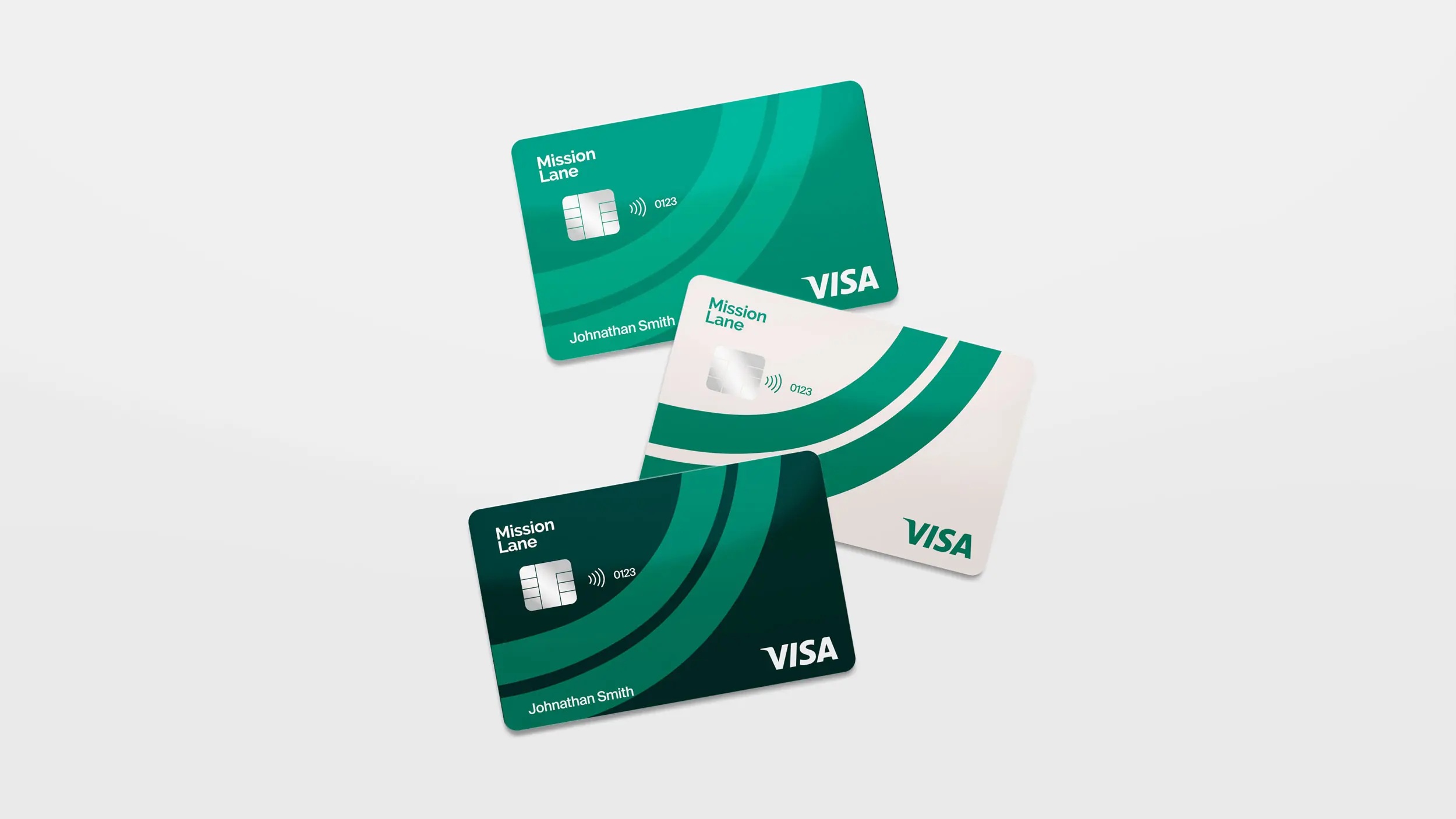
Four cards, four starting points
Today’s range is broader than the familiar second-chance card. Green Line is unsecured, with typical starting limits of $300 to $2,000. Secured Visa asks for a refundable deposit of $200 to $1,000, which becomes the initial limit. Both report activity to the three major credit bureaus, giving repayment behavior somewhere to register.
Silver Line and Gold Line target good-credit customers. Silver advertises 1.5% cash back on purchases. Gold advertises 3% on gas, travel and dining, and 1% elsewhere. Both advertise no annual fee and starting limits up to $3,000. Having these products in the same shop suggests a business interested in more than the first rung of the ladder.
The costs require more attention than the colors. Secured has no annual fee; Green’s fee depends on the offer. A September 2026 review reported variable purchase APRs across the range of 19.99% to 33.99%. At the upper end, a steady $1,000 balance would accrue roughly $28 in one month using APR divided by twelve. Actual charges depend on daily balances and account terms. Rewards can disappear into that arithmetic quickly.
Prequalification uses a soft inquiry. Mission Lane says a hard inquiry happens when someone accepts the offer, submits an application and is approved. Its app handles payments, balances, transactions and credit-score access. Automatic credit line reviews can begin in as few as seven months. A review offers consideration, not a guaranteed increase.
The debit road ended here
There was a wider ambition. In May 2021, Mission Lane acquired Honeydue, the couples-finance platform, to strengthen digital banking capabilities. The deal’s price was undisclosed. But Mission Money debit accounts closed on August 31, 2023. The closure notice explicitly separated that program from the continuing credit card business.
That sequence limits any tidy story of uninterrupted expansion. Buying capabilities did not make every adjacent product permanent. The practical lesson for another operator is to distinguish the customer problem that already supports a business from the products that merely sit nearby.
Help with the bill behind the bill
One expansion addressed the pressure behind repayment. In 2022, Mission Lane partnered with SpringFour to connect customers and the public with assistance for food, utilities, rent and other expenses. Its launch described more than 20,000 government and nonprofit resources in 625 cities. The useful insight: a credit card bill competes with the electricity bill.
That is a concrete idea others can copy: make relevant assistance easy to find. Internally, Mission Lane describes a remote-first culture organized around truth-seeking, responsibility, unity, stretching and transformation. The meaningful test of those values is whether they produce understandable decisions and useful help when a payment becomes difficult.
The next chapter costs real money
Brandon Black became CEO in February 2024, when Mission Lane reported profitability and a portfolio exceeding $2 billion. In September 2026, its proposed credit card bank received preliminary conditional OCC approval. The plan would eventually move issuance from TAB Bank and WebBank into its own bank.
Initial paid-in capital, net of organizational and preopening expenses. A regulatory requirement, not the total project cost.
Final approval remains pending. This charter covers credit cards, not everyday checking accounts. For customers, the older test remains: can the balance stay manageable and the payments stay current? For Mission Lane, the test grows larger: can it give more people a useful next chapter while keeping the lending sound?