Cynthia Chen spent the night of her eighteenth birthday applying for a credit card. It is an unusually practical way to mark adulthood. Most birthday presents arrive with wrapping paper; this one came with an application and the prospect of a payment schedule. For Chen, who had arrived in America at seventeen, getting approved meant gaining access to something she had barely known existed.
She had grown up in Beijing, where her family managed a limited income carefully. Major purchases could mean borrowing from relatives or friends. Their reliability was visible to people who knew them. An American credit file, by contrast, required a different kind of evidence. At Columbia University, Chen watched classmates use credit cards and became fascinated by the machinery behind an ordinary purchase.
That curiosity survived graduation, a succession of finance jobs, a move across the country and several startups. Today she is the co-founder and CEO of Kikoff, a San Francisco company that helps Americans build credit. The connection between the student and the executive is unusually direct: both are interested in how a person gets a financial system to acknowledge that she can be trusted.
Learning which doors the numbers open
Chen came to Columbia in 2000 on a full scholarship and studied economics and operations research. She also earned a master's in mathematics of finance there. Her education supplied a vocabulary for problems that already interested her. Operations research concerns decisions under constraints; money had supplied plenty of constraints before she encountered the academic term.
Her early career kept her close to credit. She joined Capital One after college, working in Richmond, Virginia, before moving back to New York for consulting work at Deloitte. She wanted city life and travel. Several years later, with a child and less appetite for constant travel, she returned to Capital One's commercial and small-business banking group.
OnDeck then recruited her to lead risk management. The attraction was the chance to help small businesses obtain capital through a younger financial company. She was there when OnDeck went public in December 2014. In 2016, she moved to San Francisco to become chief risk officer at LendingHome, now called Kiavi. Joining an earlier-stage business was part of the point: she wanted to understand how it worked.
After leaving LendingHome in 2017, Chen spent time investing and advising, then joined Mike Cagney in starting Figure. She was its founding chief risk officer and later chief revenue officer. Risk and revenue can look like rival departments from a distance. Chen had now been responsible for both: deciding what a business could safely do and helping it find customers willing to pay.
The CEO who kept saying no
Chen did not spend those years plotting her eventual corner office. Asked earlier in her career whether she wanted to become a CEO, she repeatedly declined. She had watched the job at close range and understood its demands. Entrepreneurship had acquired no romantic haze through familiarity.
“No. I never really thought about being a CEO.”
Cynthia Chen, recalling her earlier ambitions
Then she found a problem she wanted someone to solve. Existing credit-building services seemed expensive and awkward to use. She wanted a more accessible starting point for people whose financial lives were restricted by weak or missing credit histories. When she could not find someone else to take the idea forward, she became the person responsible for it.
Before raising money, she tested interest with a survey promoted through Facebook advertising. The experiment brought responses from people who wanted help understanding and improving their credit. Among the audience were millennials carrying substantial student debt. It was an unglamorous beginning: a question, an advertisement and evidence that strangers cared about the answer. A survey has the useful advantage of costing less than a mistaken company.
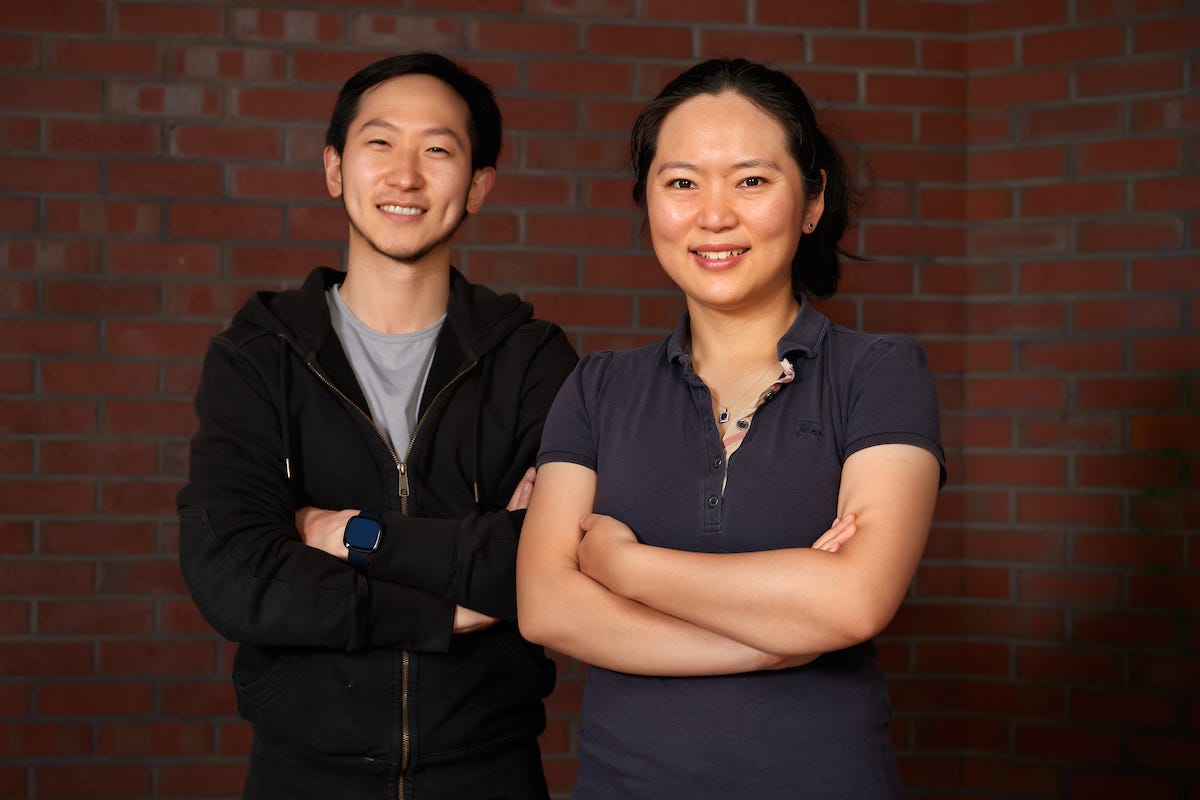
Chen and Christophe Chong started Kikoff in November 2019. Chong brought experience at Lime, Square and Facebook. A mutual connection introduced them; they had not previously worked together. In the fall of that year, they described their plans over coffee to investor Ansaf Kareem. The conversation centered on establishing credit as the beginning of a longer relationship with a customer.
A small subscription, a consequential habit
Kikoff's first product was free. It combined a small loan for building credit with short educational material. Chen says the company gathered tens of thousands of active users before moving toward a subscription model. By her account, about forty percent converted when the paid offering arrived. She credits the goodwill earned while the company was serving them for free.
The business became public-facing in a larger way in June 2021, alongside a $30 million Series B led by Portage Ventures. Its announced financing totaled $42.5 million. Backers included Lightspeed, as well as Stephen Curry, Melissa Smith and Teresa Ressel. The investor list mixed venture capital, corporate finance experience and a basketball player whose work is rather easier to watch than credit reporting.
The underlying product was deliberately ordinary. Customers made purchases through Kikoff's store and built a record of payments reported to credit bureaus. The available products have expanded since then, including rent and bill reporting. The recurring idea is to give the system additional evidence of a person's payment behavior.
Credit scores are not awarded for determination. They depend on recorded information. That distinction helps explain why Chen's experience matters: she understands the distance between a responsible person and a file that demonstrates responsibility. Kikoff sells ways to help close that distance. Its basic credit service currently starts at $5 a month on a twelve-month plan. Outcomes vary, and missed payments can damage credit.
Making the phone call
The next problem involved existing debt. Kikoff developed a service in which people negotiated with lenders and collectors on customers' behalf. It then used experience from that work to train an AI voice agent. The company publicly announced its AI Debt Negotiator in April 2025.
The mechanics matter more than the novelty. An agent contacts a creditor, seeks different terms and brings any offer back to the customer. The customer decides whether to accept. In Chen's account, automating part of this labor reduces the expense of a service that would otherwise require considerably more human time. The business case begins with the cost of making a call.
THE CALL, SIMPLIFIED
- ReviewIdentify a debt to negotiate
- NegotiateAgent contacts the creditor
- DecideCustomer reviews any offer
An offer depends on the creditor and individual circumstances.
She has described keeping the feature complimentary for eligible Kikoff users even though operating it costs money. Her position is that every feature need not generate its own profit. That argument depends on the wider company being able to sustain the work. By mid-2025, Chen said Kikoff was profitable and had not raised additional capital since its Series B.
Financial independence is a recurring concern for her. She links the company's spending discipline to the freedom to make longer-term choices for customers. It is a recognizable extension of the teenager who wanted her own credit history: having fewer dependencies can create more room to decide.
The experience she stopped editing out
Chen's independence has also required revision. Arriving in the United States alone encouraged self-reliance; running a company required learning to share responsibility. She says she had to stop treating fundraising, decisions and execution as burdens she should carry by herself. At weekly all-hands meetings, she publicly recognizes employees' work. The gesture is small enough to repeat.
There was another revision. Early in fundraising, she concealed that she was a single mother after being warned investors might consider it a distraction. She now regrets doing so. Motherhood, she says, helped her prioritize, make calculated decisions and focus on results. The supposed complication was also part of her preparation for the job.
“You don’t need to be a perfect leader.”
Cynthia Chen
Her stated ambition includes encouraging more women, particularly mothers and single mothers, to lead and start businesses. It gives the career story a second audience beyond customers and investors. Someone weighing whether her circumstances disqualify her from a role may recognize the question Chen once tried to avoid discussing.
From the app to the plumbing
By April 2026, Kikoff said its 2025 revenue had exceeded $300 million, more than doubling year over year while it remained profitable. It appointed John Kaelle chief financial officer and Robert Mahnke chief legal officer. These were company-reported results, accompanied by hires suited to a larger operation.
Revenue reported by the company in April 2026, alongside continued profitability.
Growth has also brought a public disagreement over control. In 2026, Chong sought company records through Delaware's Court of Chancery, alleging misconduct involving governance and secondary share sales. Kikoff denied the core allegations and agreed to provide several requested documents. Those allegations are disputed claims. The disagreement adds a less comfortable dimension to the question of who gets to decide a company's future.
In July 2026, Kikoff acquired technology, customer relationships and other assets from The Service Bureau, whose platform served more than a thousand businesses. Its employees were to join Kikoff. The deal expanded Kikoff Enterprise, launched in 2025, into a broader business providing credit-reporting and related infrastructure to other organizations.
Chen's work now reaches into the machinery behind the file as well as the customer's experience in front of it. The student applying for a card needed the system to register her first few payments. The executive is building products for people making those payments and tools for organizations recording them. A birthday application turned out to contain a fairly durable question: how does someone get a fair chance to begin?