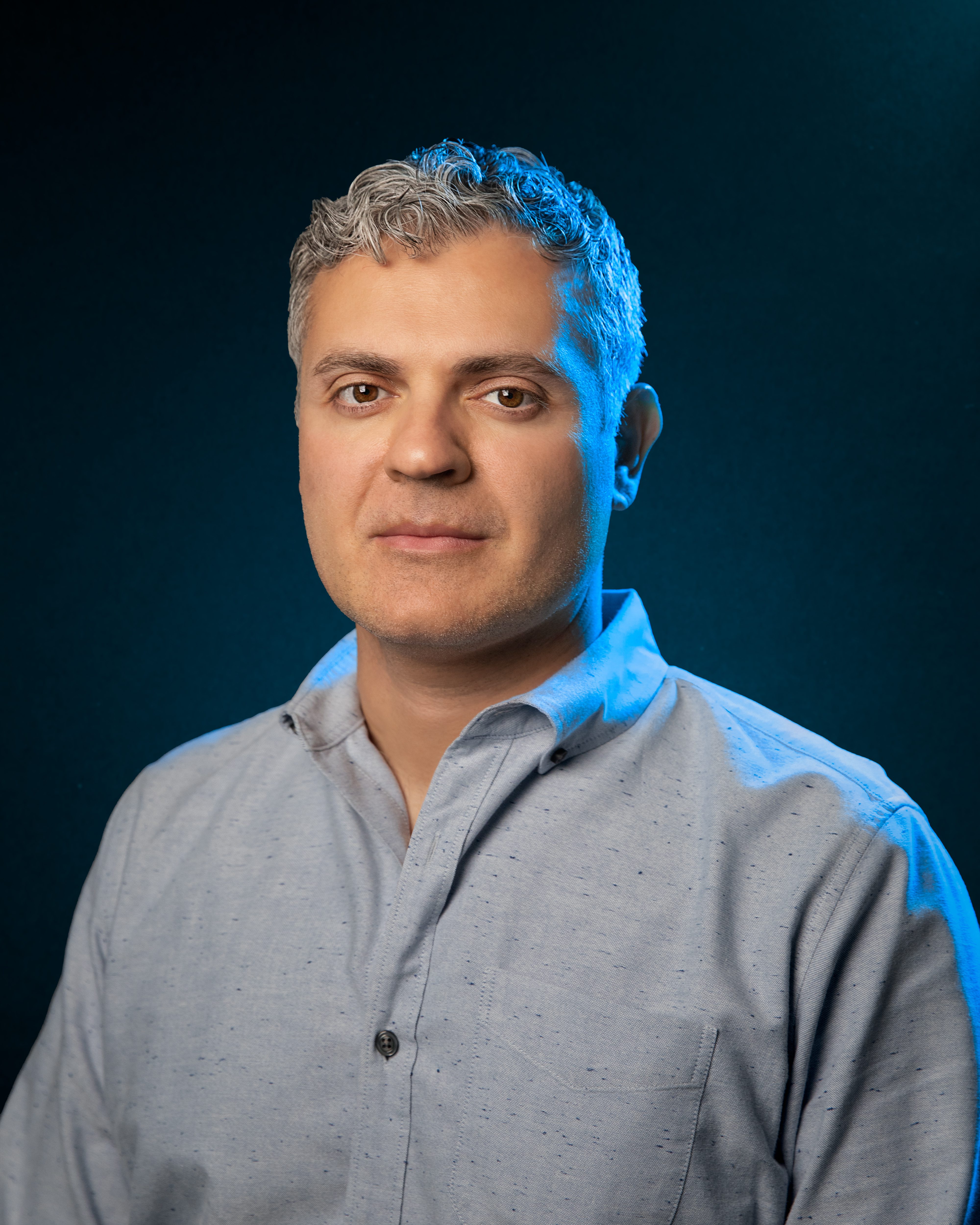
He builds banks for the people the banks left out. His latest, StellarFi, turns the rent and the Netflix bill into a rising credit score - no debt required.
The one-line thesis Lamine Zarrad has spent a decade engineering
StellarFi runs on a deceptively small idea: your bills are already proof that you pay your way. Rent, the gym, the streaming subscriptions, the phone plan - month after month of on-time payments that, until recently, vanished into the void without ever touching your credit file. Zarrad's company plugs that gap. Members route everyday bills through StellarFi, and StellarFi reports those payments to all three major credit bureaus. The result reads like a magic trick to people who have spent years stuck behind a thin or empty credit history: a reported average jump of 26 points in the first month.
The target market is not niche. Roughly 132 million Americans carry low credit, no credit, or a file too thin to score - which is another way of saying they pay full price for being poor, locked out of the apartments, loans, and rates that a three-digit number quietly governs. Zarrad describes the work in the bluntest possible terms: disrupting the US poverty cycle. He is not selling a budgeting app with a wellness gloss. He is trying to pry open a system he once helped police from the inside.
That inside view matters. Before he was a founder, Zarrad was a National Bank Examiner at the Office of the Comptroller of the Currency, the federal agency that supervises national banks. He has read the rulebook from the regulator's chair, which is a strange and useful place to start a fintech career. Most founders learn compliance the hard way, after they have already shipped. Zarrad started with it.
To understand why Zarrad reaches for the phrase “building a company out of nothing,” you have to go back to a building in Moscow that was never meant for living in. He was born in Baku, Azerbaijan, during the Soviet era - his mother Azerbaijani with Armenian heritage, his father Tunisian, a lineage that put the family directly in the path of the ethnic conflict that erupted between Azerbaijan and Armenia. Around age ten, they fled.
Moscow was supposed to be refuge. For six years it was a dilapidated chemical laboratory building, with no documentation and no legal way to work. The family improvised an economy out of nothing: his mother made meat pies to sell, and as a teenager Zarrad hawked pirated VHS tapes. Eventually the family threaded its way across seven countries to reach the United States, settling in Georgia after his mother married an American who had been working with a refugee-support mission. He finished high school there. He got a green card.
Then he did something that surprises people who only know the fintech version of him: he joined the Marine Corps, only a few years removed from being an undocumented teenager in a foreign capital. Military service threads through his story alongside an association with the US Army's Long Range Surveillance unit. Later came a master's degree in public policy from the University of Texas at Austin - the city he would eventually plant three companies in.
Zarrad does not treat any of this as a sob story to be survived and forgotten. He treats it as training. “Refugees make really good entrepreneurs,” he has said, “because they are forced to take those risks.” The chemical lab was an MVP. The meat pies were a go-to-market. He learned the founder's core competency - improvising survival when the safety net is fiction - long before he learned the word for it.
Plenty of founders chase whatever is frictionless. Zarrad does the opposite - he keeps wandering into regulated finance, the part of the industry where lawyers outnumber the laptops. His career began in 2008 in financial services at Merrill Lynch, then took the unusual turn into the public sector at the OCC. The startups followed, and each one picked a fight with an institution that would rather not be bothered.
First came Tokken, which set out to give legal cannabis businesses a secure way to move money between banks - a banking problem so politically radioactive that most of the industry simply refused to touch it. Then Joust, building business banking for the self-employed and freelancers, the people whose lumpy income makes traditional banks nervous. Joust was acquired by ZenBusiness in 2020, where Zarrad ran the product organization through two fundraises as the company became one of Austin's rare unicorns.
StellarFi, founded in 2021, is the third act and the most personal one. Where Tokken and Joust served businesses the system ignored, StellarFi serves people the system ignored - and it does so with a model that refuses the usual fintech temptation to profit from debt. The company has gone as far as purchasing and forgiving roughly $50 million in consumer debt. In a sector that often dresses up payday-adjacent products in friendly fonts, that is a genuinely contrarian stance.
His hiring philosophy is cut from the same cloth, and he states it plainly: “Hire people that represent the borrowers you want to include.” The team he has built reflects it - headquartered in Austin with people spread across the Bay Area, Chicago, and Miami. Inclusion, in his telling, is not a marketing layer applied at the end. It is a staffing decision made at the beginning.
The genius of StellarFi, if you want to call it that, is that it does not ask people to behave differently. It asks the credit system to notice behavior that was already happening. Members designate recurring bills - a streaming subscription, a gym membership, a utility - and StellarFi pays them, then reports the on-time payment to the bureaus on the member's behalf. There is no loan to qualify for, no security deposit to scrape together, no new debt to service. The thing being financed is, in effect, your own reliability.
That distinction is the whole game. The conventional path to building credit runs through products that can quietly punish the people using them: secured cards, credit-builder loans, store financing - all of which work, and all of which can tip into the very debt cycle they claim to cure. Zarrad's bet is that the cleanest way to build credit is to report the payments people are already making and would make anyway. The reported average of a 26-point lift in the first month is the proof the bet pays off.
He defines the problem with the vocabulary of someone who has lived on the wrong side of it. Being “unbanked,” he explains, simply means a person does not have accounts with a financial institution - a clinical phrase for a condition that quietly taxes every other part of a life. Inclusion, then, is not charity. It is plumbing. And Zarrad has spent his career as the kind of plumber who keeps choosing the buildings nobody else will service.
Ask Zarrad for the line he lives by and he reaches for Les Brown: “We don't fail because we aim too high and miss. We fail because we aim too low and hit.” It is a tidy summary of a man who keeps choosing the harder market on purpose. His ambitions run past quarterly metrics - he has described wanting a pro-sustainability political movement built around institutional and ecological longevity, the kind of thinking measured in centuries rather than funding rounds.
Asked who he would want breakfast with, his answer was not a celebrity or a fellow founder. It was Treasury Secretary Janet Yellen, so he could press the case for reforming an American financial system he considers structurally exclusionary. That is the tell. For Zarrad, StellarFi is a single instrument in a much larger argument about who gets to participate in the economy at all - and the argument, not the app, is the point.
“Hire people that represent the borrowers you want to include.”