credit-cards
(18)
Fibe outgrew payday.
EarlySalary began with the awkward gap between a bill and a paycheck. Fibe now finances hospital visits, classrooms and everyday purchases - while personal loans still pay most of the bills.

CorServ Built the Credit-Card Business Small Banks Were Told to Give Away
For years, a community bank had two bad choices: hand its card customers to a bigger issuer or build an expensive operation from scratch. CorServ found a third door - and more than 40 financial institutions have walked through it.

John Ta Turned 30 Credit Cards Into a Compliance Company
Before Affil.ai, John Ta taught personal finance, wrote more than 200 travel-and-credit-card articles, and kept a wallet with 30 cards. The odd collection became field research for a stubborn problem: nobody could reliably watch what financial affiliates published.

Gregory Feniak Is Making the Credit Card Feel Local Again
The Calgary payments executive has spent two decades turning back-office complexity into products credit-union members can actually use. His latest chapter carries the same collaborative instinct from the card network into the community.
Capital One Built a Bank Like Software. Now It Has a Payment Network.
The credit-card upstart spent three decades turning data into a bank. With Discover's network and Brex's software now inside the company, its next test is whether one institution can make lending, payments and financial tools feel like a single product.
Gene Hall Runs Marketing Where the Math Never Sleeps
Inside Capital One, one of America's most data-obsessed banks, a divisional CMO answers a harder question than most marketers ever face: can you prove it worked?
The $4.6 Trillion Bank That Runs on Software
It moves trillions of dollars a day, employs more engineers than most tech companies, and answers to one of the longest-serving CEOs on Wall Street. Here is how a 227-year-old bank became a software business that happens to hold your deposits.
Citi
Citi’s signature product is not a card or an app. It is a 214-year-old network that moves nearly $6 trillion a day - now being rebuilt for an always-on financial world.

American Express
American Express began by moving parcels, gold and cash. Today, its most valuable cargo may be the information flowing between cardholders, merchants and a network it controls end to end.

Pointwise
Pointwise is a New York fintech that tells you which credit cards to get and when, so you stop leaving rewards on the table. Founded by Ken Book and Ben Litvin and backed by Y Combinator (W23), the free app connects to a user's existing cards, analyzes their real spending, and runs it against a live database of nearly 4,000 credit cards to build a personalized, math-driven plan for maximizing cash back, points, and sign-up bonuses over time.

Jirnexu
Jirnexu is a Kuala Lumpur-based fintech company that runs RinggitPlus, Malaysia's largest financial-product comparison platform, and builds XpressApply, a digital application and CRM stack that banks and insurers use to acquire and onboard customers online. It pairs a consumer-facing comparison site with white-label technology, positioning itself as a full-stack customer-acquisition and lifecycle-management provider for financial institutions across Southeast Asia.

NymCard
NymCard is an Abu Dhabi-based embedded finance and payments infrastructure company that lets banks, fintechs, telecoms and enterprises launch and run card programs, lending and money-movement products through a single API-first platform called nCore. Founded in 2018 by Omar Onsi, it owns its issuing and switching technology rather than licensing it, is licensed by the Central Bank of the UAE, and is a certified partner of Visa and Mastercard across the Middle East, North Africa and Pakistan.
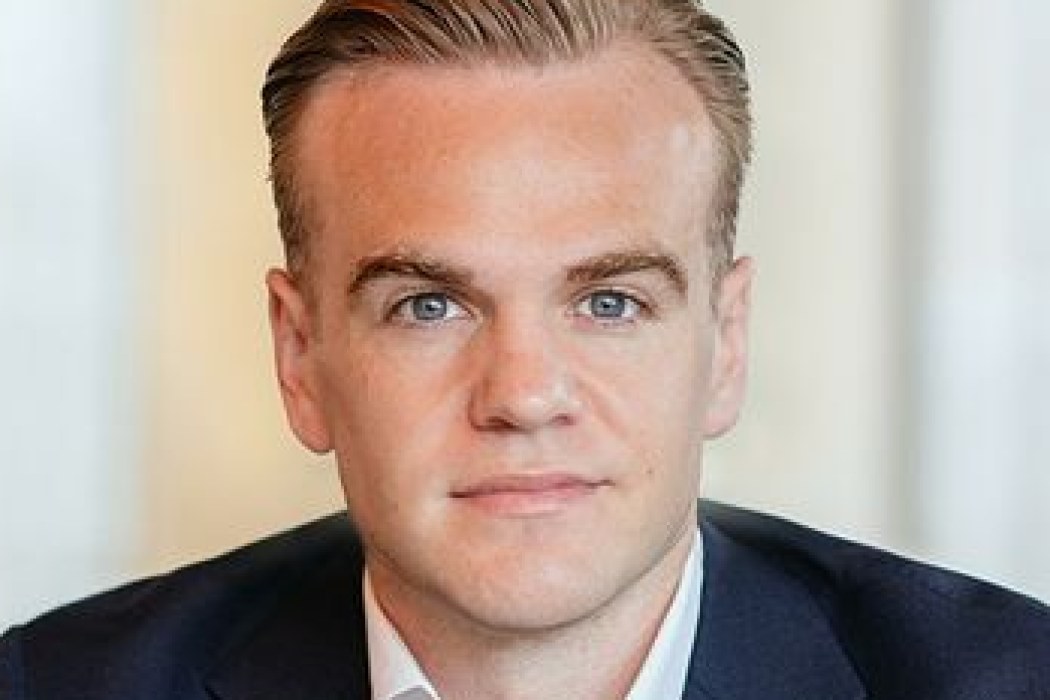
Daragh Murphy
Daragh Murphy is the Irish-born co-founder and CEO of Imprint, a New York fintech that builds co-branded credit card and loyalty programs for consumer brands like Rakuten, Booking.com, Turkish Airlines and H-E-B. A former corporate lawyer and WeWork operator, he started Imprint in 2020 and grew it to unicorn status, reaching a $1.2 billion valuation in a $150 million Series D in December 2025.

Malte Rau
Malte Rau is the Berlin-based CEO and co-founder of Pliant, a B2B fintech that lets companies and banks issue physical and virtual credit cards and plug the resulting data straight into their finance stacks. A former risk manager and fintech investor, he founded Pliant in February 2020 with Fabian Terner and has grown it into a modular, API-first card-issuing platform serving thousands of European businesses. In April 2025 the company closed a $40 million Series B led by Illuminate Financial and Speedinvest to fund its expansion into the United States.

Odynn
Odynn is a New York-based fintech infrastructure company that lets banks, card issuers, fintechs, and travel brands stand up embedded travel, loyalty, and rewards programs through an AI-powered, modular, API-first platform. Often described as 'the AI Shopify for loyalty and travel,' it connects cardholders to dozens of airline, hotel, and bank loyalty programs, shows the real cash value of points and miles in real time, and powers white-label travel portals that can go live in weeks rather than the 18-plus months typical of legacy providers.

Scott Kazmierowicz
Scott Kazmierowicz is the co-founder and CEO of Cardless, a San Francisco fintech rebuilding the credit card from the brand outward. Started in March 2019 after a Christmas Eve napkin session in a Bryant Park Whole Foods, Cardless lets companies like Coinbase, Bilt, Qatar Airways and Alibaba launch and run their own co-branded credit programs without the legacy bank in the middle. A Stanford computer science grad who passed through Goldman Sachs and Allen & Company before turning founder, Kazmierowicz frames the work as a design problem as much as a finance one: make credit products that are useful, fair and respectful of a person's dignity. By 2025 the company had raised more than $170 million and was growing card transaction volume 400% year over year.

Cardless
Cardless is a San Francisco fintech that gives consumer and product-led brands the infrastructure to launch and run their own co-branded credit cards. Its API-first platform handles the parts most companies never want to touch - underwriting, compliance, issuing-bank relationships, rewards and servicing - so a brand can ship a branded card inside its own app in weeks instead of the year-plus a legacy bank program takes. Founded in 2019, Cardless powers cards for partners including Coinbase, Bilt, Qatar Airways, Alibaba.com and Simon, and raised a $60M Series C led by Spark Capital in September 2025.

Credit Karma
Credit Karma is a consumer finance platform that gives more than 130 million members in the U.S., Canada and U.K. free, ongoing access to their credit scores and reports, plus monitoring, recommendations and tools for credit cards, loans, insurance and more. Founded in 2007 by Kenneth Lin, Ryan Graciano and Nichole Mustard, the company built a 'freemium' model funded by lenders rather than consumers and was acquired by Intuit in 2020 in a roughly $7.1 billion deal.