The problem is a calendar. A salary arrives on one date. A school asks for fees on another. A hospital is spectacularly indifferent to both. For someone with an income but little spare cash, the distance between those dates can become an expensive stretch of life.
EarlySalary made that mismatch its name. Founded in Pune in 2015 by Akshay Mehrotra and Ashish Goyal, it offered credit to salaried Indians through a phone. By September 2022, the name needed replacing. Longer loans and financing at the point of purchase had made “salary” a cramped description of the business. Fibe, a combination of finance and vibe, gave it room to move.
- Loans beyond salary advances.
- Finance inside purchase journeys.
- Personal loans: about 77% of AUM.
- Check costs and collateral risks.
01 / A marketer meets a balance sheet
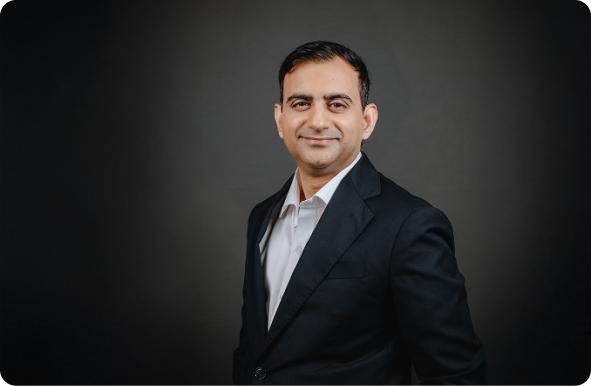
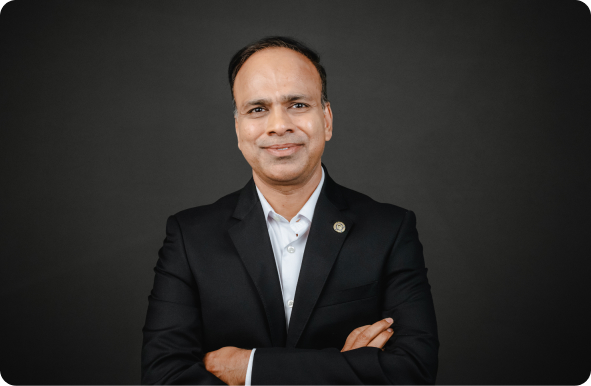
The founders brought complementary instincts. Mehrotra had worked in marketing at businesses including Future Group and Bajaj Allianz Life. Goyal, a chartered accountant with an investment and finance background, had worked at Bajaj Allianz General Insurance. One understood how to get someone’s attention. The other understood what could happen after money left the account.
That pairing matters in consumer lending. An easy application is useful, but the lender must decide who can repay. Fibe describes AI, machine learning and data science running through onboarding, underwriting, fraud management and collections. Its expertise sits in that connection between a convenient phone journey and a credit decision. The loan is digital; the repayment obligation remains wonderfully analogue.
02 / The pause that changed the product
Covid interrupted the original rhythm. In a March 2024 Founder Thesis interview, Mehrotra recalled that Fibe stopped new lending and concentrated on collections. Its loan book roughly halved, from about ₹330 crore to ₹160-170 crore. During the interruption, the team built purchase-linked financing and moved toward longer repayment periods.
Another adjustment followed. Mehrotra said its edtech partnerships fell from roughly 200 to 11 active relationships as partners’ models weakened. Skilling and university-linked courses became a tighter focus. Distribution could produce customers; it could also import somebody else’s troubles. For a lender, the partner’s business deserves scrutiny alongside the borrower’s finances.
“We moved from the one month product to the slightly longer tenure products.”Akshay Mehrotra · Founder Thesis · 2024
03 / Put the loan beside the bill
Fibe’s purpose-driven financing puts credit into a purchase journey: education, healthcare, insurance, rooftop solar, travel and e-commerce. The merchant gains a way to make an immediate payment manageable. The customer gains a repayment schedule. That can help a parent avoid paying a whole term’s fees at once, or let a patient spread an eligible treatment bill across instalments. Approval still depends on the lender’s checks; the payment option is an invitation to apply, rather than a promise of money. A hospital counter and a course checkout become places where a lending relationship can begin.
This is also a different customer-acquisition route from asking everybody to download a loan app. Fibe’s December 2025 announcement counted more than 8,500 partner centres and over 50 channel partners. Those are distribution points for credit, not bank branches. The lesson for another business is practical: find the moment your customer’s problem becomes urgent, then place the service there.
The broader proposition faces familiar alternatives: a bank personal loan, a card, or consumer financing from an established lender such as Bajaj Finance. Fibe’s distinguishing combination is its mobile application, merchant-linked finance and additional financial products. Convenience is a reason to consider it. A borrower still has to compare the actual offer.
04 / Fast money has a price tag
Fibe advertises personal loans up to ₹10 lakh, repayable over six to 36 months. Its published starting annual rate is 18% on a reducing balance, with processing fees from 2% plus GST. Foreclosure charges are nil. “Starting” carries considerable weight here: the approved rate depends on the customer and loan. Speed does not make interest disappear.
For scale, a ₹1 lakh loan over 12 months at exactly 18% would have an EMI of about ₹9,168 and total instalments of roughly ₹1.10 lakh. That illustration excludes processing fees, tax and other applicable charges. It makes the trade-off visible: solving today’s timing problem means committing part of tomorrow’s income.
A loan against mutual funds takes another route. Investments are pledged rather than sold; interest applies to the credit used. Fibe lists rates starting at 10.49% annually. But a market fall can reduce the available limit and require repayment of a shortfall. Unresolved shortfalls can lead to liquidation. Keeping an investment means keeping its market risk, too.
05 / A card with something missing
The Fibe Axis Bank Credit Card, launched in October 2023, removes the card number, expiry date and CVV from the plastic. Details live in the app. The RuPay card supports eligible UPI merchant payments, and Axis lists no joining or annual fee. There is something pleasing about a financial product whose most visible innovation is an absence.
Axis issues the card; Fibe supplies the customer-facing connection. Alongside lending, Fibe now lists fixed deposits and third-party insurance. Those additions make the app useful beyond the moment a customer needs cash. They also broaden the relationship: borrowing is one event, while payments, saving and insurance give people other reasons to return.
06 / The book behind the vibe
The offer documents show how the business earns money: loan interest, processing and servicing fees, commissions and guarantee premiums. Equity supports the lending operation, while borrowing and financial partners help fund credit. This is a business in which capital is part of the product. More money to lend also means more repayment risk to manage.
The fundraising followed that logic. A $110 million Series D arrived in 2022. The $90 million Series E in June 2024 included primary investment and secondary share sales, so the headline amount was not all new operating cash. A $35 million Series F investment from IFC followed in December 2025.
By March 2026, the portfolio was still weighted toward personal loans. In September, Fibe’s parent received SEBI observations allowing preparations for a proposed IPO with a ₹750 crore fresh issue and an offer for sale. That milestone is a step toward a listing, rather than a completed public debut.
Fibe works best when a payment arrives before money that a customer can reasonably expect to earn. It becomes a harder proposition when income is unreliable, the bill is recurring, or the repayment merely requires another loan. The useful idea is the calendar. The difficult discipline is making sure the calendar eventually closes.