Mike Simmons moved downtown and encountered a problem that his résumé suggested he ought to be able to solve. He had spent more than two decades helping institutions manage parking. Now he needed somewhere to put his own cars. A condominium offered a change of scenery; it offered considerably less hospitality to a collection of old sports cars. The answer became SILO Auto Club and Conservancy, a place where storage could come with company. Even his spare time had acquired a business model.
There is a pleasing circularity here. Simmons co-founded T2 Systems in 1994, making software for the largely uncelebrated business of parking permits and tickets. By 2016, the company had attracted a buyer in Thoma Bravo, and he was ready to spend more time investing, serving on boards and enjoying the machinery he collected. Today, he is CEO of another parking technology company, TEZ. Leaving the office proved easier than leaving the subject.
His story travels through university parking departments, private equity transactions, a former cooking school and an industry award ceremony. The recurring question is practical: what do people need in order to make something work? Sometimes the answer is software. Sometimes it is capital. Occasionally it is a building large enough to accommodate both a Lamborghini and a conversation.
A business in the leftovers
Simmons grew up in Stilesville, Indiana, and studied mechanical engineering at Purdue. Before T2, his working life included IBM, PepsiCo and General Motors, across sales, marketing and project management. Engineering gave him one way of approaching a problem; selling software at IBM supplied another. His eventual business would require both an interest in systems and a willingness to learn what customers actually wanted them to do.
The opening came in California. Simmons was working for a business near San Francisco that had entered the parking software market, then decided to leave it. He and Steve Howard bought what remained of that operation and started T2. In 1995, Simmons moved the business to Avon, Indiana. The University of Memphis was his first customer. This was a business beginning with an existing need and a customer willing to pay for a solution.
Its early university work covered selling permits and handling parking tickets. It was an unglamorous corner of institutional life, with the advantage that the work still needed doing on an ordinary Tuesday. Growth brought its own complications. By 1998, a staff of 12 needed to double; Simmons and three managers took on recruiting themselves. The small company was already learning that making software and building an organization were different jobs.
The customers got a room of their own
One of T2’s consequential decisions involved putting customers in the same room. In November 2004, nearly 350 parking professionals attended its tenth PowerHouse User Group conference. The gathering included the launch of PowerPark Flex, a web-based parking data warehouse application, and the appointment of a new customer advisory board chair. There were technical sessions, demonstrations and a fairly direct route from customer complaint to product priority.
“This is my favorite event of the year,” Simmons said. He explained that the team was already adjusting its priority list in response to suggestions received at the conference. A software roadmap can look wonderfully tidy before the people who use the software arrive. T2 had made their arrival part of the process.
Years later, the industry would single out this community-building work when recognizing Simmons’s career. Its assessment credited him and his team with introducing a formal user conference to a field that had not traditionally organized itself around customer experience. The achievement is revealing because it is social as much as technical. He helped make a place for people who were often wrestling with related problems at different institutions.
Growing the company, changing the job
For years, T2 financed expansion from retained earnings and a bank credit line. Its first institutional investor arrived in 2007: Petra Capital Partners. The initial $3 million investment supported a larger change in the business, from selling software licenses toward subscriptions. That shift meant funding growth while changing how money came in. The financing was part of the product’s evolution, rather than a decorative announcement attached to it.
During Petra’s investment, T2 more than doubled revenue and earnings before interest, taxes, depreciation and amortization between 2007 and 2011. It also moved into commercial parking operations. By 2015, the business included garage access and revenue controls, street pay stations and technology to help drivers locate available spaces. Acquisitions had extended the reach of the original university software company.
T2 annual revenue, reported in the 2015 Fast 25 ranking.
Simmons had already tried handing over the chief executive’s job. In October 2013, after 19 years running T2, he moved toward the chairman’s role as David Sparks became CEO. He was unusually candid about his reasoning: “I wasn’t sure if I was the right guy.” The company was preparing for more complex growth, and he questioned whether his experience matched the next assignment.
The arrangement lasted about six months before the board asked him to return. That return gives the episode its human texture. An executive can recognize the need for a different kind of leadership without a succession working exactly as planned. Simmons resumed running the business. In 2016, when Thoma Bravo agreed to buy T2, Adam Blake took over as CEO and Simmons stepped back again.
This time, he pictured board work, angel investments and hobbies occupying more of his days. His investments already included businesses such as BoxFox and WebLink International. He was also involved with Sharpen and Bolstra. About another operating role, his answer left a small but useful opening: “I wouldn’t say never.”
A garage with a guest list
The cars had been there long before the exit. As a teenager, Simmons owned a 1969 Camaro; his father had a 1967 Firebird convertible. Rebuilding American classics in his father’s garage helped establish an interest that later widened toward European sports cars. SILO’s account of his collection includes a 1969 Lamborghini Islero and a 1965 Griffith Model 200, alongside a 1963 Corvette that had belonged to his father.
Moving from Zionsville to downtown Indianapolis gave that enthusiasm a property problem. Simmons bought a former Chef’s Academy building in 2017. In early 2018, he was renovating the approximately 27,000-square-foot structure into storage and event space, with a planned investment of $3 million including the purchase. Former classrooms had been opened into room for cars. The cooking school was preparing to welcome a different kind of expensive equipment.
The project contained a wager about other people’s interests. “I’m building a baseball field in the middle of Iowa,” Simmons said, invoking Field of Dreams. His own cars justified finding space. A club required people to want to spend time there.
By 2022, he was describing a private club with a kitchen, a liquor license and members from downtown and surrounding communities. The attraction included access to cars, regular events and other enthusiasts. On the Cars Yeah podcast, he identified Mark Hill as an important business influence and recommended Stephen Covey’s The Seven Habits of Highly Effective People. The practical businessman and the car enthusiast appeared comfortably housed together.
“This is my favorite event of the year.”
Mike Simmons, on T2’s 2004 customer conference
The word “never” stayed out of it
Simmons’s post-T2 life also included managing Jupiter Peak, his family investment company, and community board work. His involvement has encompassed the Central Indiana Community Foundation, the Indiana Repertory Theatre and Junior Achievement of Central Indiana. These commitments widened the settings in which he worked with people, money and institutions. They also made his departure from T2 less a disappearance than a change in where he spent his time.
He went on to serve as CEO of Sharpen Technologies, a cloud contact center business. The move took him beyond parking while keeping him close to software and customer interactions. In 2021, he joined TEZ as executive chairman, working with management on strategy, operating plans and organizational structure. In April 2022, he became chief executive.
TEZ founder Ken Lovegreen moved into the vice chairman and chief innovation officer roles. The division paired Simmons’s operating experience with a founder whose earlier inventions included restaurant paging systems. Their parking business emphasized payments and access without requiring drivers to download an app. Simmons’s assignment included expanding North American operations and the company’s international footprint.
In announcing his move on LinkedIn, Simmons called parking his “professional home.” After decades in the field, the phrase sounds less like a branding exercise than a useful explanation for his return. He knew the customers, the awkward transactions and the distance between an appealing demonstration and a system that works at the curb.
After the lifetime achievement award
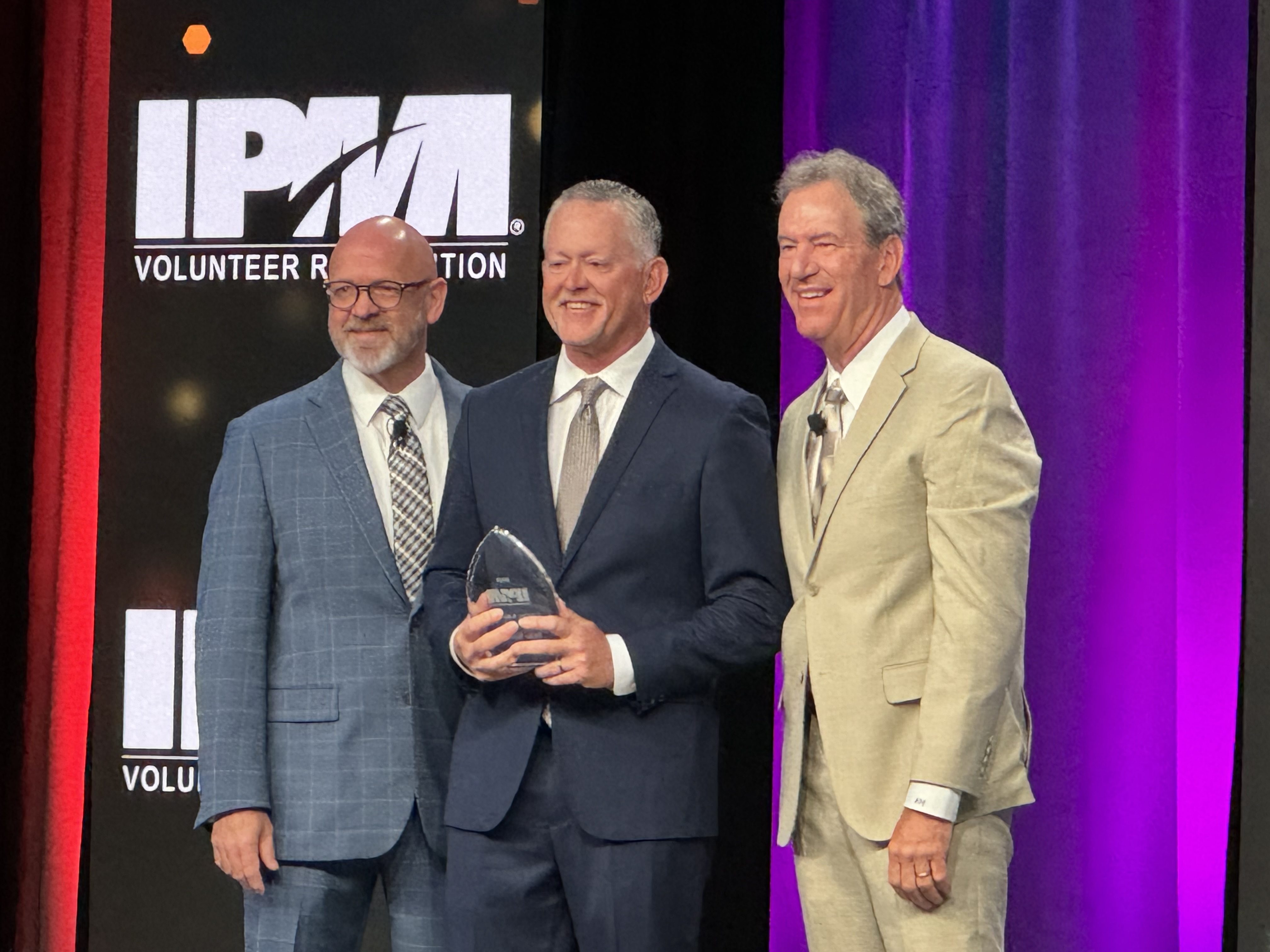
In June 2024, Simmons received the International Parking & Mobility Institute’s Lifetime Achievement Award. He had served on the association’s board as well as leading companies in its orbit. The recognition covered a career of more than 30 years. It also arrived while he was still running a business, an amusing scheduling choice for an award whose name can suggest that the work is finished.
His more recent work has remained specific. In a February 2025 letter to TEZ customers, he introduced a satisfaction survey and described changes to account management, customer communication and operational reporting. In July, TEZ announced Joshua Henderson as chief technology officer and promoted Maggie Vercoe to chief operations officer, both reporting to Simmons. The current team listing continues to name him CEO.
These are familiar concerns for someone who once took customer suggestions back from a user conference and changed a product’s priorities. The companies and payment methods have changed. The need to hear what happens when people use the product has stayed close to the job. And somewhere in downtown Indianapolis, the cars have a place to live, with enough room for their owners to linger.