The interesting thing about Todd Borgmann’s latest expansion problem is that some of the answer is sitting next door. At Great Falls, Montana, Calumet’s renewable fuels business is planning to reuse equipment from the adjacent conventional refining operation. The company says that approach reduces the remaining capital needed for its MaxSAF expansion to $137 million, compared with $1.2 billion contemplated in the original Phase 2 plan. For a chief executive who has worked in sales, trading and finance inside the same company, it is a particularly apt assignment.
There is a certain satisfaction in a growth plan that begins with a closer look at the premises. The familiar equipment gets another job. The finance department gets a smaller construction bill. The ambition, meanwhile, still has to survive the journey from presentation slide to working plant. As of September 2026, Calumet’s target was approximately 200 million gallons of annual sustainable aviation fuel production by the end of 2028. That is a plan, with work still ahead.
Borgmann’s route to this point supplies the human interest behind the machinery. He joined Calumet in 2008 and became CEO in May 2022. In between, he moved across enough parts of the business to encounter its products as things to sell, its raw materials as things to buy and its operations as things to finance. His career invites a practical question: what does a leader see differently after spending years learning the company from several desks?
A career with several desks
An Indiana native, Borgmann studied industrial engineering at Purdue University and earned an MBA at the University of Notre Dame. The combination brings engineering and business into the same biography. Neither degree explains a career by itself. His work history provides the more useful detail: a financial analyst who moved into commercial operations, then returned to finance with a broader set of responsibilities.
His Calumet roles included director of white oils and petrolatums, vice president of business development and vice president of supply and trading. These are specific corners of an industrial company, with different customers and different questions. Selling a specialty product involves its usefulness to a buyer. Trading and supply involve availability, price and timing. Business development asks what the organization might become. A company can look rather different depending on which problem lands on your desk.
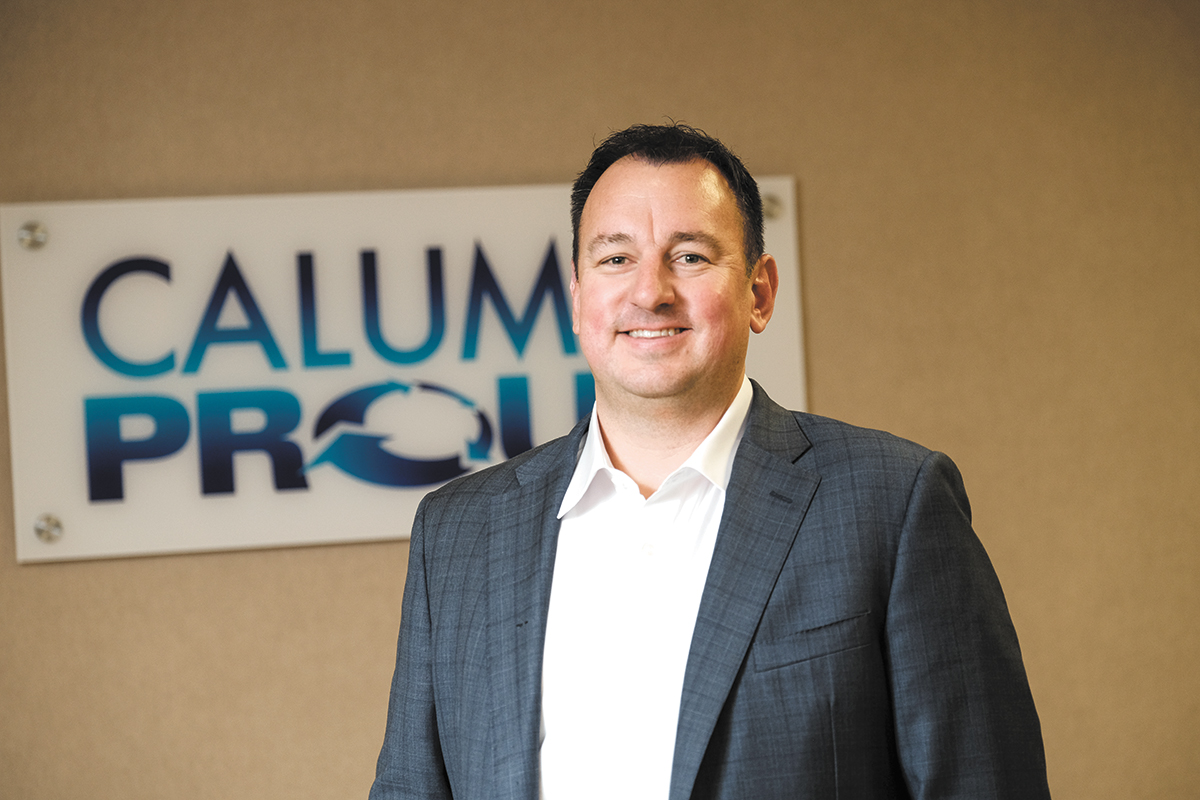
By the time he was profiled as a CFO of the Year honoree in December 2021, his remit included finance, accounting, IT, crude oil trading and economics. He had also worked in investor relations, risk management and supply chain. The breadth matters because Calumet itself resists a tidy description. It makes specialty products and branded lubricants, while its Montana subsidiary produces renewable fuels. Explaining how those activities fit together is part of the executive job.
Borgmann had identified that communication problem before becoming CEO. In 2021, he described a complex collection of businesses that stakeholders needed to understand before they could believe in it. Calumet had reorganized its reporting segments that year to give them a clearer view. The observation is revealing: alongside the work of running the business came the work of making it legible. A balance sheet is less persuasive when the reader cannot picture what stands behind it.
The promotion was an inside job
His promotion letter was dated February 28, 2022, with the new role effective May 1. Steve Mawer, the chief executive he succeeded, signed it. The document gives the transition an unusually concrete shape: a named successor, a start date and a continuing relationship with the outgoing leader. Mawer moved to executive chairman, then became non-executive chairman at the beginning of 2023.
That sequence put Borgmann in charge while retaining a colleague who knew the company. In November 2022, he thanked Mawer for the transition and spoke about continuing to collaborate. Leadership changes often arrive wrapped in a promise of discontinuity. Here, the public arrangements gave continuity a substantial part to play. Borgmann brought an existing understanding of the business into a role whose responsibilities were about to widen.
The company he leads has a long industrial history. Calumet traces its origins to 1919; its headquarters moved to Indianapolis in 1990. Today its products are available in more than 80 countries, and its operations span 12 North American facilities. Royal Purple, Bel-Ray and TruFuel give parts of the portfolio names that consumers may recognize. Elsewhere, the customer encounters an ingredient or a formulation rather than a Calumet label.
The resulting leadership task is unusually varied. A specialty oil customer, a buyer of packaged fuel and an investor studying renewable aviation fuel capacity are looking at different aspects of the same organization. Borgmann’s earlier movement between departments supplies context for that variety. It does not remove the competing demands. It does mean his appointment followed years spent working among them.
Changing the wrapper around the business
One consequential change under his leadership happened on paper. On July 10, 2024, Calumet completed its conversion from a master limited partnership to a C-corporation. Common stock began trading on Nasdaq the following day, retaining the CLMT ticker. Borgmann also became a director of Calumet, Inc. that July.
The conversion addressed who could own the business. Borgmann explained that some institutional investors and passive indices previously unable to invest in master limited partnerships would now be able to participate. Opening that door was the intended benefit; it was not a guarantee that every eligible investor would walk through it. The distinction matters when judging an executive’s decisions. Changing access to capital and delivering operating results are connected tasks, each with its own test.
The vote preceding the conversion was emphatic: 99.6 percent of votes cast on the proposal supported it. That figure describes the votes cast, rather than every outstanding unit. It is also a reminder of how much of an industrial transformation takes place away from the equipment. Ownership structures, investor eligibility and board arrangements can affect what a company is able to attempt long before a new unit starts producing.
“A great company culture is critical to a successful business.”Todd Borgmann, on Calumet’s workplace certification
Next door to the next chapter
In an October 2024 interview, Borgmann explained why Great Falls had become an opportunity. The existing refinery had been built to handle highly acidic crude oils, and he described useful similarities with renewable feedstocks. Location mattered too: the surrounding region offered access to raw materials. His account began with the capabilities of an existing facility and the possibilities around it.
He described financing in 2021, construction in 2022 and full commissioning in 2023. Those dates also put his own appointment in perspective. The renewable fuels project crossed the transition between chief executives; its history began before he took the top job. His responsibility as CEO has included carrying that effort forward while the company continues to operate its other businesses.
The customer proposition was equally practical. Renewable aviation fuel is typically blended with conventional jet fuel for use in existing aircraft. Borgmann described the attraction of working within the established aviation system. In the same interview, he pointed to Shell’s role in buying product, helping move it through the supply chain and reaching end customers. A refinery needs a route to the wing as well as a route through its equipment.
By September 2026, the expansion design had changed substantially. Calumet said repurposing installed equipment at the neighboring asphalt facility would reduce the remaining capital requirement. It also reported receipt of the final $34 million draw under its amended Department of Energy loan agreement. The revised funding approach and the equipment reuse belong together: changing the physical plan changed the financing problem.
That development gives Borgmann’s story its most concrete image. An industrial company is looking across its own site to build its next business chapter. The attraction is understandable, but the result will depend on execution. Equipment has to be integrated, construction completed and production sold. A lower planned capital bill is meaningful precisely because it leaves those practical obligations in place.
Less capital on the drawing board
A smaller debt bill, and another scoreboard
The balance sheet remains part of the assignment. In July 2026, Calumet redeemed $100 million of senior notes and repaid a $15.5 million Montana terminal financing arrangement. On October 15, it announced another $150 million note redemption, scheduled for October 25. At this profile’s publication, that second redemption was still ahead. Including it, the company expected roughly $265 million of debt retirement since July and approximately $26 million in annual cash interest savings.
The operating picture also requires more than one number. For the second quarter of 2026, Calumet reported a $95.9 million net loss alongside $159.3 million in adjusted EBITDA. The latter is a company-defined measure that excludes specified items; it is different from net income. Borgmann’s case for growth and debt reduction sits inside that accounting reality. Readers need both figures to see the distance between the operating argument and the reported bottom line.
Outside the company, another scoreboard appears in his public biography. In 2021, Borgmann said much of his and his wife’s time away from work went toward youth sports. He coached his sons’ baseball and basketball teams. It is a modest detail, and a welcome one in a career otherwise documented through appointments, financing and production. There is no need to turn a basketball practice into a management philosophy. It gives the person a life beyond the quarterly calendar.
For now, his next professional chapters remain unusually tangible: equipment at Great Falls, an expansion schedule and debt coming due. The interesting measure of Borgmann’s leadership will be how those pieces come together. He has spent much of his career learning what Calumet contains. The work ahead asks him to decide what to keep using, what to change and how much the company should spend to get there.