Mike Rubin wanted the smallest part in the school play. An innocent bystander would do, preferably stationed somewhere near the back. In seventh grade, he had landed in his last-choice elective: drama. For a boy trying to avoid the attention of his peers, a spotlight seemed an unnecessarily elaborate form of punishment. He planned to endure one semester. He stayed with theater for six years.
Today, Rubin asks people to attempt things they have never done before. Rubin founded Northpond Ventures in 2018 and leads the firm as CEO. His work brings scientific researchers into the unfamiliar business of building companies. His own education in unfamiliar rooms began considerably earlier, in North Hollywood, with a role he would rather have declined.
He remembers finding humor, poise, and a voice through performance. Trying on characters gave him room to experiment without making every experiment a referendum on his everyday self. A costume offered a little cover. Eventually, the boy who wanted to be inconspicuous learned that he could improvise. There are less expensive introductions to uncertainty than starting a company. A school play, for instance, comes with rehearsals.
“By assuming the appearances of other people, I found myself.”
Mike Rubin, on school theater
The suitcase full of questions
Before the theater came the measuring tools. As a child, Rubin collected analytical instruments and measured things around him. Cameras interested him down to their workings; he carried a separate light meter and questioned other enthusiasts about apertures and focal lengths. On European trips with his parents, he bought books about the places they visited. The return suitcase grew heavier in direct proportion to his curiosity.
He also learned programming and won a competition with friends in sixth grade. Looking back, he describes the attraction as making something useful through code. The instrument collection, the books, and the programming belonged to the same impulse: he wanted to understand how things worked and what he could make with that understanding. His childhood was full of objects that invited another question.
Education was a family occupation. His father was a professor, his mother a teacher, and their friends included other educators. Rubin grew up around adults who treated learning and explaining as work worth doing. At UCLA, he studied electrical engineering and became his engineering school's student graduation speaker. He later earned an MBA at the University of Massachusetts Amherst and became a CFA charterholder. The camera enthusiast had acquired a vocabulary for capital.
Dinner before the pitch
Rubin co-founded and served as managing partner of Sands Capital Ventures before establishing Northpond. The earlier business ranged across industries and countries. Its investments included software companies such as Anaplan, AppDynamics, DocuSign, and MuleSoft; financial technology companies including Funding Circle and LendingClub; and consumer businesses including BigBasket and Souq. His investing experience extended well beyond one type of laboratory or one corner of the American startup map.
That breadth did not make the basic question disappear: why should a founder work with him? A new venture firm competes with established firms whose reputations precede their partners into the room. Rubin's answer starts with the journey to the room. When he finds a company compelling, he describes flying out, taking its management team to dinner that evening, and meeting formally the following day.
His shorthand is three Ps: prepared, personable, passionate. Preparation might mean reading a scientist's less obvious papers, rather than arriving armed only with the headline result. It creates the possibility of starting a conversation further along. Personability acknowledges that people must actually want to work together. Passion recognizes the commitment a founder has made. Each asks the investor to contribute something before a term sheet enters the conversation.
Arrive ready for a deeper conversation.
Listen, ask, and acknowledge.
Bring interest you can demonstrate.
This is an unusually domestic account of winning business: do your homework, be pleasant company, care about what is happening. It also leaves an investor with fewer places to hide. A large fund can be described in a slide. Whether its representative has read the papers becomes apparent rather quickly. Dinner, too, tends to expose the limits of a rehearsed pitch.
A company named for a conversation
Northpond's name carries a private memory into the public business. Rubin says it comes from the restaurant where he and his wife, Iris, talked about their future together. A firm built around what might happen next took its name from an earlier conversation about precisely that. The detail is more revealing than another explanation of a venture firm's investment thesis.
Northpond's team includes co-founder and partner Sharon Kedar. The firm's work reaches into universities through Northpond Labs, its research and development affiliate. In November 2020, an alliance with Harvard's Wyss Institute committed $12 million to establish a Laboratory for Bioengineering Research and Innovation. Rubin helped develop the alliance's vision with the institute's leadership. The arrangement made early research part of the firm's work, before a company necessarily existed to receive an investment.
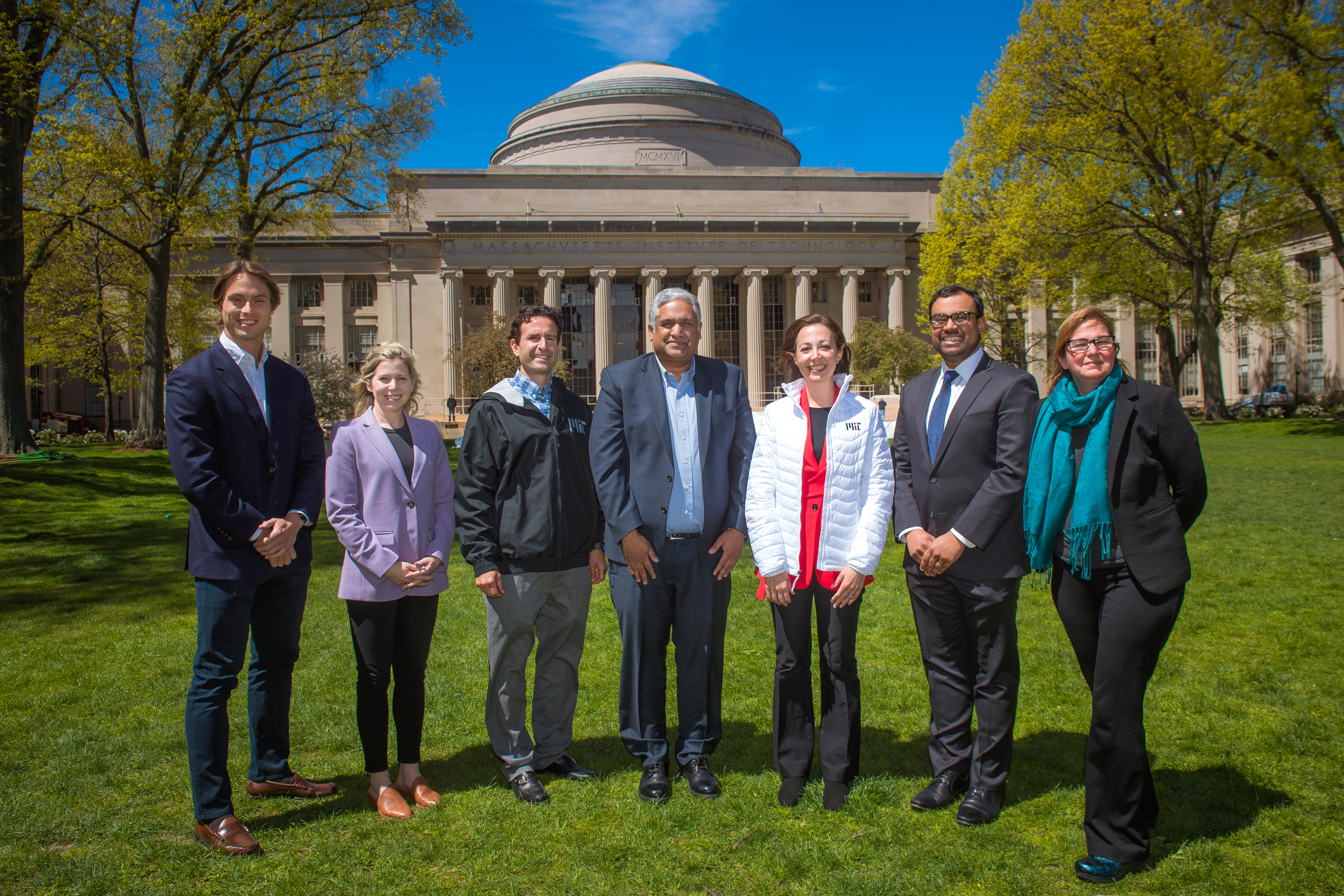
MIT followed in June 2022 with a five-year program connecting researchers and venture investors through mentorship and collaboration. Its design included funding for up to five translational projects a year and support for two postdoctoral fellows annually. Rubin and Angela Belcher were named co-chairs of the joint steering committee, with Ernest Fraenkel as faculty lead. Those numbers describe the program's intended capacity, rather than a tally of completed companies.
A Stanford collaboration launched in July 2023, also as a five-year engagement, with Rubin serving as a steering committee co-chair. The sequence gives shape to his preference for working close to research: Harvard, MIT, Stanford, each with a formal arrangement. In May 2026, Harvard expanded its Northpond Labs alliance, extending the framework for sponsored research and commercialization. The work has continued beyond the original announcements.
- 2020Wyss Institute alliance
- 2022MIT-Northpond launch
- 2023Stanford program launch
- 2026Harvard alliance expands
The people without the corner office
Rubin's approach to networking began with advice from a colleague at another firm: spend time with junior people. Analysts and entry-level managers are easier to reach, often do consequential work, and may become the decision-makers later. They can also ask the basic questions that more established professionals hesitate to ask. Seniority is a fairly poor substitute for an interesting conversation.
He recalls people who gave him time when he was exploring a move into venture capital and had little obvious value to offer them. He now describes making time for unsolicited requests for career advice. At Northpond, many founders have never run a business; researchers may still be doctoral or postdoctoral students. Looking for people before their reputation has arrived is central to the job.
Teaching gives that relationship another form. Rubin holds academic appointments at Harvard, MIT, and Stanford, and regards explaining something as a test of whether he understands it. A student's question can expose a gap that an expert conversation glides past. He sometimes explains a concept to himself in writing or aloud. The teacher from a household of teachers continues to find uses for being a student.
Small words, expensive consequences
His enthusiasm for learning has an unglamorous setting, too: online discussions of mathematics and physics. Rubin visits technical forums when working through problems. He appreciates the amateurs who share their knowledge and objects to participants who humiliate others over an incomplete proof or an imperfect explanation. The hobby supplies a close view of how quickly a useful exchange can become a contest over status.
In business, he describes hostile conduct as particularly draining when money, careers, and reputations are involved. He argues for preserving composure and kindness through those encounters. Elsewhere, he makes the argument at the level of individual words. During difficult situations, he uses manageable with colleagues. Calling a volatile competitor capricious, he says, removes some of the fear attached to a more threatening description.
“I’m a word nerd, I admit it.”
Mike Rubin, on choosing words
He even imagines language as a balance sheet: words can incur costs or create value. It is an investor's metaphor applied to something that never appears in the accounts. His interest extends to names. Dale Carnegie was the author of the first self-development book he read, and Rubin still recommends remembering and using the names of people one meets. Attention has small, observable forms.
A guitar need not become a career
Rubin plays guitar without aspiring to become a professional guitarist. He draws a distinction between extending an existing skill into related work and enjoying an activity for its own sake. His investments in science and entrepreneurship, he observes, do little for his guitar technique. It is a cheerful limit for someone whose biography otherwise suggests considerable enthusiasm for accumulating qualifications.
His account of family life includes a son whose determination to have fun can complicate the evening routine. Rubin recognizes the contradiction: a child is doing what children do, while the adult trying to get through dinner, a book, and bedtime has become the obstacle. He credits his mother with treating every day as a celebration. The inherited lesson occasionally competes with the schedule.
Running is another recurring interest. His publisher's biography records five Boston Marathon finishes. A forthcoming book, Exponential Potential, is scheduled for April 20, 2027, with Tarcher. Writing gives him another way to share lessons beyond the university classroom. It also places his ideas before readers who can take them apart at their leisure, without the courtesy of waiting until a lecture ends.
The remaining question concerns the business he has already built. Rubin has written candidly about compromises made as his firm grew, and about the time-intensive work of developing research into companies. He wants to judge those choices by whether they improve the work. There is a recognizable thread from the child with the light meter to the adult reading a founder's papers: look more closely. Then decide what deserves the next hour.
Keep the conversation going
More from Rubin, plus the programs and conversations behind this story.
- Mike’s essays and interviews
- Northpond Ventures
- Mike Rubin on LinkedIn
- Mike Rubin on X
- Return on Potential newsletter
- Stage Skills Are Life Skills
- Better Not Bigger
- The MIT-Northpond program announcement
- Harvard’s expanded research alliance, May 2026
- Exponential Potential: forthcoming book
- Watch: Building the Future interview
- Watch: Business Innovators Radio interview