A San Francisco hacker house is an unusual place to put a finance education to work. The arrangement brings aspiring entrepreneurs under one roof, making introductions part of domestic life. For Michiel Rauws, one of those introductions was to Eugene Bann. They would become co-founders of X2AI, the company later called Cass. In 2014, an encounter in shared accommodation became the beginning of a business built around conversations.
There is a pleasing economy to that origin: two people meet, and then build software that talks to people. The company would acquire product names, institutional customers, research collaborators and a new identity. But the initial business partnership began at the scale of an ordinary introduction. Silicon Valley can make even a kitchen sound like infrastructure.
Rauws is now Cass’s founder and chief executive, based in San Francisco. His route there includes business school in the Netherlands, an exchange in Hong Kong, corporate experience and student entrepreneurship. Follow those stops and a different view of an AI founder comes into focus. Before the chatbot came a substantial education in how organizations work.
Rotterdam, with a detour through Hong Kong
At Rotterdam School of Management, Erasmus University, Rauws studied International Business Administration from 2009 to 2012. He followed that with a master’s in Finance and Investments, from 2012 to 2014. The sequence belongs comfortably to a career in investment or corporate finance: learn the machinery of a business, then learn how to value it.
His education also crossed borders early. An international exchange took him to City University of Hong Kong in 2011 and 2012. His professional record includes work as a HousingAnywhere sales agent there. Alongside the formal study of international business was the less tidy exercise of selling a service in another market. A university timetable and a customer’s decision keep rather different hours.
During his student years, he also worked with RSM STAR, including commercial relations for its Community Development International team. Later came M&V Enterprises, which he co-founded and worked on between 2012 and 2014. Cass would therefore arrive after earlier attempts at building and organizing things. Entrepreneurship had already made an appearance before San Francisco entered the picture.
The spreadsheet years
In 2012, Rauws was a project manager in IBM’s Extreme Blue talent program. In 2013, he worked in private equity and mergers and acquisitions at Marsh. Corporate innovation and transaction work are different rooms in the business world. One asks what might be built; the other examines what an existing business is worth and what happens when ownership changes.
His later biography includes corporate finance, risk insurance and innovation among his areas of experience. Those are practical disciplines, full of budgets, assumptions, counterparties and decisions that have to survive scrutiny. They also give his career an interesting breadth. The founder of a conversational AI company had spent time around the institutions that would eventually be the sort of organizations a founder must persuade.
His academic work included a project called Takeover Targets: A Predictive Model. It used publicly available data to identify firms that might be acquired. The project received an 8.5 out of 10, with distinction. Long before he was explaining conversational software in interviews, he was working on a familiar analytical problem: what useful pattern can a large collection of information reveal?
There is no need to make a straight line out of every item on a résumé. A project manager, a finance student and a startup co-founder have different responsibilities. Together, though, these roles describe the actual range of work Rauws brought with him. His background includes both examining a company from the outside and taking responsibility for one from the inside.
- 2009-14RotterdamBusiness and finance studies
- 2011-12Hong KongExchange and sales work
- 2012-13IBM & MarshProjects and transactions
- 2014San FranciscoX2AI takes shape
A small loan, a very concrete idea
Another strand of his early record concerns money moving in smaller amounts. In 2010 and 2011, Rauws’s volunteer work for Hope North included raising €15,000, preparing a sustainable development plan for the organization in Uganda and preparing business teaching on microeconomics and microcredit. He also organized a volunteer trip connected with spending the funds locally and transferring knowledge.
That is a different sort of financial exercise from predicting acquisitions. The sum has a destination and a proposed use. Teaching, fundraising and organizing the trip each require a separate piece of work. The practical detail gives the episode its interest: a contribution involves more than putting a number next to a worthy intention.
His profile dates his involvement in funding microcredits through Zidisha to December 2014. He describes encouraging others to take part as well. Here, the recurring subject is another person’s enterprise: a borrower with a plan, and a lender prepared to back it. It is a modest, specific counterpoint to the large numbers that tend to accompany discussions of artificial intelligence.
Raised for Hope North through his volunteer work.
The machine should introduce itself
By 2016, Rauws was answering questions about how people should encounter conversational AI. Asked whether users ought to know they were speaking with a machine, he answered directly: “Yes, they should wholly be aware of that.” Nine words make a useful design requirement. A conversation can be natural without making the identity of the other participant a guessing game.
In the same interview, he discussed work on an administration panel that would allow subject specialists to add their own material. The detail puts another set of people into the picture. Software needs an interface for the people maintaining its knowledge, as well as the people asking it questions. A fluent reply is the visible end of a longer production process.
That division of work also appears in his research profile. Rauws describes setting research direction and methods, leading a team, and working with engineers to automate and scale research tasks. The work he describes spans management, investigation and implementation. A founder’s public interview may last a few minutes; organizing the work behind each answer is a continuing responsibility.
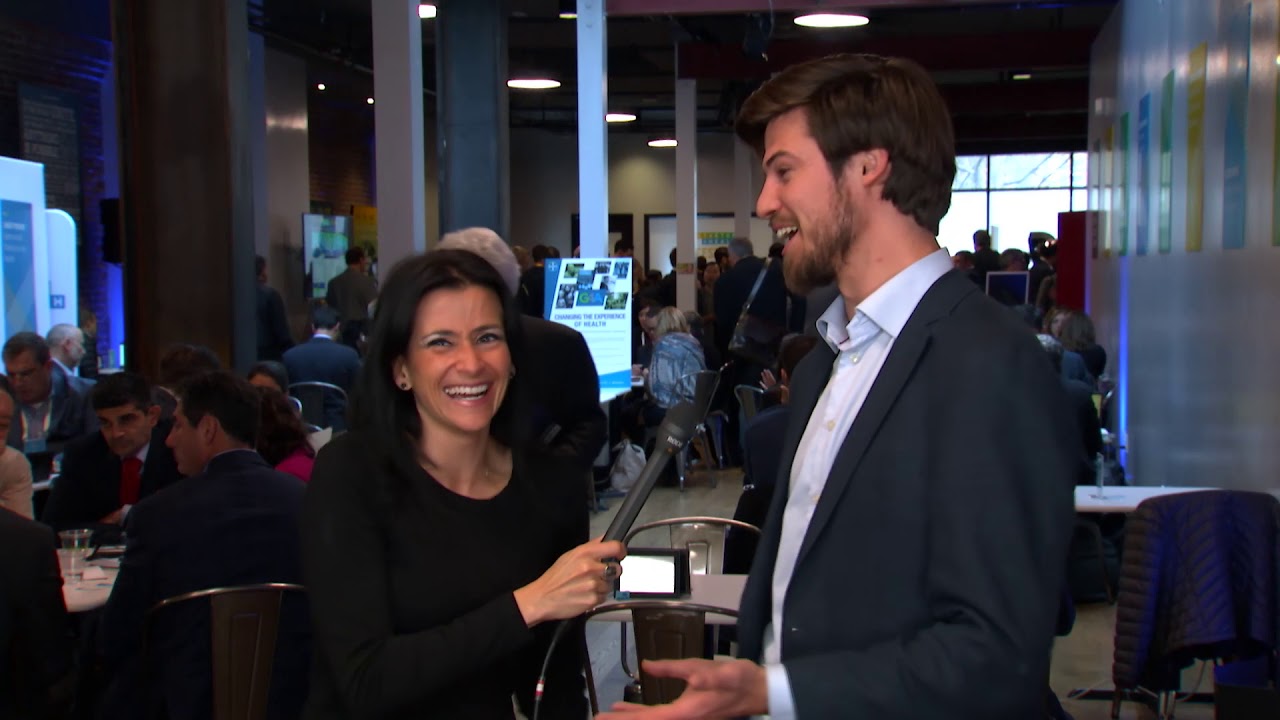
Cass’s team has included engineering leader Tomasz Finc, while its leadership page names Tim Connors as an investor and board member and Christine Cassel as a board member. The company around Rauws has distinct jobs and distinct responsibilities. The familiar photograph of a founder holding a microphone can conceal how many other desks a product passes across before it reaches a customer.
“Yes, they should wholly be aware of that.”
Michiel Rauws, on telling users they are speaking with AI / 2016
A shorter name, a longer conversation
On August 29, 2022, X2AI announced its rebrand to Cass. The new name stands for Calm and Safe Space. It is considerably easier to say across a crowded room. It also moves the name away from the visible machinery of artificial intelligence and toward the sort of interaction the company wants to offer.
The announcement addressed three audiences: users, partners and the team. For partners, it emphasized listening, customization and collaboration during deployment. For employees, it described a culture intended to attract people who wanted meaningful work and research. A rename takes an afternoon to announce. Making those promises part of everyday operations takes considerably more calendar.
In August 2023, Rauws discussed his experiences in Europe and the United States in an interview with Geoffrey Roche and Travis Hearne. In introducing the conversation, he highlighted his interest in human-centered leadership. Working across countries had become part of what he wanted to discuss as a leader, alongside the company and its software.
Cass’s stated operating values include accepting differences of opinion and revising views when new data arrives. Those are demanding habits for any organization to maintain. They require room for disagreement, a way to examine evidence and people willing to change a decision. A chief executive can put the words on a page; the test comes when colleagues need to use them.
Calm and Safe Space
What happens after someone says hello?
Today, Cass’s website describes a resource-navigation assistant. Its product descriptions give the conversation several separate jobs: answer a visitor’s questions, connect a qualified visitor with a live person, and surface insights for an organization’s teams. The names include Cass Engage, Cass Copilot and Cass Signals. Each points to a different part of the work after someone arrives.
The business question is straightforward. An organization may already have useful resources and staff, yet still need a better way for visitors to find the right next step. Cass’s current pitch includes following up after the initial exchange. That makes the journey longer than the first impressive answer. The conversation has somewhere to go.
For Rauws, the career now stretches from studying investment decisions to running a company whose interface is language. Along the way are a Hong Kong sales role, a corporate project, a student venture, small loans and a chance meeting with a future co-founder. None requires a mythical origin scene. There is enough interest in the actual sequence of jobs, places and responsibilities.
For the organizations buying such software, the work includes deciding which questions it should answer and when staff should take over. Product names divide up that work, but a visitor experiences the sequence as one exchange. A question answered, a relevant option offered and a connection made are small events individually. Together, they are the service the organization is trying to provide. Keeping that sequence understandable is part of the product’s practical appeal.
The useful ending is on the other side of the screen. Someone asks a question. The software responds. A person or a resource becomes easier to reach. After the spreadsheets, introductions, product names and interviews, the founder still has a concrete task to organize: making the next exchange useful enough that someone can act on it.
Continue the conversation
More from Rauws and the company he leads.