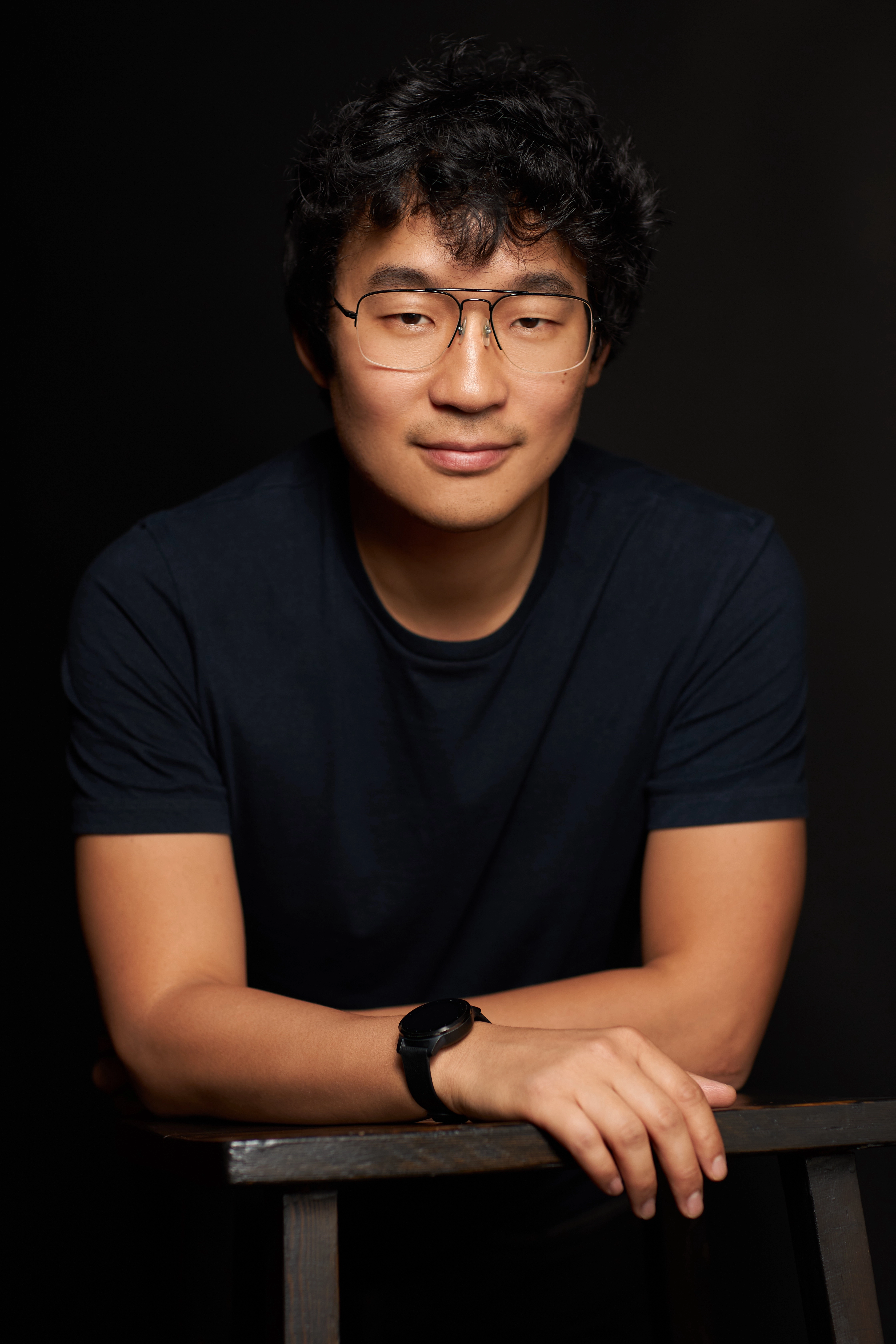
There is a version of Fedor Pak who spent the rest of his career in Russian oil and gas - filling spreadsheets at Sibur, managing gas deals at Rosneft, climbing the energy industry's ladder one rung at a time. He chose a different one. In October 2022, Pak walked into Chatfuel as its new CEO, taking the reins of a company that already powered nearly half of all bots on Facebook Messenger and had 7 million businesses depending on it. The pivot from oil to AI is not as strange as it sounds - both industries run on infrastructure you never see, moving things that would otherwise not move.
Chatfuel was not a startup looking for an origin story when Pak arrived. Founded in Silicon Valley in 2015 by Dmitry Dumik and Artem Ptashnick, the platform had already become Meta's official automation partner - a rare status that placed it inside WhatsApp, Instagram, and Facebook Messenger at a structural level. Adidas, Netflix, Nissan, Visa, T-Mobile, and LEGO had all run their customer conversations through it. What Chatfuel needed was not a founder with a vision; it needed a builder who could convert that installed base into durable revenue.
"AI will never consult patients better than an experienced specialist. But it can handle everything around that conversation so the specialist can actually focus."
- Fedor Pak, CEO of ChatfuelPak brought a peculiar resume to the job. Before Chatfuel, he had spent four years as founder and CEO of Coincom, a coin machine and financial terminal network he built in Russia from scratch. Currency fluctuations eventually made the unit economics brutal - he exited, but kept the scar tissue. Then came inDriver, the ride-hailing app, where as Director for Asia Pacific he helped strategically displace Uber from Pakistan. Then a stint at Shoplio, the e-commerce platform. Three different industries, three different operational challenges. The through-line was always the same: find the bottleneck, automate around it, measure what changes.
His education ran the same dual track. A bachelor's in Applied Math and Computer Science from Lomonosov Moscow State University gave him the quantitative foundation. A master's in Economics from the New Economic School layered on the market logic. Rosneft and TNK-BP, where he spent nearly a decade in energy business development, gave him something none of that coursework could - the specific experience of watching large organizations resist change, and understanding exactly why they do.
"I see AI as a young, inexperienced, yet brilliant employee with significant potential. The mistake is expecting miracles. The opportunity is knowing what they can actually do."
- Fedor PakUnder his leadership, Chatfuel has evolved from a no-code chatbot builder into what Pak calls an "AI sales engine" - a distinction that matters more than it sounds. The old chatbots answered FAQs. Chatfuel's new AI agents close deals. They follow up on abandoned carts. They book clinic appointments. They respond to Instagram story replies at 2am. In 2024, the company launched a suite of autonomous generative AI agents purpose-built for e-commerce on WhatsApp, Facebook, and Instagram. In 2025, it went deeper into healthcare - a vertical where the friction between clinic operations and patient communication is almost entirely composed of tedious, repetitive tasks that no human should be doing.
The healthcare pivot produced something unusual: a product that delivers 20-40% weekly increases in booked appointments for clinics, saves practice owners 30 or more hours per month in administrative work, and lets doctors scale 3-5x during peak seasons without adding headcount. Pak's vision for this work is almost polemical: "I don't want to deal with ads, leads, bookings, or reminders. I just want to walk into my clinic and treat patients." That framing - technology as a way to give skilled people their attention back - runs through everything Chatfuel does under his direction.
His personal relationship with AI automation is not merely theoretical. Pak reports saving approximately four hours a day by delegating routine communication and task management to AI tools. That is over 1,400 hours a year - time he has redirected into product decisions and team development. He is careful to qualify this, though: realistic expectations are a recurring theme in his public remarks. The person expecting AI to transform their business overnight is the person who will be disappointed. The person who asks "what specific problem does this solve today?" is the person who will extract compounding value.
He describes his own temperament with unusual candor. Three traits, he says, have driven his career: curiosity (a near-compulsive interest in new markets and technologies), optimism (which he admits is "often irrational," but without which he would not have survived his Coincom years), and resilience grounded in accountability - to investors, employees, and customers who are depending on what he promised. The ability to treat failure as input rather than verdict is something he credits explicitly to his corporate years, where the culture was less forgiving and the feedback cycles were slower.
Chatfuel today sits at a crossroads that is shaping every company in its category: the shift from software-as-a-service to service-as-software. The old model sold you a tool and let you figure it out. The new model - Pak's model - deploys AI agents that just do the work. He has argued publicly that this transition will make most traditional SaaS obsolete, and that the platforms which survive will be those that own the customer's outcome, not just their subscription. With Meta integration at the structural level, 7 million businesses already on the platform, and a healthcare vertical showing early proof of the thesis, Chatfuel is closer to the front of that argument than most.
What makes Pak's arc interesting is not the pivot from oil to chatbots - plenty of executives have made bigger jumps. It is the deliberateness. Each stop - Coincom's coin machines, inDriver's Pakistan market, Shoplio's e-commerce stack - added a specific operational capability that the next role required. The math degree from Moscow State runs underneath all of it: a preference for precision over storytelling, for measurement over narrative. At Chatfuel, where the product is ultimately an argument that "automation is better than human labor for specific tasks," having a CEO who has personally run that experiment across multiple industries and continents is not incidental. It is the whole point.