Michael Rubenstein remembers a change of lunch. At Google, there was Chilean sea bass in the cafeteria. At AppNexus, there was a bag of peanuts in the kitchen. He was trading the comforts of an established company for an office full of young people, rickety chairs and a business still finding its shape. The menu had deteriorated. His enthusiasm had improved.
He had helped build DoubleClick Ad Exchange, then worked at Google after its acquisition of DoubleClick. By 2009, he wanted another entrepreneurial chapter. New York mattered, too. After returning from California one spring, he walked through the city and felt quite certain that this was where he wanted to work. AppNexus offered a place to put those preferences together.
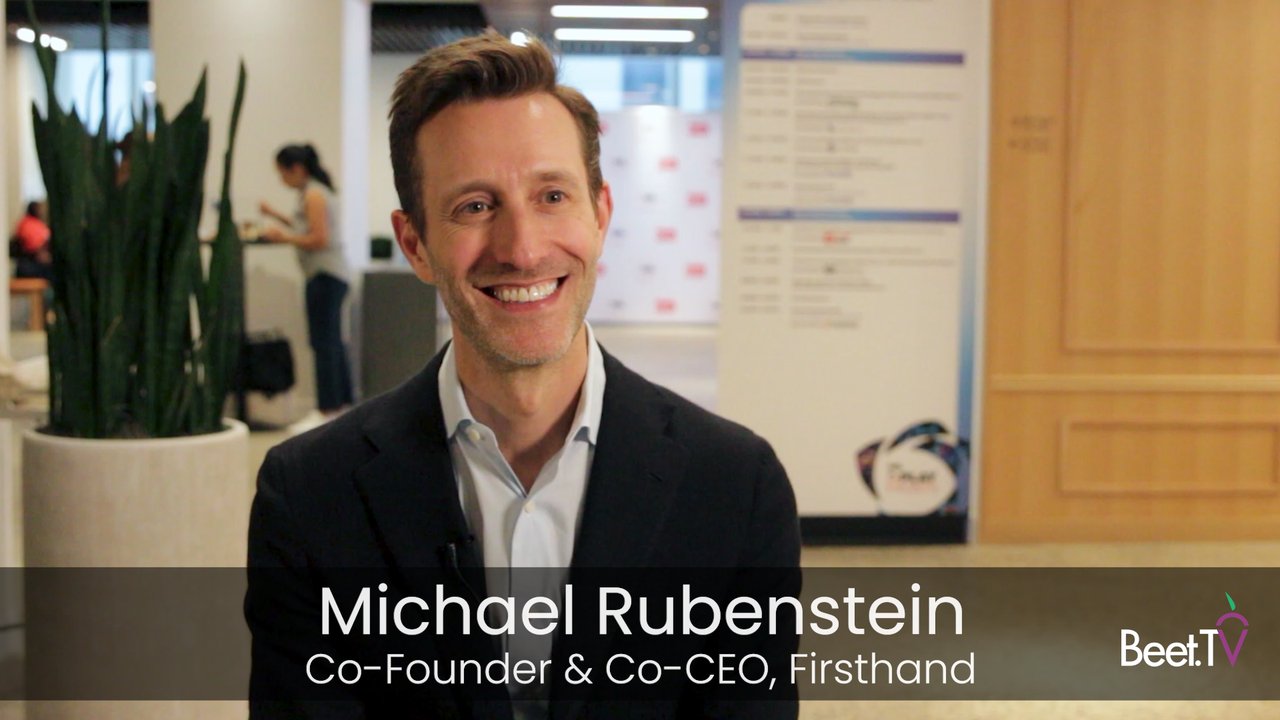
Today, as Firsthand’s co-founder and co-CEO, Rubenstein is asking advertising to make another adjustment. He spent years helping companies decide which message to show someone. Now he wants the message to respond when that person has something to say. His career has followed the internet through email, exchanges and AI, with a recurring interest in who gets to control the relationship.
The browser in the library
Before New York, there was Montreal. Rubenstein fell for the city on his first visit and decided he wanted to attend McGill after touring its downtown campus. He studied political science, graduating with a BA in 1997. His account of those years gives technology a place alongside questions about business and society, rather than treating it as a separate universe with its own admission requirements.
In an introductory computer science course, an assignment required students to send an email. It was the first email he and his classmates had sent. Then computers with web browsers appeared in the library. “Despite their very slow internet connections, I was transfixed.” It is a pleasing origin story for an advertising executive: someone captivated by a screen before the screen became valuable advertising space.
He was already interested in entrepreneurship. Both his parents were businesspeople, and he started a marketing business while still an undergraduate. After McGill, he joined the Toronto email-marketing company that became FloNetwork. Its acquisition by DoubleClick brought him into a different part of the internet economy and eventually to New York. The business changed; the attraction to building stayed.
A startup with an existing front door
At DoubleClick, Rubenstein moved through account management, sales and strategic accounts. These were jobs built around customers: understanding what a large organization needed, getting people to agree, making a relationship work. They were also an education in the commercial mechanics behind a webpage. Advertising software could be technically accomplished and still face a very uncomfortable business problem.
He completed his MBA at Columbia Business School in 2004. When he wanted to start a business, DoubleClick CEO David Rosenblatt offered him a way to do it inside the company. Rubenstein became the founder and general manager of DoubleClick Ad Exchange. A new marketplace could connect advertising buyers with publishers, adding monetization to a company known for selling software.
The arrangement suited a builder who already knew the customers and the people around him. It also makes his career less tidy than the usual founder biography. An entrepreneurial beginning can happen inside somebody else’s organization. The useful question is whether there is room to build, and whether the building has a reason to happen.
Google completed its acquisition of DoubleClick in 2008. Rubenstein’s next move would put him back in a smaller company, with Brian O’Kelley, an entrepreneur whose earlier work at Right Media had made the two competitors. They found that their skills and interests could work together.
The other machinery inside an ad company
Rubenstein joined AppNexus as president in September 2009. His responsibilities included its global commercial functions: sales, client services and marketing. He later oversaw business units, international expansion and strategic partnerships. The title placed him at the junction between what the technology could do and what customers would actually use.
That junction has its own machinery. Someone must explain the product, support the customer, build a partnership and make the next market workable. A company can have a skilled engineering team and still need all of those things. Rubenstein’s background gave him a particular interest in allowing people outside engineering to contribute fully.
He and O’Kelley deliberately worked on AppNexus’s mission and values while the business was young. They used facilitators to help codify the culture, and wanted to recruit people who could learn advertising technology rather than limiting hiring to those who already knew it. Rubenstein described inclusion across skills, geography, gender, race and ethnicity as part of that effort.
In a January 2015 announcement about executive promotions, AppNexus reported more than 750 employees and 20 global offices. Rubenstein emphasized the talent the company had developed and the opportunity for new leaders to step forward. Growing a business meant making room for other people to grow with it. AT&T acquired AppNexus in 2018.
Old colleagues, a different conversation
Firsthand began in 2023 with three founders: Rubenstein, Jonathan Heller and Wei Wei. Rubenstein and Heller had met at DoubleClick. Heller later co-founded FreeWheel, the video advertising platform acquired by Comcast. Their new company therefore started with relationships formed well before generative AI became the subject of every second business meeting.
When Firsthand emerged from stealth in February 2024, it announced seed backing led by Radical Ventures. Participants included O’Kelley and Rosenblatt. There is something revealing in those names. A former competitor who became a colleague, and a CEO who made space for an internal startup, were now supporting another beginning.
The founders’ proposal was specific: let brands and publishers create AI agents using their own knowledge, then distribute those agents where consumers were seeking information. A brand’s expertise could appear beyond its own website, while the company retained control over the material the agent used. The ambition combined a familiar concern about publishers’ independence with a new kind of interaction.
The part underneath the conversation
Firsthand calls its data and knowledge rights layer Lakebed. The name suggests something below the surface, which is appropriate: the visible interaction depends on decisions about what information an agent can access and how it may use it. A conversation representing a company has to draw from material that company is prepared to stand behind.
This is where Rubenstein’s new venture connects with his older marketplace work. Bringing parties together requires an arrangement they are willing to enter. Publishers have knowledge and an audience. Advertisers have products and expertise. Consumers have questions. Firsthand’s proposed arrangement lets those assets meet while giving the owners control over their contributions.
In March 2025, Firsthand announced a $26 million Series A led by Radical Ventures, with FirstMark Capital, Aperiam Ventures and Crossbeam Venture Partners participating. The company said the investment would support product expansion and team growth. Rubenstein framed the opportunity around marketers and publishers participating in AI on terms they could shape themselves.
Capital for Firsthand’s product expansion and team growth.
When a graphics card becomes a question
By September 2026, that proposition had a concrete setting: IGN. Firsthand partnered with the gaming and entertainment publisher to connect its Brand Agents with IGN’s IMAGINE audience intelligence platform. Rubenstein joined the IGN team at IAB PlayFronts to discuss the partnership and demonstrate an advertiser experience featuring AMD.
The context makes the idea easy to understand. A person reading about a game may next investigate whether their computer can run it. In the example Rubenstein discussed, a reader moving from coverage of Onimusha to an article about building a gaming PC encounters an AMD ad asking whether a graphics-card upgrade is needed. The experience takes account of what the person is doing.
The commercial promise is that an ad can begin closer to a useful question, then adjust as someone engages. Publishers’ understanding of their audiences can influence the experience inside the ad. The reader has somewhere to take the inquiry; the advertiser can learn which information matters. It remains a brand experience, with all the commercial intent that entails. At least the sales pitch has acquired some conversational manners.
A preference for the beginning
Rubenstein has remained willing to return to the uncertain part of company life. “I love building early-stage businesses,” he said in June 2025. By then he had already lived through acquisitions, worked inside large companies and helped grow AppNexus. Experience had given him reasons to recognize risk; it had also given him reasons to take it.
His argument for Firsthand is that AI creates a communications medium, opening a different way for companies and consumers to interact. He has urged publishers to participate, and described a five-year ambition for Firsthand to become a standard platform through which brands, marketers and publishers build consumer relationships using AI. It is an aspiration, with the work of adoption still ahead of it.
“Playing it safe will not keep you safe as a company.”
Michael Rubenstein · 2025
That line from his conversation with Mike O’Sullivan captures a practical tension in his career. Safety can feel like staying where the organization is larger and lunch is better. Rubenstein has repeatedly found reasons to move toward a business being assembled. The reasons matter more than the romance of starting again.
His recollections of McGill also return to mentorship. He credits mentors with changing his life and says he takes satisfaction in helping the next generation of entrepreneurs, particularly people who have had fewer opportunities. Advice, introductions and support are part of the story he tells about how a career develops.
The library browser, the internal startup, the peanuts in the kitchen and the question inside an AMD ad belong to different internet eras. Together, they describe a working life spent paying attention to how people connect. Firsthand gives Rubenstein another chance to build around that interest. This time, the person on the other side of the screen gets to answer back.