Michael Horvath has spent years helping people put themselves on a map. His latest project asks them to look up. Foggy, the Bay Area app built by his company Nyfik, combines satellite imagery with reports from people standing beneath the weather. A cloud seen from space needs a little local interpretation. Someone down on the pavement can supply it.
The subject is suitably San Franciscan. Fog can spoil a picnic, improve a photograph and make a perfectly reasonable jacket purchase look like foresight. It also offers an unusually precise answer to the question facing an entrepreneur after a large company: what deserves your attention next? For Horvath, the answer has become something close enough to walk into.
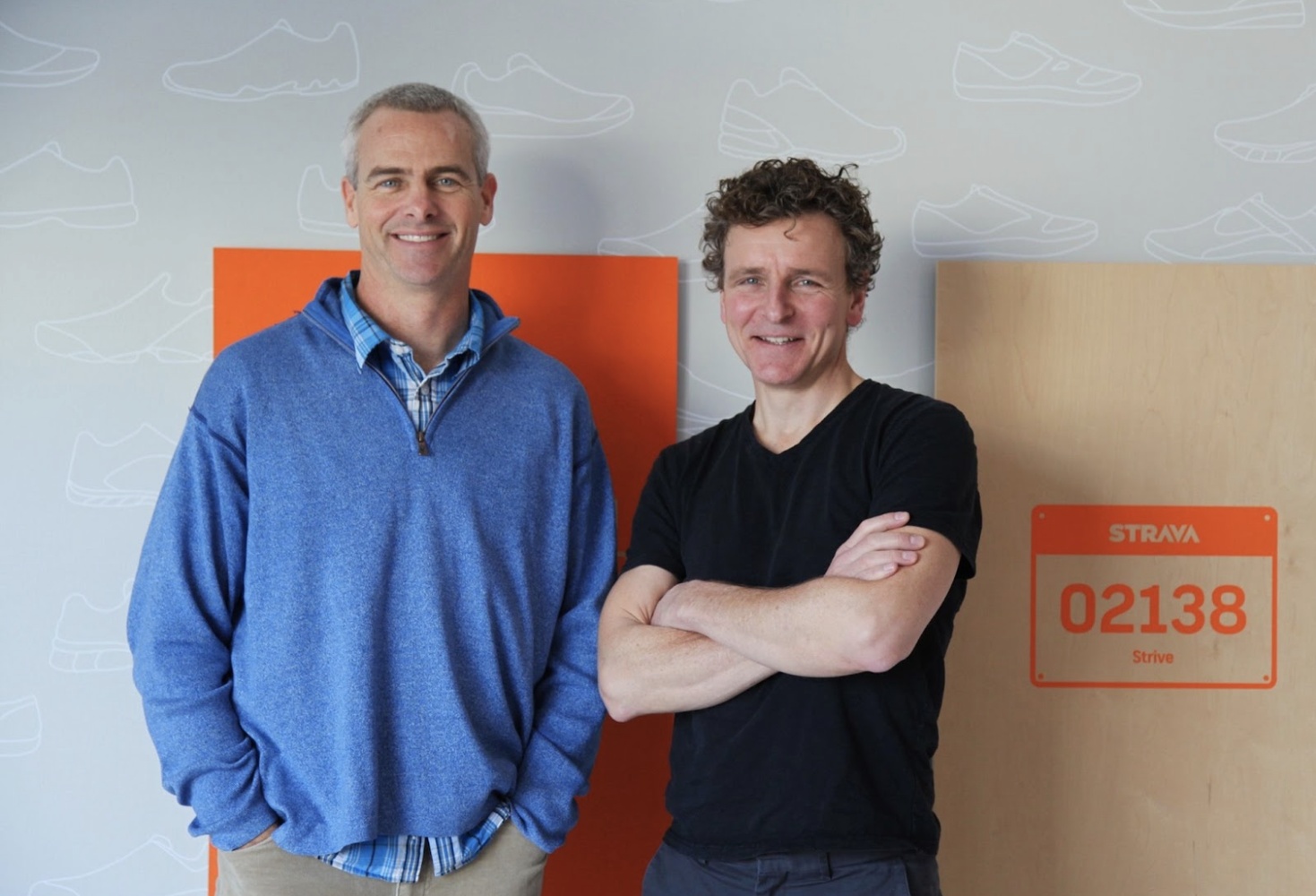
He co-founded Strava with Mark Gainey, served two stretches as its chief executive and handed over the job in early 2024. Today he is Nyfik’s co-founder and CEO. The change in scale is deliberate. Nyfik says it wants to build useful software for focused communities and remain small and profitable. A fog map is an excellent way to test that ambition. The audience knows exactly what it cares about.
There is a familiar idea beneath the new weather. Strava connected people through their rides and runs; Foggy lets neighbors contribute observations of their surroundings. Both give an individual experience a place among other people’s experiences. Horvath keeps returning to that territory, even when the territory itself is briefly invisible.
The friendship that survived the Jeep
Before the apps came the rowing team. Horvath graduated from Harvard in 1988 with an economics degree, having captained the lightweight crew. Gainey was a younger teammate. Their friendship included a trip to Princeton in Horvath’s old Jeep, a vehicle with holes in the floorboards, a leaking roof and insufficient heat. They went to watch a race. The rain accompanied them in both directions.
The trip became a shared landmark, remembered by both friends decades later. It is an appealing beginning for a partnership: nobody has to pretend the first excursion was comfortable. The friendship lasted through graduation and separate careers. When Horvath chose Stanford after earning his economics doctorate at Northwestern, knowing Gainey was nearby helped draw him west.
By the mid-1990s, they were discussing a virtual locker room. They wanted the companionship of a team to survive the dispersal of its members. The internet offered a possible meeting place, although reaching it was considerably less convenient than reaching it now. They set the idea aside and built Kana Communications, a business that helped companies manage customer email. Kana went public in 1999.
That detour matters. Their eventual return to sport came after experience with a different sort of customer, a different business model and the demands of a public company. The original question had waited through another venture. A friendship can preserve an idea longer than a pitch meeting can.
An economist leaves the classroom
Horvath’s route into business passed through university offices. He taught economics at Stanford from 1994 to 2000 and at Dartmouth’s Tuck School of Business from 2000 to 2004. He also served as Kana’s chief financial officer and, later, held finance and operations responsibilities at GlycoFi. His career moved between teaching and running organizations, with some of those jobs overlapping.
The academic background supplies a useful way to read his business decisions, without imagining that an economics degree explains a whole personality. He has dealt with allocation in a practical sense: what a company can afford to build, which customers it can serve well, and what it must charge to keep doing the work. An appealing product still has bills.
His later advice has an exacting streak. Speaking about focus, he says entrepreneurs must choose what they will excel at and follow through. Merely narrowing a list of activities leaves the harder decision unfinished. The company needs a reason for a particular group of people to care enough to come back.
It is easy to admire that principle when the eventual audience numbers in millions. Applying it before the audience exists is less comfortable. The Strava founders had already postponed one version of their idea. They had to distinguish between a weak proposition and a proposition whose practical ingredients were still arriving.
- 1988Harvard graduate
- 1996Kana co-founder
- 2009Strava launches
- 2025Nyfik introduced
- 2026Foggy launches
The bicycle was the way in
Strava launched in 2009. Alongside Horvath and Gainey, the founding team included Davis Kitchel, Chris Donahue, Mark Shaw and Pelle Sommansson. GPS data made possible a form of connection that the earlier locker-room idea could barely describe. Friends could compare efforts on the same stretches of road without having to ride them together.
In a 2013 interview, Horvath described the prototype he and Gainey developed with Kitchel, then the work of Shaw and Donahue in turning it into a public website. He explained the appeal through company and competition: training alone could still feel connected to other athletes. A record of an outing became something friends could respond to.
Cyclists provided the initial focus. Segments, the defined portions of routes that people compare, gave that focus a recognizable shape. The same climb could be a personal benchmark, a contest with a friend or a place on a leaderboard. An ordinary piece of road acquired a second life. Its address stayed the same; its social possibilities multiplied.
The early office reflected the people the product served. There were bikes, training equipment and a signed Greg LeMond poster. By late 2013, Strava had also made running a visible part of its work, hiring runners and building on the Run app introduced in 2011. The original audience gave the company a starting point from which to learn.
“People motivate people, it’s as simple as that.”Michael Horvath
A company built for another lap
Horvath and Gainey did take venture investment. Their account of the decision emphasizes a conversation with investor Greg Gretsch about the duration of the undertaking. They wanted a brand people could keep using across decades. That expectation was something to discuss before accepting the money, rather than discover in an argument afterward.
A long life changes the definition of a good product. People alter their routines, move cities, find new companions and take up different pursuits. A service built around participation must make room for those changes. The ambition to keep someone for decades is a commitment to keep learning about that person, even as the first version of the customer becomes history.
Horvath returned to the CEO role in November 2019. In a conversation recorded in January 2023, he described Strava entering 2020 with roughly 50 million registered users and later crossing 100 million. Those figures belong to that period. They show how far the early cycling community had spread while he was back in charge.
The subscription business remained central to his account of the company. When he announced a search for his successor in February 2023, he credited the team’s work on the product and said the next stage needed a leader with the appropriate experience. Michael Martin took over in 2024. Leaving the chair was itself a decision about what the organization needed next.
Small enough to know the weather
Horvath took more time away than he initially expected after leaving the executive job. He then returned to building with MacBeth, the former Strava design leader who is now Nyfik’s co-founder and head of product and design. Nyfik’s public introduction appeared in April 2025. The company’s name draws on the Swedish word for curious.
Their stated aim is to make software that fits into everyday life. The company’s public notebook extends that approach to the work itself: sketches, questions and observations about what the team is making. MacBeth’s account of Foggy’s identity describes a visual language rooted in the Bay Area’s terrain, developed with the design studio Identity Crisis. A local product ought to look as though it has visited the place.
Foggy launched on June 29, 2026. Its official description promises maps refreshed every five minutes, with two-hour and 24-hour playback. Local reports add conditions experienced on the ground. It charges a one-time download fee and says reports are anonymous, with no accounts or advertising. The design gives participation a relatively small administrative burden.
Horvath’s interest grew after moving to the Outer Sunset in 2019 and discovering the satellite-based website Fog Today two years later. He subsequently recruited its developer, Logan Williams, to help with Foggy. What began as frustration with the weather became an interest in watching its movement. The weather retained its habits; the observer found a better vantage point.

A local fog map
One view covers the region. The other supplies the experience on the ground.
A niche is somebody’s whole world
The same preference for a defined audience appears in Horvath’s investing. Caitlin Hodge, founder of FeMMA, describes him as her lead investor and partner in a platform for women in combat sports. Introduced through Tuck professor Paul Argenti, he advised her to begin with a narrow community and build deeply for it. The lesson travels beyond cycling, and beyond weather.
This is the thread through a career with several apparent turns. Customer email, activity records and fog reports are different materials. Each needs a reason for someone to use it again. Horvath’s recent work makes the boundaries especially visible: a place, a community, an interest shared strongly enough to sustain a product.
There is no guarantee that a well-defined audience produces a durable business. Horvath is making a choice about where to test the possibility. His current company explicitly treats a small market as something worth understanding. After Strava, he has the experience to recognize the work involved in that choice, and the appetite to begin it again.
Fog is a generous subject for a curious founder. It changes, invites argument and refuses to respect neighborhood plans. A satellite can show where the clouds are. A neighbor can explain what standing beneath them feels like. Horvath has built his new project around giving those two views somewhere to meet. The old rowing-team idea still has a recognizable seat at the table.
Follow the next question
- Nyfik and its public notebook
- Foggy: the Bay Area fog app
- Michael Horvath on LinkedIn
- Strava’s company profile
- Watch: Horvath’s Money Maze interview
- Watch: the January 2023 Talks at GS conversation
- Read: Strava Comes Full Circle
- Read: Horvath’s CEO succession letter
- Read: the August 2026 Foggy interview
- Read: Caitlin Hodge on FeMMA and Horvath’s investment