Mark Gainey had a business plan for Strava fourteen years before he had Strava. In 1995, he and Michael Horvath wanted to build a virtual locker room: somewhere former teammates could compare their efforts, exchange encouragement and continue the conversation after graduation. The idea was ready. Much of the machinery needed to make it convenient was still missing.
A paper plan can be wonderfully patient. People are less accommodating. They have jobs, children, different addresses and increasingly elaborate reasons to postpone a run. Gainey and Horvath were trying to recover the company that had once made turning up easier. Their eventual product would record routes and times. The original problem was the absence of other people.
The boathouse that followed him home
Gainey grew up in Reno, Nevada, and arrived at Harvard as a recruited runner. He later took up lightweight rowing, working with coach Charley Butt and meeting Horvath, who graduated two years before him. Gainey finished in 1990, having studied fine arts. His recollections give the boathouse a substantial claim on his education.
He remembers the everyday commitment as well as the racing. Practice came with shared expectations, companionship and trash talk. There was room to want a better result and enjoy the people chasing it with you. A college team provides this arrangement almost by default. Graduation dismantles it with remarkable administrative efficiency.
In college, Gainey kept a paper-and-pencil training log. A workout could be written down, but there was no effortless upload into a shared feed. The later app would make recording an activity easier; it would also put that record where another person could respond. The connection between those two acts helps explain why a rower eventually became interested in building software.
The inbox interrupts
After Harvard, Gainey worked at TA Associates. Entrepreneurship followed, although the first company took a turn away from the sporting life he had hoped to serve. He and Horvath approached bicycle and ski manufacturers about supporting their proposed online community. Those conversations produced an awkward discovery: the potential sponsors had a more pressing internet problem.
Customer email was arriving through newly launched websites. Businesses accustomed to selling through retailers were finding themselves in direct conversation with consumers, without an adequate way to manage the correspondence. The question of supporting someone else’s sporting website could wait. There were messages to answer.
Kana Sports became Kana Communications, co-founded in 1996. Gainey helped build an enterprise software business around that need. Kana went public on NASDAQ in 1999. Before there was an app that asked what you had done on your bicycle, there was software that helped a company answer what had landed in its inbox.
The detour has the pleasing untidiness of an actual career. A founder pursuing one problem encounters another, and the second one supplies the business. The sports idea remained available for later. By then, the partners had experience building together, a history of decisions made under pressure and a reason to take their own unfinished conversation seriously.
Twenty cyclists, several cables
In July 2008, during the Tour de France, an early version of Strava received a much smaller sporting test. Twenty cyclists were given Garmin devices and asked to ride and upload their activities. Ten were on the East Coast, ten on the West Coast. Getting the data online required plugging a device into a computer.
The prototype was nicknamed the Green Machine. Davis Kitchel helped turn raw activity data into something the founders could experiment with. They introduced competitions between participants and watched the response. Riders began talking back and recruiting cycling friends to help them compete. The paperwork had acquired some noise.
There is a useful scale to this episode. Twenty people could tell the team something a large forecast could not: whether the experience gave them a reason to act. The exercise was small enough to observe, inconvenient enough to reveal commitment, and social enough to resemble the feeling Gainey had missed.
The company launched in 2009. Its broad ambition was to connect athletes, but its first audience was deliberately specific: passionate road cyclists. They owned the equipment that could supply useful data and cared about understanding it. A world-spanning plan had found a manageable place to begin.
Ten on each coast. One early question: would comparing their efforts change what they did next?
A hill acquires a social life
The cyclists brought their own priorities. Within a ride, a particular climb could matter disproportionately. A long route contained one stretch they wanted to examine: how they had performed there, how their effort compared with an earlier attempt, whether they were improving. Distance alone could not explain the interest.
Strava’s segment feature grew out of that attention to climbs. Once riders could inspect their own performance, comparisons with friends became a natural extension. Gainey has said that the first version of the feature was created in southern France. The geography was local; the question proved portable.
A hill is an excellent accomplice for a software business. It stays where it is. It can be ridden again. People bring different ambitions to it, and the repeated effort creates a story without anyone having to invent one. The route becomes familiar, while the outcome remains uncertain enough to tempt another attempt.
That also helps explain Strava’s problem before it had a crowd. An early member needed value from uploading a workout even without friends on the service. Gainey calls this the single-player experience. Personal progress gave the activity meaning first. Other people then expanded the reasons to return.
There is a wonderfully ordinary human bargain here. You go outside and make an effort. A piece of software helps you remember it. Someone else notices. The app can supply the record and the meeting place, but the rider still has to ride, and the friend still has to care. Gainey’s founding idea depends on both.
The office gets bleachers
By December 2013, Strava’s San Francisco workplace had about 85 employees. A set of bleachers served as the company meeting room. There was bike storage, a kitchen and staff coming and going on runs and rides. Sporting interests were visible in the office, alongside the computers required to translate them into a product.
The running app had launched in 2011. The team hired runners as it developed that part of the service, while French, German and Portuguese versions arrived in late 2013. The original cycling audience had supplied a starting point, and the business was learning to speak to more people.
Bleachers are an amusing piece of office furniture for a company founded by rowers. They invite people to sit together and watch the same thing. They also make the sporting reference impossible to miss. In a business whose promise concerned companionship, the physical arrangement had a certain consistency.
Gainey’s own route to this workplace included a fine-arts education rather than an engineering degree. His account of leadership places considerable weight on recruiting people with the expertise to build what he cannot. The founder supplies direction, finds the team and supports its work. There is plenty to do without commandeering the keyboard.
Learning to change seats
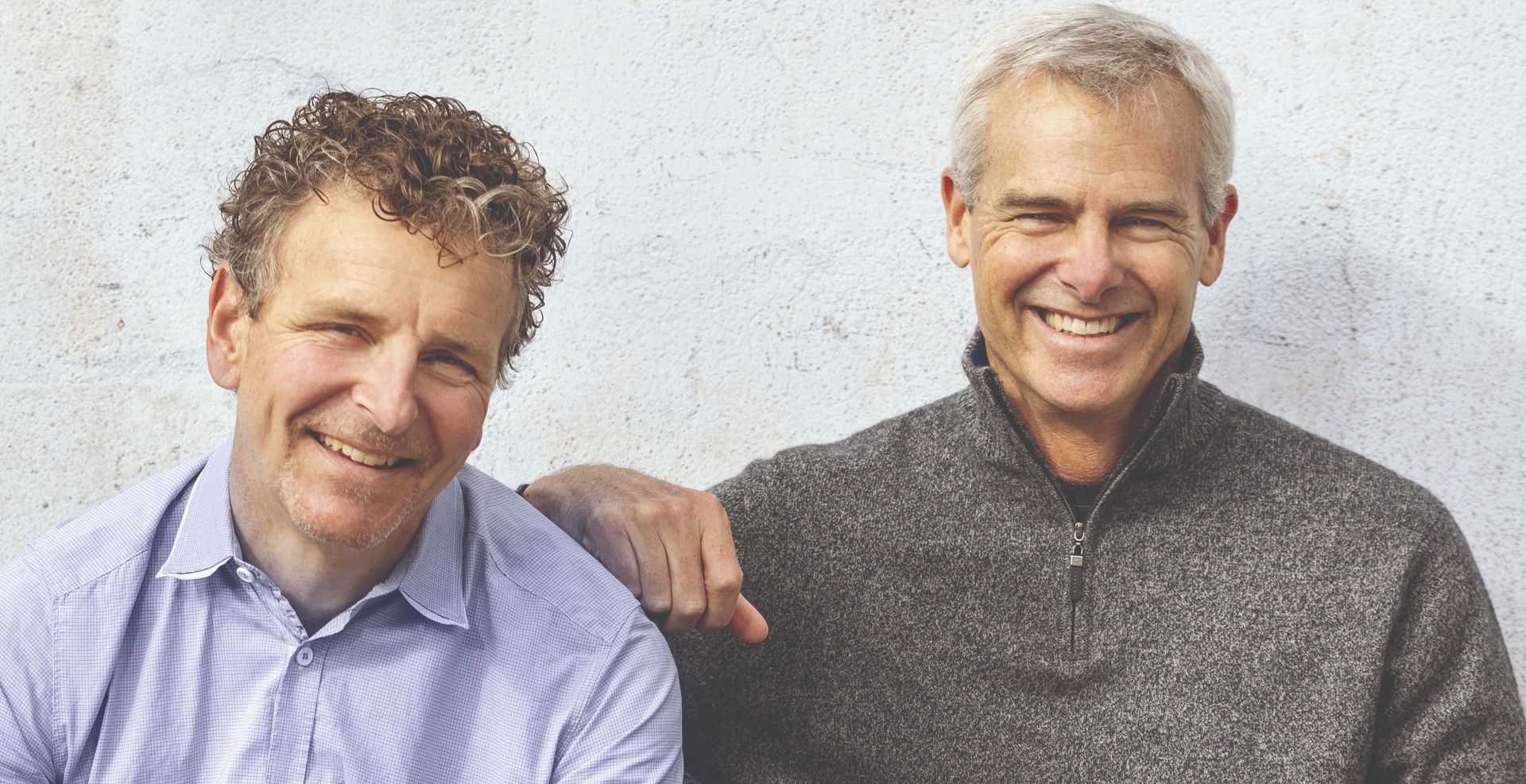
Gainey served as Strava’s first CEO, passed the role to Horvath in 2010, and returned to it in 2013. In 2017, James Quarles, previously an executive at Instagram, became CEO. Gainey continued as chairman. The friendship had lasted through more than one distribution of responsibilities.
When announcing the 2017 change, Gainey connected it to another commitment: being a more present father to his boys. Bringing in Quarles gave the founders room to concentrate on strategic work and gave him more room for family. A leadership transition, in this telling, included the practical question of how a person spends his days.
Titles make a career look tidy. The underlying decisions are less decorative. Someone must run the company, someone must know when to hand over responsibility, and everyone involved must continue working together afterward. Gainey’s repeated moves between executive and chairman roles make those decisions part of his story rather than an appendix to it.
In December 2023, he and Horvath welcomed Michael Martin as the next CEO, beginning in 2024. Their message returned to movement, friendship, discovery and connection. The founding pair were still describing a purpose that began before the first uploaded ride.
“It’s not an end game. You’re just getting started.”
Mark Gainey, on taking a company public, 2020
A company with another lap to run
Gainey has described an ambition to build Strava for generations. He has also resisted treating an IPO as the final destination of a company. For someone who had already helped take Kana public, that distinction carries experience behind it. New shareholders would be investing in what comes next.
In a July 2025 conversation in San Francisco, he contrasted the software business of the 1990s with the speed of modern development. Earlier software arrived on discs and required work at a customer’s premises. Today, changes can be tested and revised much more quickly. He sounded interested in what new tools let builders attempt.
His description of the customer relationship remained familiar. Free members contributed activities, posts and support for one another. They were participants in the community whose value the company was trying to sustain. Charging some members for additional features sits alongside that broader contribution.
In April 2026, Gainey shared the launch announcement for Linecook, a community for home cooks being built by Nick Stewart and Nick Kafker. He added a brief message of encouragement to the pair. The interest makes sense beside his own history: another group of people wanted somewhere to share an activity they cared about.
The test of the old plan is renewed whenever someone returns. A rider remembers a climb. A runner checks a friend’s activity. Someone offers encouragement after an ordinary outing. Gainey’s career has moved through investment work, enterprise software and executive handovers, but this small exchange keeps supplying the point of the business.
The 1995 plan was trying to keep a team together after everyone went home. Fourteen years later, Strava gave that wish a working form. It still begins with a person doing something, then letting another person know.