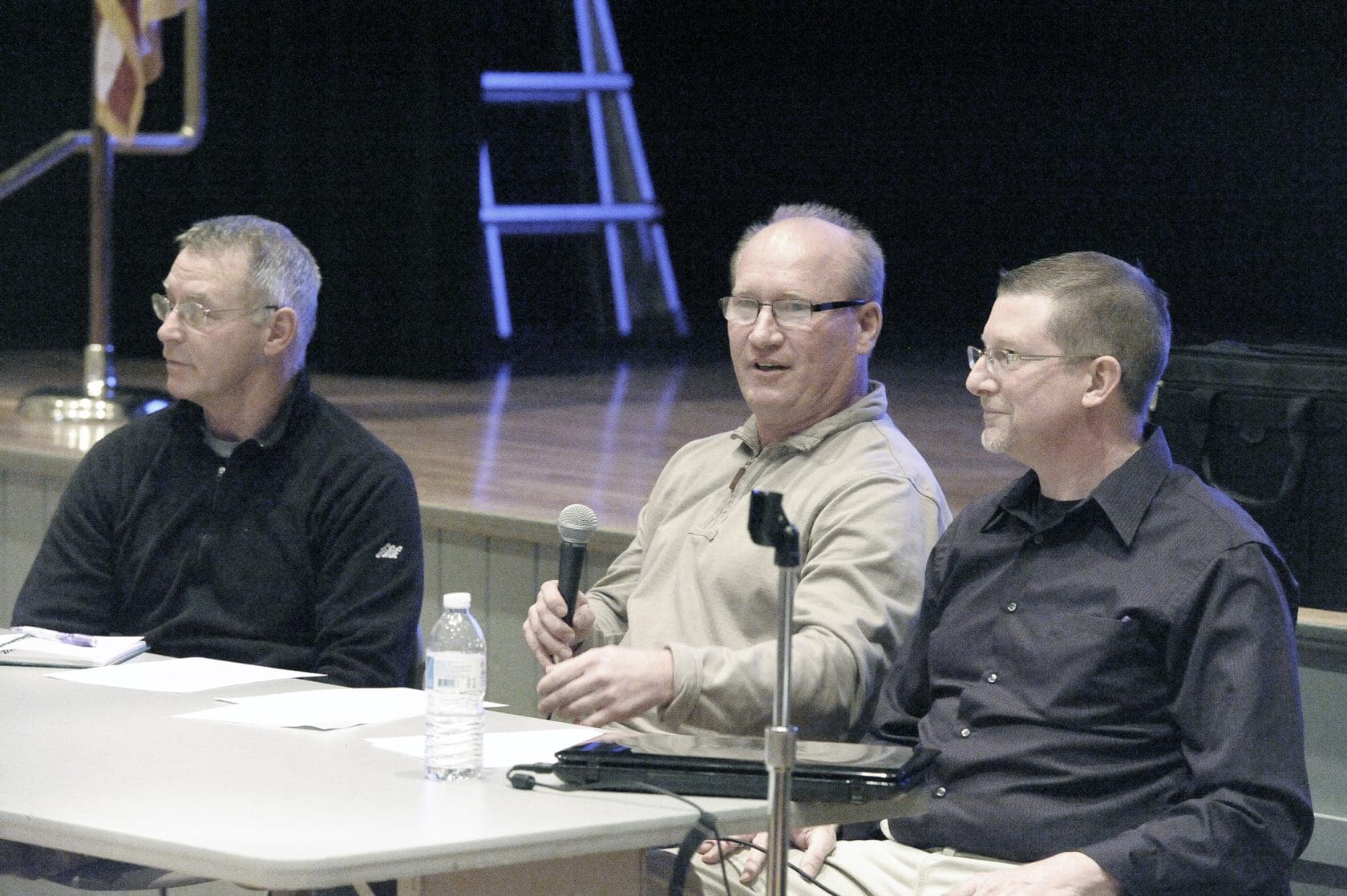
Michael Grondahl was back in a room full of people who had opinions about his business. This time, the business was a sand track. At Southwick Town Hall in the spring of 2014, the Planet Fitness co-founder sat between fellow organizers Gary Yelin and Travis Loucks, discussing how to bring motocross back to a place he had raced decades earlier. There were questions about permits, property boundaries and noise. Success in franchising had not exempted him from the public meeting.
He said he had no intention of making money from it. For an entrepreneur associated with the $10 gym membership, that was a further reduction. The remark also gives his story a useful second setting. Grondahl’s career includes a chain designed to welcome casual customers and a noisy patch of Massachusetts that had welcomed him long before he became a chief executive.
Before the purple, a borrowed start
The gym story began with enthusiasm and some painful arithmetic. In 1991, Grondahl and his brother Marc bought a Gold’s Gym in Leominster, Massachusetts. Michael had money from selling real estate and borrowed from his grandmother. Marc was a cost accountant. Neither a family loan nor familiarity with weights supplied an automatic understanding of the club business. Their early ventures failed, and Michael described losing his credit.
By August 1992, he was taking on another struggling Gold’s Gym, this one in Dover, New Hampshire. In his later telling, it was days from closing because it could not pay its utility bills. An origin story with an unpaid electricity bill has a certain advantage over a polished business-school diagram: it makes the immediate objective quite clear. Keep the doors open. Then figure out why anyone should come through them.
The brothers hired Chris Rondeau to work the front desk in 1993. The eventual model came from the three working together, rather than a finished concept arriving with the keys. Their starting club offered the familiar assortment of equipment, classes, a juice bar and childcare. Familiarity was part of the problem. They were competing for the same customers as other gyms, with much the same invitation.
A monthly membership price that became central to Planet Fitness’s early identity. Historical pricing, not a current offer.
The customer outside the club
Planet Fitness’s own account of the change starts with a question about the people who stayed away. Most Americans did not belong to a gym. First-time and occasional customers could find the prevailing atmosphere intimidating, and they did not want an expensive experiment. The partners began changing the environment and the price together. Removing costs meant something only if the resulting club felt like somewhere an ordinary person might choose to spend time.
That distinction helps explain Grondahl’s place in the story. A low number can attract attention. A recognizable customer can organize a business. The company’s Judgement Free Zone gave the price a setting and a tone. The proposition could be understood before a prospective member had mastered the vocabulary of the room. Customers were allowed to arrive without already resembling an advertisement for the product.
The simplicity was deliberate, though the work behind it took years. Grondahl said the model required 11 years to develop. In 2003, the chain still numbered only a handful of clubs. Franchising then allowed a locally refined operation to travel. A small New Hampshire market had supplied a demanding rehearsal: a club could not depend forever on finding another large group of committed enthusiasts just around the corner.
Somebody had to mind the arithmetic
Michael’s public manner could be expansive. Marc’s contribution was often described in steadier terms. When Marc became chairman in 2010, Michael credited his financial expertise with guiding the company through its early difficulties and helping establish its culture. That acknowledgment matters in a founder’s portrait. The visible personality and the person watching the spending can occupy different seats while doing equally necessary work.
Rondeau supplied another essential part of the partnership: operations. The front-desk employee became a partner and helped refine the lean system that made inexpensive memberships workable. Grondahl’s achievement belongs in that company. He could define an audience and sell an idea, but the idea had to survive staffing, cleaning, equipment and a month’s receipts. A catchy price is easy to print. Repeating the business behind it is a much longer assignment.
By 2011, Planet Fitness had more than 400 clubs in 40 states. The business had outgrown an early ambition of 100 locations. Expansion also altered the founder’s working day. Grondahl complained that he spent more time with attorneys than he wanted, dealing with franchising and policing imitation. The reward for making a recognizable business, apparently, included an obligation to recognize it when somebody else borrowed the look.
- 1979Starts racing at Southwick
- 1992Co-founds the business in Dover
- 2003Planet Fitness begins franchising
- 2013Rondeau succeeds him as CEO
- 2014Takes on the Southwick lease
- 2016Southwick returns to the national schedule
A bigger world, and a successor
Grondahl was willing to try businesses beyond the original formula. In 2006, Planet Fitness bought World Gym International. The two brands addressed different audiences, making the purchase a more complicated proposition than simply adding another purple-and-yellow location. Around that period, the company also hired Ben Midgley as president, giving the partners more room to concentrate on strategy as the organization grew.
Those decisions complicate the tidy portrait of a founder who discovered one number and repeated it. There were acquisitions, additional executives and competing demands on his attention. Growth required an organization that could carry more than its founder’s convictions. It also required knowing which responsibilities to hand over, a business skill that offers fewer entertaining anecdotes than a bold advertising campaign.
In January 2013, Planet Fitness announced its partnership with TSG Consumer Partners and Rondeau’s appointment as CEO. Grondahl stepped down, with the announcement saying he would remain on the board. Rondeau had joined two decades earlier. The succession placed the operating business with someone who had helped build it from the front desk upward. It is a particularly literal version of promotion from within.
“Chris Rondeau is the right man at the right time,” Grondahl said. The timing distinguishes his personal history from the later history of the chain. His tenure belongs to the long construction of the model and its first major expansion. Planet Fitness would become publicly traded in 2015, after he had left the chief executive’s job.
“I’m not looking to make a dime.”
Michael Grondahl · Southwick, 2014
The track he remembered
Motocross had its own chronology. Grondahl began racing at Southwick in 1979 and earned an AMA professional license in 1981. By the time he took on the track’s lease in 2014, his involvement in the sport included a partnership in the GEICO Honda team and the riding-gear business Alias MX. Racing was a longstanding interest with businesses attached, rather than a hobby discovered after an exit.
At Southwick, however, a lease was only the beginning. Access to the pits ran across approximately an acre of land belonging to the neighboring school. Town and school officials had to be involved. Heavy equipment and a plan to rebuild could do little until access was settled. The details were stubbornly physical: land, parking, machinery and the route a vehicle could legally take to reach the track.
There is something revealing about that scale of problem. A founder who had helped build a national franchise was now concerned with one entrance. A national brand can put its name on many doors; an old racecourse needs permission to use this particular piece of ground. Grondahl’s return to Southwick put business experience in the service of a place that could not simply be copied elsewhere.
Keeping a place in the calendar
The return involved other people. Keith Johnson and his father Rick took on day-to-day operations, and Southwick rejoined the national motocross schedule in 2016. Grondahl’s long-term agreement with the American Legion had helped keep the track available. The result was a race date again attached to a place that had been close to disappearing from the sport’s calendar.
His other motocross ventures brought the family into the picture. His son Eric raced and worked on designs for Alias. In 2017, Eric described a process in which his designs were still adjusted as a team. The business connections ran through equipment, riders and places to practice, including the Florida training property known as the Nest. Grondahl’s money and attention reached several parts of the same small world.
It would be too convenient to turn all of this into one universal business formula. A franchise grows by making an experience repeatable. An old racetrack survives partly because people care about its particular turns, sand and memories. Grondahl participated in both. The interesting connection is his willingness to spend years on the arrangements that let other people show up.
A birthday party, another beginning
A smaller episode offers a quieter measure of his reach. Kalpana Lubrano met Grondahl at her sister’s 40th birthday party. The conversation helped plant the idea of becoming a Planet Fitness franchisee. She opened her first club in 2011; by a 2024 company profile, she had 13 in Oregon and Washington. An expanding chain also consists of individual conversations that persuade someone else to take responsibility for a local business.
Grondahl’s story is full of those changes in scale: a grandmother’s loan, a front-desk hire, hundreds of clubs, an acre beside a school. The numbers matter because each represents a different kind of commitment. At Southwick, he described wanting other people to have the experience he had enjoyed. After all the pricing and expansion, the ambition was easy to picture: a track open, riders arriving, another generation getting its turn.