Laduram Vishnoi was trying to see what his software was doing. At Acquire, the customer engagement company he co-founded, the engineers needed a way to understand their cloud infrastructure. One observability vendor supplied a quote roughly three times the company’s monthly cloud bill of about $4,000. The software for watching the software would cost more than the software’s home. A small accounting joke, with an expensive punchline.
The team built a tool of its own. Years later, that problem helped give Vishnoi a reason to start Middleware. It is an unusually practical beginning for a company associated with artificial intelligence: an unwelcome price, an engineering need, and an internal workaround. Before there was another business to explain, there was a task that needed doing.
Vishnoi’s career has moved through a development agency, customer communication and cloud infrastructure. Read through those changes and a recurring question appears. How much work should people have to do before the information in front of them becomes useful? A customer’s conversation and a misbehaving application have different vocabularies. Both become harder to follow when the important pieces are scattered.
Three cities, then a product
Born in Jodhpur, India, Vishnoi grew up in London and has lived in San Francisco since 2016. He earned a BSc in computer science from Staffordshire University. The route gives his biography three settings, but it also gives it a gradual change in the kind of work he undertook: making software for clients, building a shared product, then tackling the systems underneath.
His first company chapter was Just Total Tech, a London web and mobile development agency. His personal company history dates that period from 2010 to 2016 and says the agency served more than 400 customers, from startups to enterprises. Agency work has an immediate discipline. Somebody else has a problem, a deadline and an opinion about whether the result is any good.
A product company asks a different question. Can a solution serve people who have never sat through the original conversation? Can it work again tomorrow, for a different customer, without becoming another bespoke project? Vishnoi’s move into Acquire took him toward that kind of repeatable software. The work changed from supplying applications to giving businesses a place to conduct their customer relationships.
Acquire’s official history places its launch in the United Kingdom in 2016, under the name Tagove. Vishnoi and Amrit Dhangal were the co-founders. The company later established itself in San Francisco and opened an office in Ahmedabad. An office map can make expansion look tidy. A growing software business still has to make those places work together.
The conversation needs a memory
Acquire’s proposition was easy to recognize if you had ever repeated your problem to a second support agent. Businesses were communicating through multiple channels. Customers were still expecting one conversation. A person who changes from chat to another channel should not have to become the archivist of their own complaint.
The platform brought those interactions into a timeline so teams could respond with the preceding context. By June 2020, Acquire had announced a $6.4 million Series A led by Base10 Partners, with S28 Capital and Fathom Capital participating. That round brought its reported funding to $11.8 million. The company was building marketing and customer success alongside the technology.
Vishnoi also wrote about the work. In a guide to lead generation, he argued for understanding buyers’ needs and the questions they might have. The advice included using support to help a prospective customer through a difficult process. It treated the friction of buying as something a company could actually change, rather than a mysterious defect in the buyer.
“Remember, leads are human before they are digital patterns.”
Laduram Vishnoi
That sentence gives his business writing a useful human scale. A lead is a term in a system; a person is trying to accomplish something. The vocabulary can encourage a company to forget the difference. Software becomes more interesting when it remembers why the person arrived in the first place.
Acquire became a substantial chapter in Vishnoi’s working life. His founder biography puts its growth at 200 people and its venture funding at $57 million through Series B. The account belongs to him, rather than to an imaginary scoreboard. Behind those numbers sits the change from a founder making a product to an organization with many people responsible for making it work.
A company becomes a different daily job as the team grows.
Back inside the problem
After Acquire’s $45 million Series B, Vishnoi handed day-to-day leadership to Dhangal and took the president role. He had also become an angel investor. For a while, he tried investing full time and found that he did not enjoy it. Being able to choose a different kind of work had clarified which kind he wanted to return to.
Investing remained part of his life. His public portfolio includes companies working in solar design, customer data, analytics and other software categories. But the move to Middleware brought him back inside one operating problem. A portfolio gives an investor several sets of possibilities. A company gives its founder a particular set of decisions that will still be there in the morning.
An investor in Middleware describes Vishnoi putting $500,000 of personal capital into the new business before raising outside money. The same account connects the idea to conversations with engineering and IT leaders who faced similar problems. An internal annoyance needed that additional test: did it travel beyond the company in which it had first appeared?
That distinction matters. A workaround can be valuable inside one team because everybody already understands the surrounding machinery. A product has to work for someone who lacks that shared history. Middleware’s challenge was to turn familiarity with a problem into software that could make it legible elsewhere.
In March 2024, Vishnoi discussed the new company with Brian Bell on the Ignite podcast. Their conversation covered both the founding story and decisions about keeping parts of the software closed-source. It is a revealing kind of founder discussion: the architecture and the business model are in the same room. A product must be useful, and the company must be able to keep building it.
A timeline for the machines
Middleware was founded in September 2022 and publicly launched its platform in February 2023. The launch described a problem of scale and separation: applications spread across services, while the evidence of their behavior accumulates in different places. Collecting that evidence does not, by itself, tell an engineer what happened.
Consider the everyday detective work involved. One view contains performance measurements. Another contains records of events. A third follows a request through the application. Each may be accurate and still leave the person reading it to assemble the explanation. A larger collection can increase the amount of reconstruction required.
Vishnoi’s early Middleware pitch put metrics, logs, traces and events on one timeline. He described speaking with other engineering leaders before committing to the business, and working with engineers who had encountered the problem at other software companies. The proposal grew around connecting the evidence, then helping people interpret it.
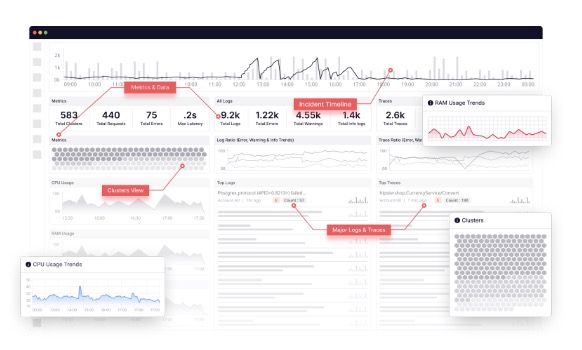
The different signals do different jobs. Metrics describe quantities over time. Logs record events. Traces follow the path of a request. A timeline lets an engineer look for connections between them. The attraction is practical: less time translating between screens, more time deciding what the evidence means.
Conceptual illustration of the product approach, not a performance benchmark.
Middleware joined Y Combinator’s Winter 2023 batch. In August, it announced $6.5 million in seed funding led by 8VC. The backers included Fin Capital, Tokyo Black, Guillermo Rauch and Gokul Rajaram. Vishnoi thanked the team and early customers alongside the investors. Capital made the next period of building possible; it was still the product that had to earn its place in an engineer’s day.
The next screen may be a repair
By 2026, the ambition had moved further along the incident. Middleware’s OpsAI product is designed to investigate application errors and propose changes to code. Its described workflow can produce a pull request: a concrete proposed repair that an engineering team can inspect. For Kubernetes, the product offers modes that suggest fixes for review or apply them automatically.
That is a consequential move for a founder whose original complaint involved the cost of watching software. The next question concerns what happens after the watching. An alert can be correct and still leave a great deal of work unfinished. It has announced the interruption; somebody must now understand it and decide how to respond.
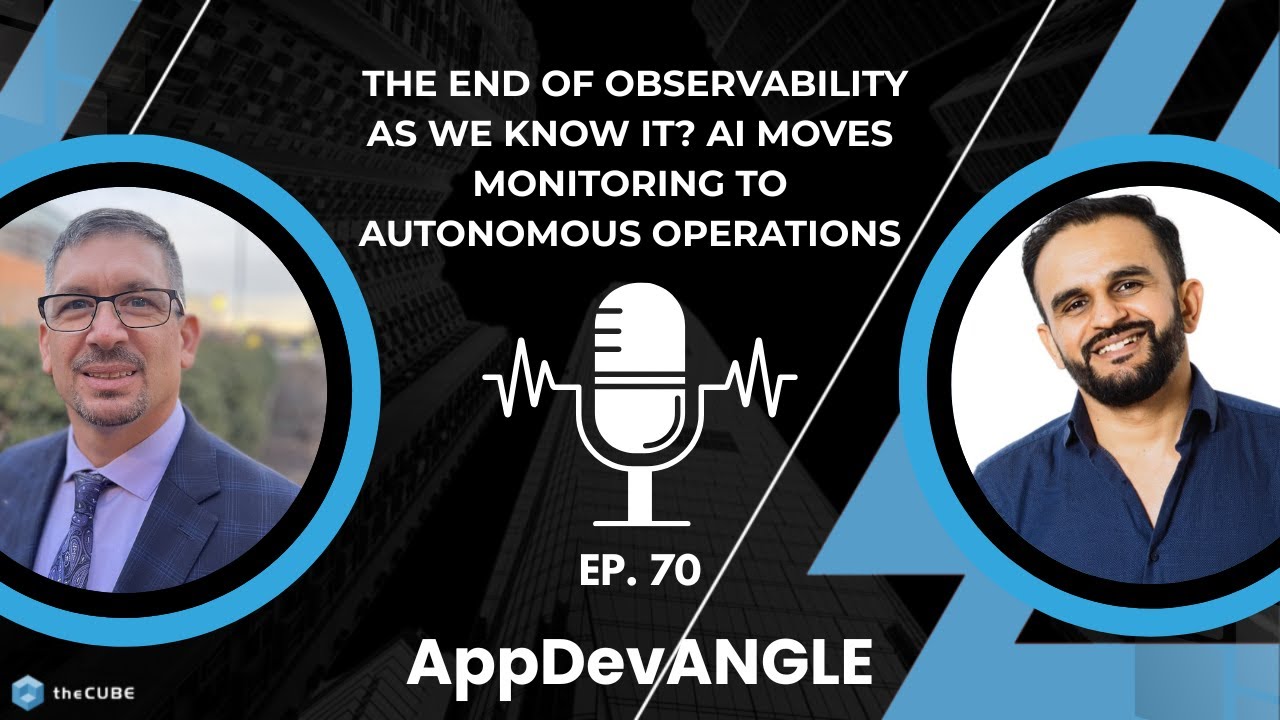
In his May 2026 AppDevANGLE conversation, Vishnoi described a future in which AI-generated fixes enter the software delivery workflow. He also connected the idea to the observability platform underneath it: the data provides the context for the proposed action. His prediction is an ambition, and the work of earning trust belongs inside it.
The useful test is therefore quite concrete. Does the proposed change explain the incident? Can the team understand it? Does it belong in the system being repaired? A confident suggestion still has to survive those questions. The closer an observability product gets to changing software, the more the explanation matters.
There is continuity beneath Vishnoi’s changes of company. Acquire put a conversation back together. Middleware tries to put an incident back together, then shorten the path to a response. His next chapter asks whether the software can carry more of that work itself. The original irritation was a bill. The lasting question is how much effort understanding should require.
Keep following the work
Personal website ↗ LinkedIn ↗ X ↗ Instagram ↗
Middleware ↗ Acquire profile ↗ YC founder biography ↗
The 2024 career interview ↗ Ignite podcast with Brian Bell ↗ The 2023 Middleware interview ↗
Vishnoi on lead generation ↗ The 2026 AppDevANGLE conversation ↗ Watch the Ops AI demo ↗