There is a respectable way to start a travel company, involving market research, a desk, and perhaps a coffee one can expense. Ross Borden’s account begins on a volcano outside Arequipa, Peru, with friends carrying tents and stoves and trying to make their money last. Lunch included tuna and crackers. Somewhere on Misti, the conversation turned to a problem familiar to anyone who has returned from a trip with photographs and too much to say: where should all of this go?
They were sharing stories through email. Borden wanted a community where travel experiences could circulate beyond a private address list, where strangers might find each other through a place or a shared interest. There was an adventure unfolding around them. The missing piece was somewhere to carry it afterward.
In 2006, he and Ben Polansky co-founded Matador Network. Twenty years later, Borden is its CEO, working across travel publishing, creator partnerships, and GuideGeek, the company’s AI travel platform. The distance between that mountain conversation and a software business is considerable. The question connecting them is surprisingly ordinary: someone has seen something worth sharing. What happens next?
A volcano, a cubicle, and somewhere to put the photographs
Borden’s early travel had a strong preference for stretching the budget. He recalls going to Spain in high school, running with the bulls, and sleeping in a park. Later came a work stay in Kenya and travel around East Africa. His Matador biography also records time living in Argentina. These were experiences measured in time away and places encountered, with accommodation occasionally taking a rather broad definition.
The corporate chapter arrived too. Back from his travels, Borden sold database software. He remembers a colleague coming over to his cubicle to show him YouTube, then a young site where ordinary people’s videos were attracting viewers. Here was a new way to distribute what people had made themselves. A travel community began to look more achievable.
“I wanted to crowdsource travel storytelling,” he recalled. That sentence puts the emphasis on participation. A reader could also be a traveler with something to contribute. The company’s name made a promise: there would be a network, with people at the other end of it.
- 2006A travel community
- 2009MatadorU
- 2023GuideGeek
- 2026Destination AI
Publishing, education, and planning - different ways to help a traveler take the next step.
The network had to earn its name
An early website can be an idea with a login screen. Making it useful to other people takes more work. Matador introduced MatadorU in 2009, a travel-writing education program that gave the community another reason to gather. Its editors described sharing, inclusion, and an educator’s impulse as part of the company’s development. Publishing someone’s experience and helping someone learn to write were closely related activities.
Borden contributed travel work himself. His archive moves from Madagascar photo essays to Cape Town recommendations, British Columbia skiing, and eating in San Francisco. The range matters. A founder selling the appeal of travel also had a byline attached to particular places and experiences. He had something more concrete to offer than an instruction to follow one’s dreams.
By 2015, he was explaining how local journalists shaped Matador’s video work. A person on the ground could introduce the characters, understand the setting, and point a visiting production toward a story. He compared that kind of preparation with the introductions behind Anthony Bourdain’s travels. Knowing somebody who knew the place was part of the method.
Matador’s short films also required compression. The team could spend about an hour interviewing a subject, then combine the conversation with footage of the person’s life, interests, and surroundings. Borden understood that audiences would not sit indefinitely through someone talking. The work was to preserve the person while making the film worth watching. Anyone who has endured a friend’s unedited holiday footage will recognize the necessity.
A good story still needs a business
Borden started Matador with $11,000. He has been candid about arriving without experience launching a company and making mistakes while building the site and hiring people. In his vocabulary, trouble belongs inside the definition of adventure. That is a convenient philosophy for a founder, although it does little to pay an invoice.
“Something is only an adventure when things start going wrong.”
Ross Borden, 2018
Matador’s initial funds, as recalled by Borden.
The business grew to include films and campaigns for destinations and consumer brands. Working with Ford and REI on outdoor storytelling meant coordinating talent, creative ideas, and distribution. Borden described drawing from a group of Bronco Sport ambassadors and looking for interesting stories and diverse backgrounds. The person in the film had to give an audience a reason to stay.
Distribution was planned alongside production. Matador, REI, and Hearst Autos brought different channels and audiences to the Ford work. Borden’s account is practical about this: decide how a film will reach people while deciding what it will say. A lovely piece of footage still needs someone to press play.
There were visible business milestones. Matador ranked No. 3,572 on the 2024 Inc. 5000. Fast Company included it among its Most Innovative Companies that year for its work in travel. Recognition supplied an outside marker of progress; the daily work still required a usable product, an interested audience, and partners willing to work together.
The warehouse and the next question
A glimpse of Matador’s workplace in 2023 offers an appropriate setting for this mixture of media and technology. The Sausalito warehouse had leather couches, woodwork, a garage door, and a 6,000-pound family safe from an Idaho bank. Across the bay stood San Francisco’s skyline. One could hardly accuse the office of lacking a conversation piece.
GuideGeek had launched that spring. The problem it addressed came after the travel story had done its job: a viewer became curious about a place, then had to assemble the practical details. Borden saw an opening between wanting to travel and feeling ready to make decisions. An inspiring video does not tell everyone how to fit a destination into their own dates, budget, and preferences.
GuideGeek initially met travelers inside messaging services, including WhatsApp, Instagram, and Facebook Messenger. Borden regarded that as a deliberate product decision. People could ask a question in a format they already understood, rather than begin by learning their way around another app. The familiar experience of asking a friend for advice helped shape the interaction.
His enthusiasm came with operational work. Borden has described hiring reviewers to watch conversations and step in when answers went astray. Travel advice has consequences in the small, expensive units of a holiday: an afternoon, a reservation, a journey across town. A fluent answer is only useful if it helps someone make a sound decision.
An editorial view of the traveler’s journey behind Matador’s publishing and planning work.
An itinerary with a local accent
Borden’s next argument was that travel brands would want AI tools shaped around their own information and customers. He set it out in a 2025 essay: destinations have knowledge visitors need, and a conversation can reveal more about a visitor’s interests than a count of website traffic. The company could build custom assistants around that relationship.
In 2025, GuideGeek won Best Use of AI at the Skift IDEA Awards. The award recognized its custom tools for travel brands, including the way they combined destination information with broader travel data. This was a different business from publishing a city guide, but the local knowledge behind a useful answer remained central.
By April 2026, a partnership with Ripe was extending the path toward booking. For destinations using both providers, the integration brought live lodging inventory, rates, and availability into GuideGeek’s tools, with links into the destination’s booking pages. Advice could connect to an available room. That is the kind of detail that separates browsing a place from preparing to arrive.
In July, Visit Baltimore launched Chessie, a GuideGeek-powered assistant named for the legendary creature of Chesapeake Bay folklore. Its remit included neighborhoods, dining, events, and itineraries. A sea monster had acquired a customer-service position. Behind the name was Borden’s proposition that a destination should be able to answer a visitor’s particular question whenever it arises.
Back at the microphone
Alongside the software business, Borden hosts CREATOR: The Podcast. His guests include travel filmmakers, photographers, and people building companies around an audience. Conversations with Caspar Lee and Eva zu Beck give him a place to ask how a career takes shape, what changed its direction, and how creative work becomes a living.
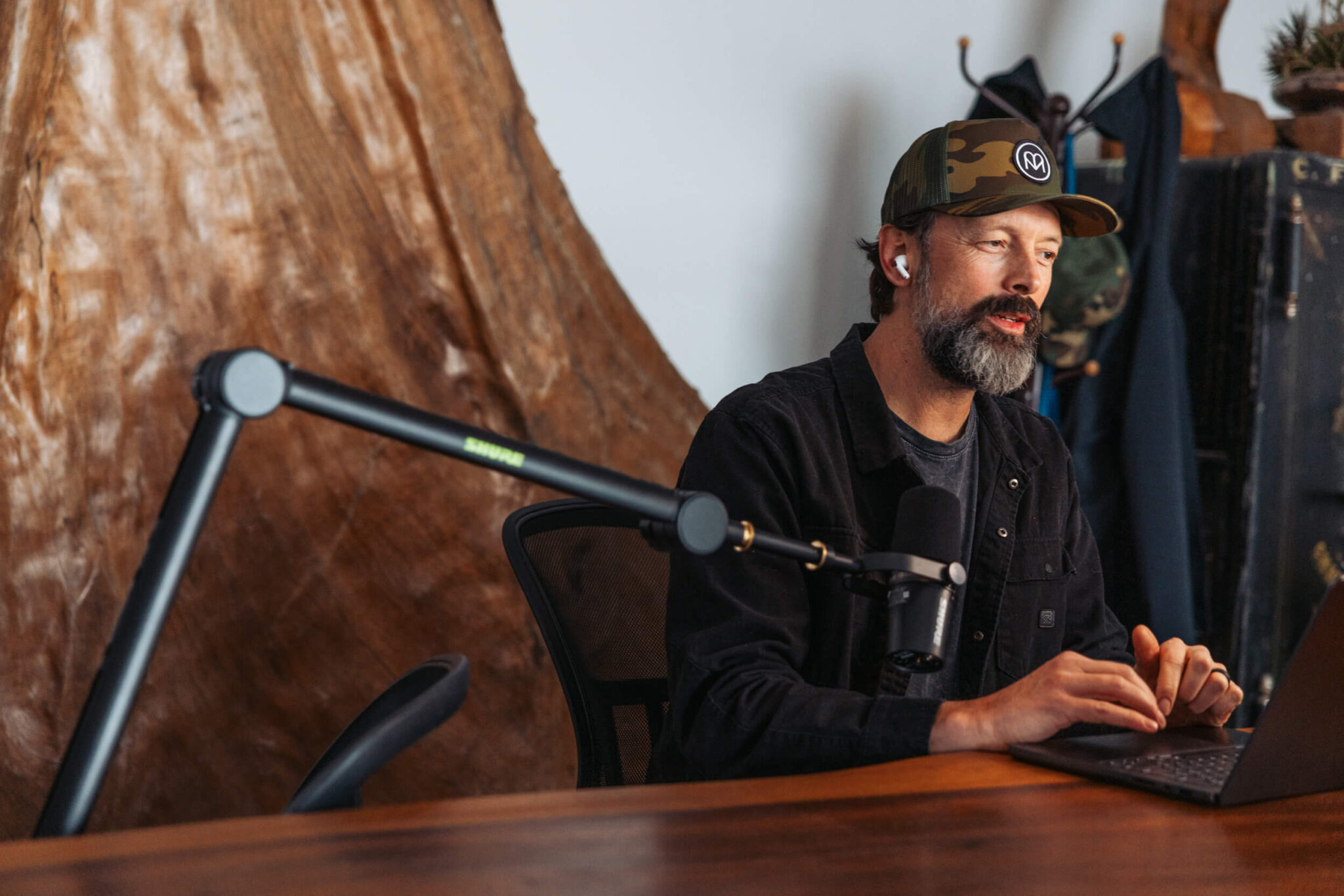
In an August 2026 episode with Josh Platillero, known as Mega American, Borden asked about the mechanics behind widely watched landscape videos. They discussed filming a reaction to a view, finding someone else to operate a phone, and eventually shooting alone. Borden was interested in the decisions behind a deceptively simple format. The landscape gets the attention; somebody has to figure out the shot.
That interest makes the various parts of his career fit together. Travelers have stories. Creators have practical problems. Destinations have information. Borden keeps looking for a way to introduce one to another, whether the introduction happens through an article, a film, a conversation, or a planning tool.
He has described success in terms of freedom and looking forward to Monday morning. For a founder whose earliest travelers were trying to make their money last, it is an appropriately personal measure. The business has acquired more machinery. The attraction of choosing where to go, and finding people worth meeting there, remains easy to recognize.
His expectation for AI ends in a similarly human place: the memorable part of a trip will be the people it helps a traveler reach. It is a useful test for the company that grew from those photographs in Peru. After the story has traveled, someone should be able to follow.
Read, watch, follow
- Matador Network Travel stories, films, and guides
- GuideGeek Travel questions and planning
- Ross Borden on LinkedIn Professional profile
- Ross Borden on Instagram Travel photographs and updates
- Watch CREATOR: The Podcast on YouTube ↗ Conversations hosted by Borden
- CREATOR: The Podcast Episodes and transcripts
- Borden in conversation with Brand USA The travel-community origin and GuideGeek
- The 2024 business interview Product choices and company development
- Why Every Travel Brand Needs Its Own AI Borden’s essay on destination tools
- The 2025 Skift IDEA Award winners GuideGeek’s Best Use of AI recognition