The first FabFitFun box had a rather useful accessory: several years of people opening the email. When Michael Broukhim and his co-founders moved into subscriptions in March 2013, they were taking a chance on 2,000 boxes. They already had readers. The experiment was whether a recommendation that worked on a screen could become something a person wanted delivered to the door.
It is a pleasingly literal turn in a publishing career. Write about a product for long enough, and eventually someone asks whether you might just send it. FabFitFun had begun in 2010 as an editorial business, founded by Michael, his older brother Daniel and Katie Rosen Kitchens. The shopping came later. For a business associated with opening boxes, its early history involves a surprising amount of reading.
The sequence matters to understanding Broukhim. His career runs through political campaigns, celebrity media, consumer commerce and now deep technology investing. Those worlds have different dress codes and considerably different inventories. Across them, he has repeatedly worked on the problem of introducing something to an audience, then giving that audience a reason to stay.
A publisher’s education
Broukhim was born and raised in Los Angeles, the son of parents who had left Iran following the Islamic Revolution. His family offered two models of a working life. On his father’s side, formal education and established professions carried weight. On his mother’s side, entrepreneurship supplied another possibility. His eventual combination of a law degree and a company suggests he gave both sides a hearing.
At Harvard, where he graduated magna cum laude in 2007, he became editorial chair of The Harvard Crimson. The surviving archive puts his name on campus commentary, arguments and dissenting opinions. Before there were subscribers choosing products, there were opinionated people choosing words. A college newspaper provides ample opportunity to discover how many confident people can disagree in one room.
His early professional opportunity came through digital work for Rudy Giuliani’s presidential campaign. Broukhim and a college friend helped with the website and online strategy, then attracted other political clients. The business that became Charlie gave him practical experience in a trade where the client’s message must survive contact with an actual audience.
Returning toward Los Angeles brought a different set of introductions. Rachel Zoe and her husband, Roger Berman, trusted the team with digital work; the Golden Globes and other entertainment clients followed. The route from a candidate’s website to a stylist’s media business sounds circuitous until you consider the shared task: make a recognizable person’s point of view travel beyond the room.
Readers become members
FabFitFun gave the founders a publication of their own. Giuliana Rancic was an early spokesperson. The team produced lifestyle content, built an email audience and learned the mechanics of running a media property. Michael was still in graduate school when Daniel launched the first boxes. In 2013, Michael also completed his JD at Stanford Law School. The qualifications and the cardboard arrived in the same year.
The attraction of the box grew partly from the founders’ experience with event swag bags. Products collected in one place could make discovery feel like an occasion. FabFitFun could bring that experience to readers who were already looking to it for recommendations. A subscription added a calendar: a new selection each season, with another reason to return.
Publishing remained part of the offering. A 2019 box came with a magazine explaining the products, while video and member shopping added other ways to engage. There was a commercial logic to that editorial work. A product introduced with context has a chance to become more interesting than a name on a label. The company could explain why something belonged in the box before the member decided where it belonged at home.
Broukhim resisted letting fashionable enthusiasm or fashionable pessimism about subscription companies set the strategy. The useful comparison was retail: individual businesses still had to earn their place. The category could attract attention, but members would make their own judgment about what arrived. Packaging can sustain a reveal for a few seconds. The contents must do the rest.
“We focus relentlessly on the customer and delivering as much value as possible.”
Michael Broukhim, 2019
The members on the other side
His descriptions of the company increasingly emphasize a shopping club. The box gives people a scheduled introduction to products; shopping events extend the relationship through the season. In a later conversation about subscriber experience, he described full customization for both annual and seasonal members. The selection still comes from FabFitFun, but members get more say over what leaves the warehouse.
That balance is central to the service. Too little choice makes a delivery a gamble. An endless catalog restores the work of shopping that the member was hoping someone else might do. Curation has to narrow the field enough to be useful while leaving room for different tastes. A recommendation business discovers fairly quickly that its customers are individuals.
The brand partnership works from the opposite direction. A company has a product and needs an introduction. FabFitFun has members and needs something they will want to discover. Broukhim talks about telling brands’ stories in different ways depending on their size and stage. The transaction has two constituencies, and a weak match is liable to disappoint both.
He has an appropriately unglamorous affection for the medium that helped start it. In 2023, he called email “the cockroach of the internet.” The joke rested on durability and openness. A newsletter can sound quaint next to a new platform, but a recurring invitation to an interested reader remains useful. Broukhim had learned audience growth, email economics and content production before the business required shelves.
and merchandising
and a delivery
a potential customer
A diagram of the model, rather than a promise that every introduction becomes a lasting relationship.
The family business, with new rules
Working with Daniel supplied trust and a shared history. It also required adjustment. “We had to unlearn the brother habits,” Michael said in 2018. The remark gives the partnership some welcome texture. Having known a person all your life does not automatically settle how you should run a meeting together.
There had been an earlier joint enterprise, of a sort: the brothers were junior-varsity basketball co-MVPs. Michael’s childhood ambition was to play point guard for the Los Angeles Lakers. Business provided a different court. By the time FabFitFun was growing, the professional relationship needed its own habits, even when the personal one came with years of practice.
His public advice often returns to learning from other people. On The Mentor Files, he described success as bringing him into work where he could no longer claim to have all the answers. In conversations about leadership, he emphasizes self-criticism and peers who can help him think. That is a practical requirement in a company whose original skill was producing content and whose later responsibilities included getting physical products into people’s hands.
The humor survives the executive biography. Asked in 2024 about his first car, he named a Little Tikes Cozy Coupe. Asked whether he wanted it back, he did. He also described a wish to visit Iran with his family when safe; his parents were born there, and he had never been. The answers move easily between a toy vehicle and a place carried through family history.
What a warehouse can teach an investor
By 2025, Broukhim was explaining how FabFitFun’s resources could help other consumer businesses. At SubSummit, he described FabFitFund, with a final “d”: a program that could offer young brands future purchase commitments and access to parts of the company’s operating infrastructure. Creative work, performance marketing, packaging and fulfillment could become useful beyond the next seasonal box.
He connected the approach to watching founders pitch related ideas and seeing what members wanted. Consumer insight had a second use. It could inform which entrepreneurs to support and where the existing business might give them an advantage. His examples included the faux-fur blanket brand UnHide and the cookware company Our Place.
This is a more concrete form of help than an encouraging coffee. A young company may need orders, distribution or someone who knows how to move the goods. FabFitFun’s experience gave Broukhim something to contribute alongside an investment judgment. It also expanded the role he could play: the person running a consumer business could become a partner to people starting their own.
A different kind of physical world
In January 2026, that investing career took a new turn. Broukhim and venture investor Lior Prosor launched Deep33. The firm announced a $100 million first close toward a $150 million fund target. Its focus included quantum computing, AI infrastructure, advanced energy and robotics, with a strategy centered on the United States and Israel.
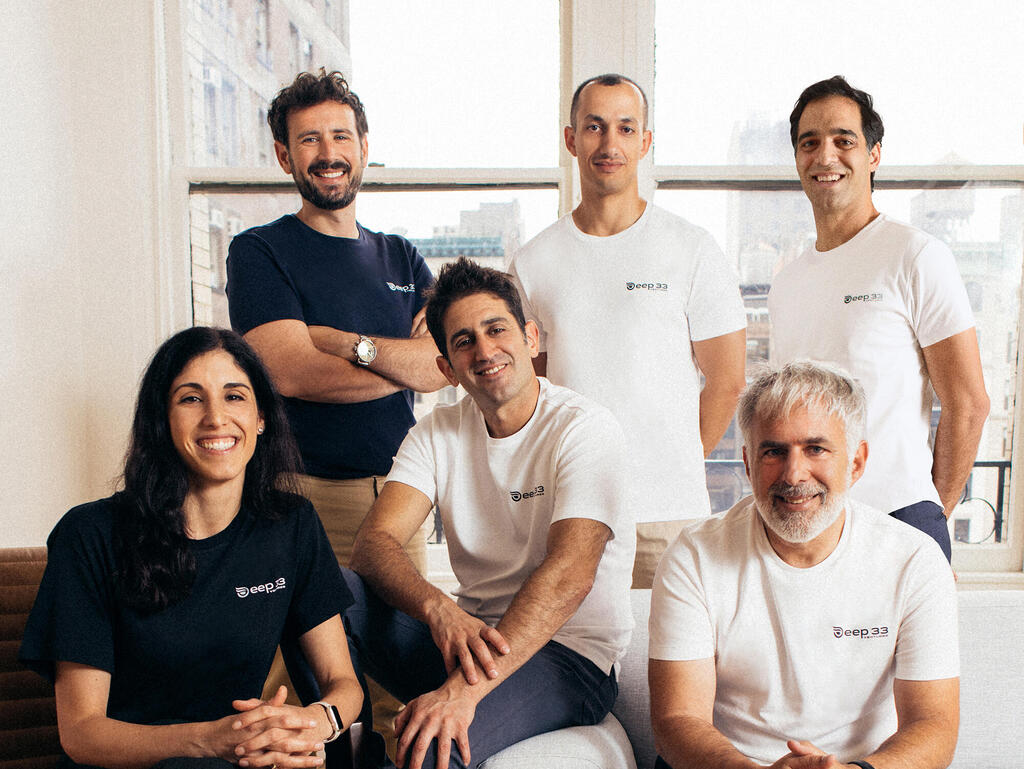
Deep33 brought specialist partners into the structure, including expertise in quantum computing, energy and AI infrastructure. Lior Susan, founder of Eclipse, became chairman. The disclosed early investments included Quamcore, CyberRidge and Particle. The proposed work reaches into technologies with scientific and industrial demands a long way from a newsletter’s publishing schedule.
By September 2026, Deep33 was explaining its investment in Aitan, whose $41 million Series A it co-led with Dell Technologies Capital. The firm described Aitan as a way for governments to integrate and update robotic systems. It was a current example of the infrastructure thesis: supporting the layer that lets a customer use changing technology over time.
The geographic focus also has a personal dimension. Broukhim has described becoming more involved in Israel’s technology ecosystem following October 7, 2023. Deep33 combines that involvement with a commercial thesis about frontier companies and the connections between Israeli technical talent and American markets. Its ambitions concern the physical capacity behind new technology: the systems and infrastructure required to make it work.
There is continuity in the change, though it would be too neat to pretend that a subscription box explains quantum computing. Broukhim has spent his career helping ideas reach people, first through media, then through products, and now also through investment. Each move asks him to learn what the next business actually needs. The original FabFitFun experiment began with readers and 2,000 boxes. The next delivery has a very different packing list.
Continue the conversation
Interviews, public profiles and the businesses behind the story.