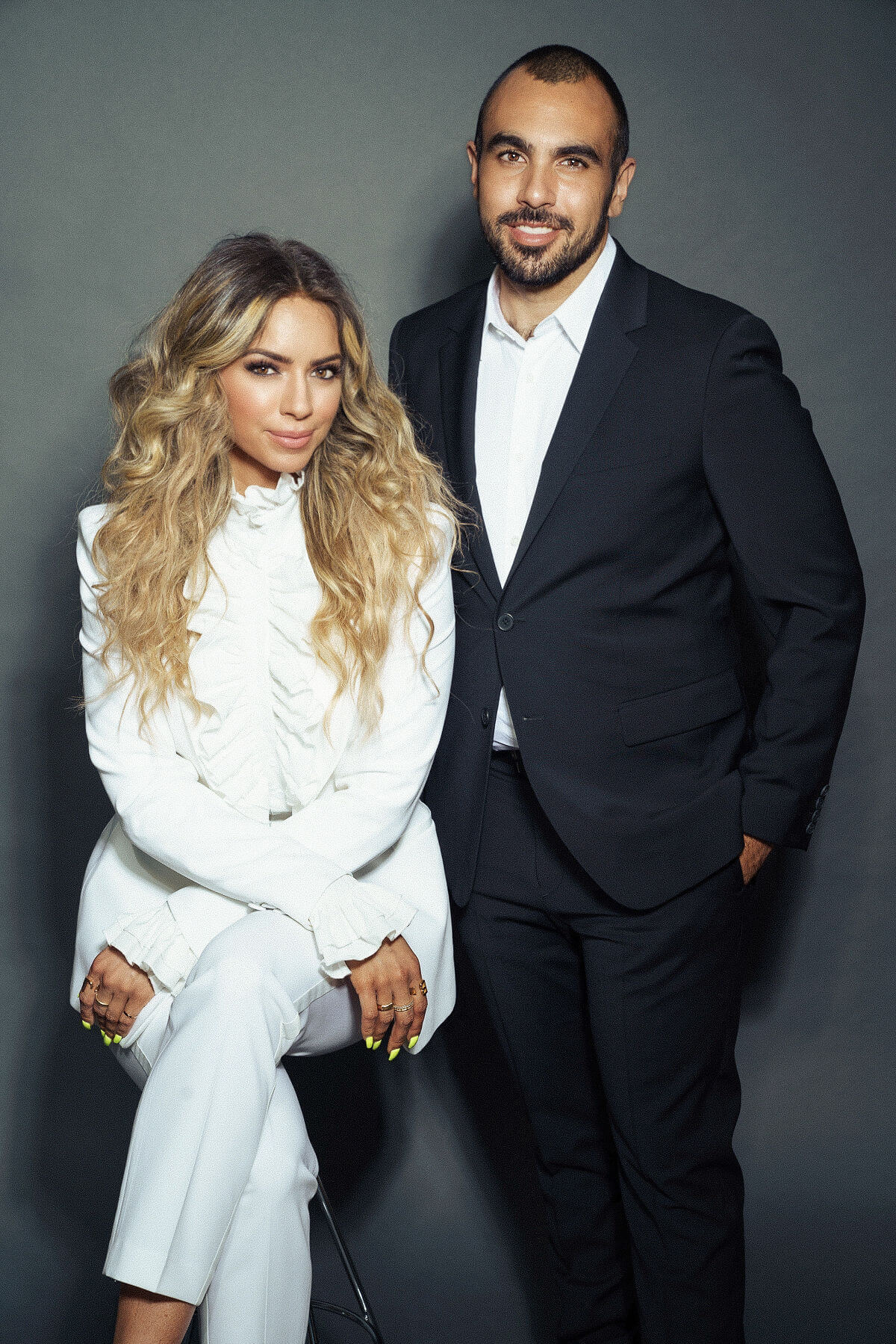
Jenna Bryant went to Los Angeles to dance. The job in technology was supposed to help pay for that decision. Somewhere along the way, the supporting role took over the plot. Recruiting engineers became a career; the career became an investment practice; and in 2020, she co-founded Embedded Ventures with Jordan Noone, who had helped start a company that 3D-printed rockets.
It is tempting to tidy this sequence into a conversion story, complete with a discarded ambition and a sensible new wardrobe. Bryant makes that difficult. She still dances. Her television credits remain part of her biography. Her degree is in apparel design. The arts have not been politely escorted out of the room now that the conversation involves manufacturing and space infrastructure.
Her path raises a useful question about how people become qualified for work they never expected to do. When a company needs an engineer it cannot find, someone has to understand the problem well enough to find the person. Bryant spent years doing that. Eventually, she began helping decide which companies should get built in the first place.
The job that paid the bills
She came from Alabama with ambitions in acting and dance. Los Angeles offered opportunities in both, along with the familiar requirement that newcomers find a way to support themselves. Bryant took a recruiting job. The work put her near the early companies of Silicon Beach, including Snap and Tinder, at a stage when building an engineering team was an immediate, practical problem.
A recruiter encounters a startup through its missing pieces. A founder can explain the product beautifully and still need someone who knows how to build a particular component. The next hire has to fit the work, the stage of the business, and the other people already there. That gives recruiting a close view of the distance between an ambition and a functioning company.
Bryant’s entertainment work continued alongside it. Her acting résumé lists co-star credits in Sleepy Hollow, The Detour, and Halt and Catch Fire, plus a recurring guest role in Rhett & Link’s Buddy System. It also lists training in improvisation and theatre. A career containing both engineering searches and comedy classes has at least the advantage of resisting a dull introduction.
There was another connection between her creative education and technology. While studying fashion design, she encountered computer-aided design tools. Years later, CAD would become central to a company she helped found. That earlier experience does not turn an apparel-design degree into an aerospace credential. It does make the boundary between her interests look rather less solid.
Her recruiting work led to a partnership at a fund focused on early-stage hard technology. Investing gave her another way to work with founders and help assemble their teams. Embedded Ventures grew out of that progression. The years spent recruiting were becoming part of what she could offer a founder after an investment.
“The past does not define the future.”
Jenna Bryant
Recruiting the rocket builder
The partnership with Noone contains a small, satisfying detail: Bryant recruited him, too. He first joined Embedded as an advisor. In his account of the firm’s beginnings, the assignment was to help build the kind of fund he would have wanted backing him. Bryant subsequently asked him to come aboard full time.
Noone brought experience from Relativity Space, where he was a co-founder and served as chief technology officer. Bryant brought her work in talent and investing. Their partnership put the engineering of a physical product beside the task of assembling the people who could deliver it. Both had spent time around young companies before those companies became easy to summarize.
Embedded’s focus includes digital engineering, advanced manufacturing, and space infrastructure. These are fields where a persuasive presentation still leaves a considerable amount of work for physics. The firm’s approach makes technical evaluation and engineering recruitment explicit parts of the investment job. Its portfolio includes companies such as Chromatic, Inversion, Slingshot Aerospace, Skyryse, and Zoo.
Another relationship required crossing an institutional boundary. In October 2021, Embedded announced a cooperative research and development agreement with the U.S. Space Force’s SpaceWERX office. The agreement created a way to collaborate on research opportunities and examine how venture investment practices could help accelerate space technology.
The arrangement involved regular discussion and shared work, without funding changing hands under the agreement itself. Its usefulness lay in opening communication between organizations that approach technology from different directions. For a young company, developing something commercially promising and understanding a government customer can be separate assignments. Embedded wanted to help connect them.
In 2023, the firm announced a first closing for an inaugural fund targeting $100 million. Bryant also made a point about patience, publicly saying the team could accept missing an opportunity while it completed diligence. That is a consequential position for an investor in companies whose central claims have to survive technical scrutiny.
- 2020Embedded Ventures founded
- 2021SpaceWERX research agreement announced
- 2022Project Payload support announced
- 2026Zoo introduces Zookeeper
A useful introduction becomes a company
Zoo’s origin brings Bryant’s particular contribution into focus. Software engineer Jessie Frazelle had encountered the limitations of hardware-design software through her work at Oxide Computer Company. She asked Bryant for an introduction to Noone. Their conversation helped lead to the original thesis behind Zoo, which began as KittyCAD and was incubated within Embedded Ventures.
There is a difference between possessing a long list of contacts and recognizing a useful connection. In this case, a software builder’s frustration met a hardware builder’s experience. Bryant was the person between them. She became a co-founder alongside Frazelle and Noone, taking her involvement beyond an introduction or an investment.
The company works on software for designing physical things. Its products include a geometry engine and tools for computer-aided design. The premise is fairly approachable even when the engineering underneath it is complicated: people developing hardware should have better ways to create, change, and work with their designs.
In February 2026, Zoo introduced Zookeeper, a conversational CAD agent. Users can describe a design, ask questions, and iterate on a model inside Zoo Design Studio. The company emphasizes that the resulting models remain editable through familiar design workflows. Bryant authored the announcement, which identified all three co-founders.
The connection to her earlier career is unusually direct. A recruiter learned how to bring people together around difficult work. A company emerged from one such connection. The outcome gives substance to the otherwise vague idea that an investor can help build: here, the help included getting the future founders into the same conversation.
Three co-founders. One shared hardware-design problem.
A different kind of early-stage investment
In April 2022, Bryant and Noone helped bring back Project Payload at USC Viterbi. The program had run in 2019. Its return would give middle school girls hands-on experience in aerospace engineering and computer science, including programming and rocket design. Embedded’s announced support included a four-year commitment and a six-figure donation.
The planned summer session was specific: fifteen girls entering sixth through eighth grades, two weeks of work, and a high-altitude balloon launch at STARBASE in Los Alamitos. High school students in USC’s SHINE research program would help mentor them. The emphasis was on having the experience of doing engineering while still young enough to be deciding what might be interesting.
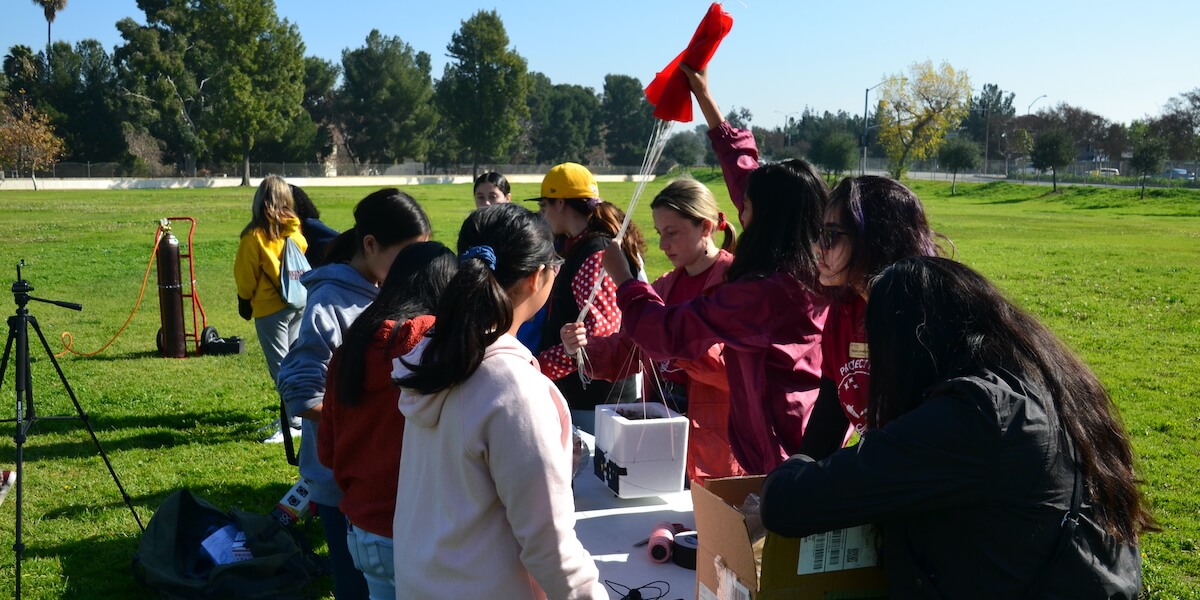
Bryant described wanting to reach girls before they had a full picture of a technology career, while they might still be unsure whether they belonged. The concern has a personal resonance in a career that crossed from performance into recruiting and investing. An invitation to try something can arrive long before anyone has the appropriate job title.
Her own public learning has included a similarly approachable entry point. In 2021, she promoted a livestream with Frazelle in which she would build a circuit using a 555 timer to control an LED. She called the series Jenna Learns to Code and invited viewers to learn along. The starting point was a blinking light. It was also permission to be a beginner in public.
Keeping the dance in the story
Bryant’s own explanation of her career resists dividing people into creative and technical halves. She points to curiosity, experimentation, and discipline as common ground between art and science. Dance remains a creative outlet. It need not justify itself by becoming a lesson about venture capital every time she goes to class.
There are less occupational details, too. Her firm biography places her in greater Los Angeles with a dog, cats, two goats, and six chickens. The household offers a pleasingly terrestrial counterpart to space infrastructure. Even a career concerned with the future can leave room for animals with fairly immediate priorities.
The through line in her work is easier to see in the people than in the titles: engineers finding a startup, an advisor becoming a partner, two builders meeting over a shared problem, girls getting to try aerospace engineering. These are tangible changes in who gets to participate and what they can do together.
Her first Los Angeles plan mattered. So did the work she took to support it. The recruiting job placed Bryant close to the unfinished business of young companies, where a missing person can matter as much as a missing investment. She has continued working in that space between an idea and the team that can make it real. There is still time to dance.
Follow the conversations
More from Bryant and the people building alongside her.