A unicorn is an odd animal to invite into a bank. It promises speed, spectacle and a valuation with several commas. A small-business bank worries about customers, payments, repayment. BRI Ventures lives where these appetites meet. Its most revealing investment story involves Haus!, an Indonesian drinks chain whose appeal includes prices within reach of ordinary buyers. The cup on the counter tells you something the pitch deck might conceal.
- Bank-backed capital, venture-fund management and startup mentoring.
- Sembrani Nusantara introduced a locally regulated route for outside investors.
- Consumer cash flow is part of the thesis; the TaniHub case exposes its institutional risks.
Established as BRI’s corporate venture arm in 2019, PT BRI Ventura Investama invests in startups and manages venture funds. Its original emphasis was fintech; its ambitions widened into consumer businesses, agriculture, healthcare and supply chains. The problem it addresses is familiar to founders: money alone cannot deliver customers, useful introductions or a working route to market. The bank connection is the proposed answer. It also brings obligations that have become painfully consequential.
The unicorn gets a local passport
In June 2020, BRI Ventures launched Sembrani Nusantara, presented as Indonesia’s first OJK-licensed venture fund. Many funds serving Indonesian startups had been incorporated offshore, often in Singapore, or invested directly from corporate balance sheets. Sembrani offered a locally constituted vehicle that could take outside investors’ money. This was a change in the plumbing of venture capital, with implications beyond the announcement.
BRI’s 2020 annual report records fund-management approval on June 12 and a joint investment contract with a custodian bank on July 2. The fund targeted Rp300 billion; its first close brought in more than Rp150 billion, with investors including Grab, Celebes Capital, Investree, Fazz Financial Group and Pandu Sjahrir. Those figures describe the fund, rather than a startup financing round raised by BRI Ventures itself.
The name supplies a small joke at the industry’s expense. Sembrani is associated with Batara Wisnu’s horse in wayang mythology: a unicorn with local wisdom, as the firm describes it. The investment thesis was similarly local. Education, agro-maritime activity, retail, transportation and health gave the fund the acronym EARTH. Indonesia’s everyday economy had acquired a fantastical mascot.
A drink can be a thesis
Haus! makes that thesis tangible. BRI Ventures’ June 2022 account says the company’s sales rose from Rp156 billion in 2020 to Rp252 billion in 2021 following Sembrani’s investment. It described affordable drinks, new snack lines and expansion plans. The inference is straightforward: a consumer brand can demonstrate demand at the cash register, giving investors evidence beyond forecasts.
The consumer remit extended through Sembrani Kiqani. A May 2022 seed investment backed Plépah, which turns areca-palm commodity waste into food packaging and tableware, working with communities in South Sumatra and Jambi. Little Joy brought baby food into the portfolio. These businesses put physical products, manufacturing and distribution beside the software usually associated with venture investing. Technology could assist a business whose customer still wanted something to hold.
That breadth helps explain BRI Ventures’ place in the market. A founder weighing a bank-linked investor against an independent VC must consider the usefulness of the institution behind the cheque. BRI Ventures advertises financial-sector knowledge and access to BRI’s network. For a merchant-facing startup, that can be a relevant advantage. Its practical value depends on whether introductions lead to adoption; an impressive parent company is not itself a purchase order.
Six startups, sixteen weeks, actual trials
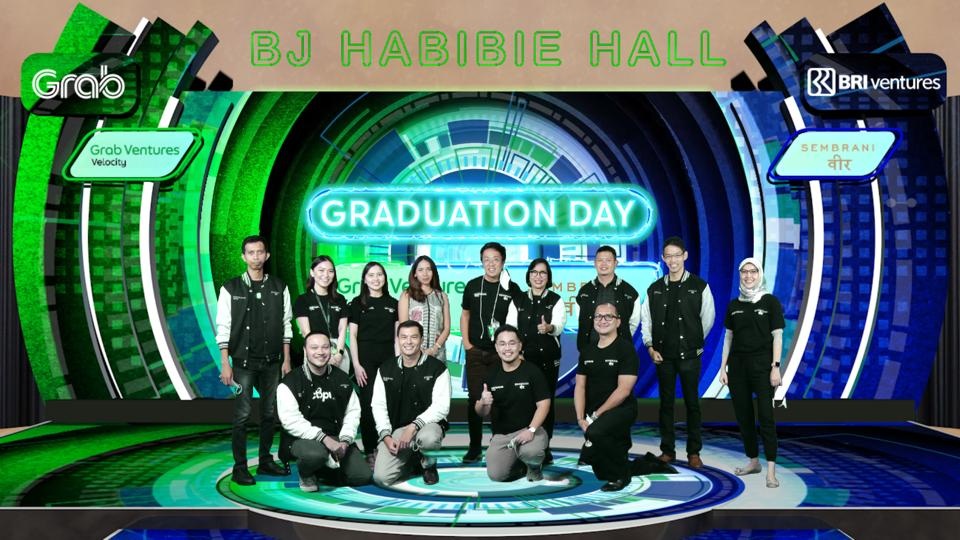
The accelerator work provides a more concrete example of access. Sembrani Wira began in 2021 with mentoring and technical training. Its collaboration with Grab Ventures Velocity gave selected startups a place to test products inside an operating commercial network. Founders can return from workshops with excellent slides but no customers.
Grab’s account of the 2021 fourth batch names six graduates: Cooklab, Crewdible, Dagangan, iSeller, majoo and Octopus. They completed sixteen weeks of training and mentoring, with trials involving services such as GrabFood, GrabMart and GrabExpress. Three secured funding during the programme. Participation and financing were separate outcomes; the cohort’s value included the opportunity to learn from a functioning marketplace.
The transferable lesson is to choose partners by the experiment they make possible. Specify the buyer, the operational bottleneck and the result a pilot must establish. A programme aimed at merchants and small enterprises will suit products that solve those customers’ problems. A business with an unrelated audience has less reason to prize the same network. Fit is a rather better selection criterion than the guest list.
The price of patient money
BRI Ventures earns through investing and managing capital; the fund structure also has explicit costs. Its July 2025 product disclosure lists administration, management, custodian and performance fees, with amounts governed by the joint investment contract. Investors buy participation units. The document describes eligible investor categories including companies, governments and multilateral organisations, making the fund a different proposition from an ordinary consumer savings product.
By May 2023, the firm was discussing distributions funded by dividends from portfolio companies. Its announcement described a planned yield of approximately 12-14%. That was a dated company claim about distributions, not a standing promise of annual returns. The attraction was nevertheless clear: businesses producing cash could offer a route to investor payments beyond waiting for a sale or stock-market listing.
“Now, the name of the game is to simply survive and reach sustainable growth.”Nicko Widjaja, then CEO / June 2020
TaniHub changes the calculation
The harder evidence arrived through TaniHub. BRI Ventures invested US$5 million in the agritech company; MDI Ventures invested US$20 million. Public signs of retrenchment included TaniHub’s closure of its Bandung and Bali warehouses and the end of consumer services in March 2022, as it concentrated on business customers. The contraction preceded the criminal proceedings that later engulfed the investment.
CNA reported that on June 18, 2026, the Jakarta Corruption Court sentenced former BRI Ventures CEO Nicko Widjaja to three years and former investment executive William Gozali to two years. The court treated the investments as state losses. DealStreetAsia reported in September that their sentences were upheld on appeal. Their defence maintained the investments were procedural business decisions and denied personal financial benefits.
This complicates the bank-backed proposition. Public capital can offer institutional reach while exposing investment decisions to scrutiny beyond commercial performance. The useful lesson is narrower than declaring either venture capital or regulation the villain: document decisions, verify operating evidence and examine governance alongside demand. BRI Ventures’ consumer thesis asks whether a business can sustain itself. The TaniHub reckoning adds another question: whether the institution funding it can defend how it chose.