A farmer’s financing problem and a venture capitalist’s financing problem can look deceptively alike. Both involve money that has somewhere useful to go and difficulty getting there. In Nepal, Aadhyanta has placed itself between those two problems: collecting private capital, backing enterprises and helping businesses become intelligible to the people who might invest in them.
- A licensed Nepali fund manager investing across industries.
- Accelerators turn business plans into material investors can examine.
- Development partners help pay for preparation; investment remains a separate decision.
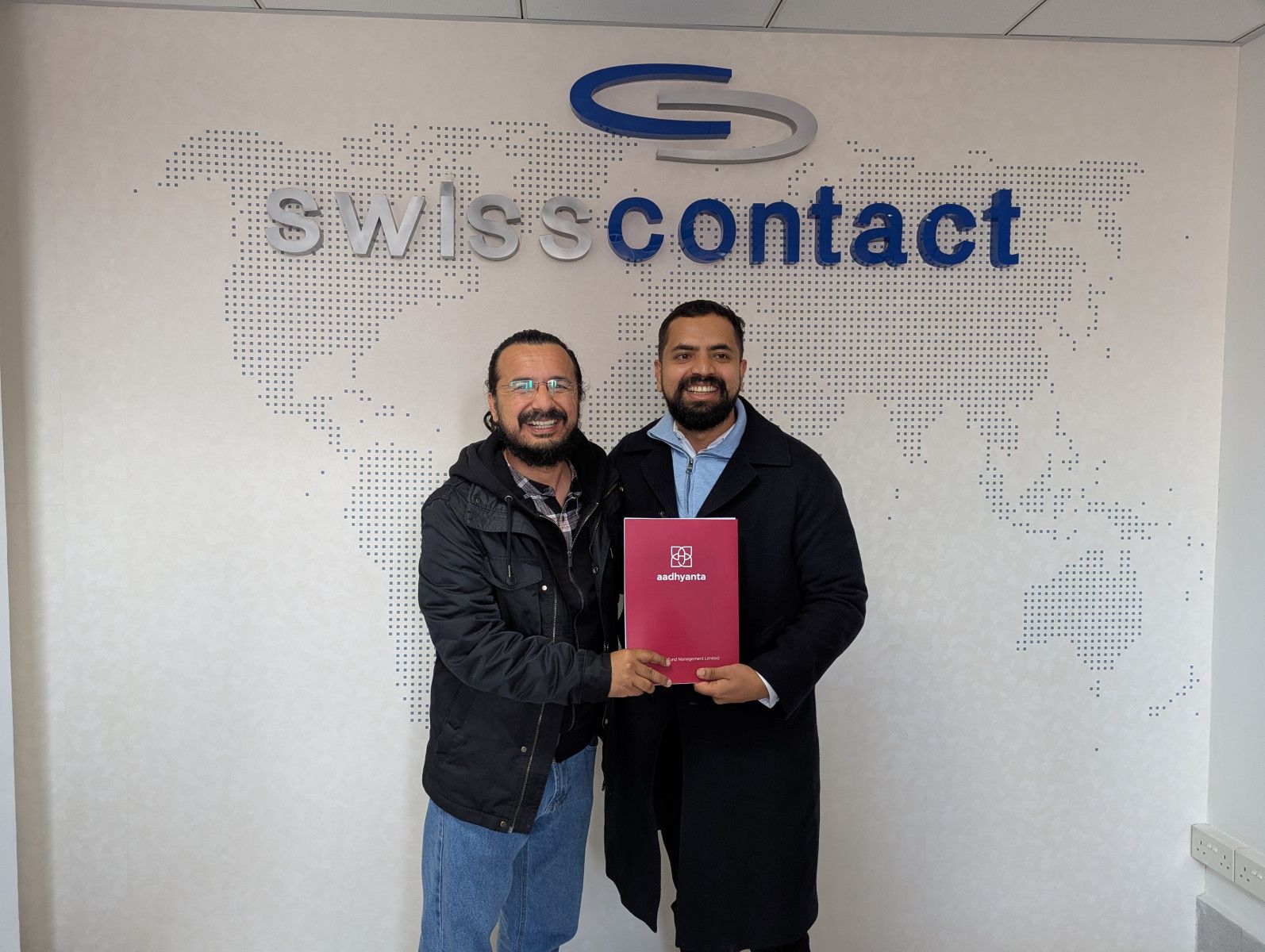
Consider KHETI, the agricultural platform operated by DV Excellus. In January 2025, Swisscontact announced Aadhyanta’s NPR 20 million investment in the company. KHETI connects farmers with agricultural services and collateral-free loans of up to NPR 200,000 from NMB Bank. One investment supports the enterprise; another financial relationship supplies the farmer. Confuse the two and the story becomes considerably grander, and considerably less useful.
01 / A cheque with a prehistory
The relationship did not begin with the announcement. DV Excellus appeared at CASA’s Investment Tourism event in December 2022. CASA, the UK-funded agriculture programme implemented by Swisscontact in Nepal, subsequently supplied technical assistance to help make the company investment-ready. The deal had a preparation period, partners and a business case.
In explaining the investment, Manoj Paudel pointed to the company’s growth potential and its team’s commitment, skills and vision. For a founder, that combination is instructive. A social problem can attract attention. A capable team with a credible route to growth gives an investor something to assess.
02 / Sixteen companies, many kinds of ambition
Aadhyanta is a private equity and venture capital fund manager, licensed by Nepal’s Securities Board. Its mandate reaches beyond the familiar startup image of a laptop and a hurried pitch. Agriculture, energy, information technology, manufacturing and hospitality all feature in its account of where it invests.
January 2026 reporting described Nepal Opportunity Fund I as fully deployed: NPR 3 billion across 16 companies, with individual investments ranging from NPR 5 million to NPR 400 million. The same report put Fund II in fundraising, targeting another NPR 3 billion. A proposed NPR 1 billion Simrik Nari Fund, focused on women-led and women-focused enterprises, was awaiting regulatory approval at that time.
NPR 3 billion deployed. Investment sizes: NPR 5 million to NPR 400 million.
The revealing detail in that report is smaller: four accelerator participants had secured investment. Aadhyanta’s response to a limited supply of investment-ready businesses was to help develop that supply. An accelerator, in this reading, is part of a fund manager’s practical infrastructure.
03 / Free has a payer
The Koshi accelerator makes that infrastructure unusually concrete. Its published six-month programme targets agricultural, tourism and digital-services businesses, working with Sahaj-NAMDP and FNCCI Koshi Province. Participants prepare a pitch deck and an investment memorandum grounded in due diligence. Those are documents another investor can use, too.
Its Nepali FAQ lists the programme cost at NPR 2 million per participant, covered by Sahaj and Aadhyanta. Entrepreneurs pay no fee. That is a useful distinction: removing the price of participation still leaves someone financing the expertise, training and support.
“We will focus on mobilizing private capital purposefully to grow enterprises that support Nepal’s development transition and aspirations.”Manoj Paudel / licence announcement, 2022
The published Koshi criteria also ask for substance: at least three financial years of operation, more than ten employees and NPR 2 million in paid-up capital. This particular programme was aimed at existing enterprises with room to grow. A promising idea alone would not satisfy those requirements.
04 / The paperwork is part of the product
Another programme, DIAL, concentrates on digital innovation in agriculture and logistics. An initiative of the Swiss Agency for Development and Cooperation, implemented by Aadhyanta, it combines mentorship, technical assistance and opportunities to pilot solutions. Its page specifies grant funding for one selected enterprise. A cohort invitation should therefore be read carefully.
The FAO Nepal partnership brings the same preparation logic to agrifood businesses. Its 2026 Agri-Value Chain Challenge advertised six months of fully funded training, mentoring, investor introductions and help with a financial model, business plan and pitch deck. Recruitment highlighted women-led enterprises; the listed application deadline was April 30, 2026.
- 01ExplainCustomers, market and business model
- 02DocumentFinancial model, plan and governance
- 03MeetInvestors assess the opportunity
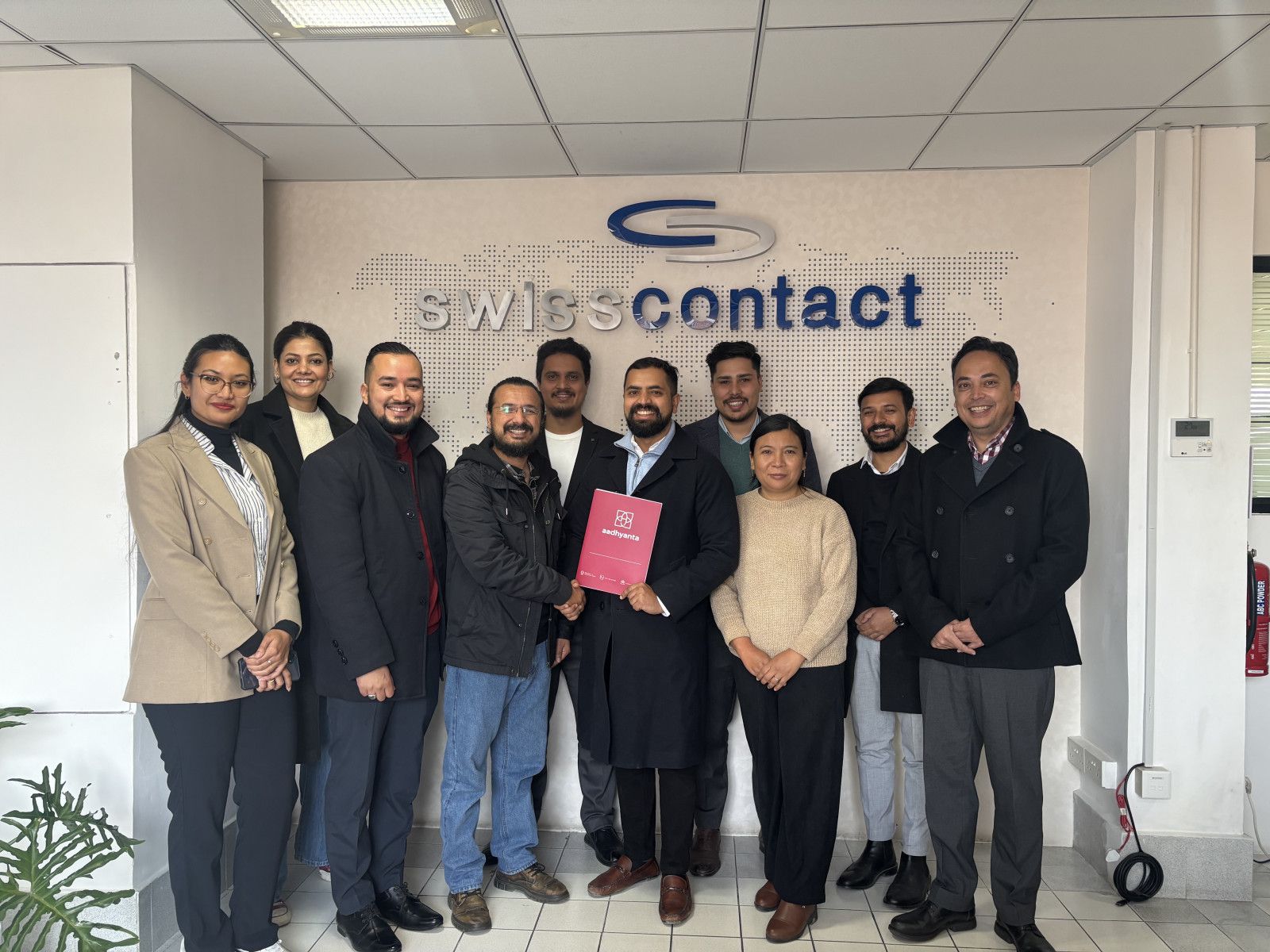
Technology ventures appear in the wider partnership network as well. In March 2026, twenty ventures presented at the conclusion of Seeding & Scaling Innovations, a US Embassy-supported initiative implemented by Aadyanta Advisory with AmCham Nepal and Aadhyanta Fund Management. The programme worked on market fit, business models and capital preparedness. The implementer and the fund manager had distinct roles.
05 / A bank account is not a growth plan
Aadhyanta serves two constituencies: investors seeking exposure to private Nepali businesses, and enterprises seeking capital and strategic support. It mobilizes funds and invests in companies; accelerator partnerships help prepare potential investees. For entrepreneurs, that offers both a financing route and a way to improve the material they bring to financing discussions.
Its founders bring relevant experience. The company identifies Manoj Paudel as co-founder and chairman, with work across government, private and development sectors. Co-founder Amit Koirala’s background includes Standard Chartered and frontier markets. CEO Santosh Thapa’s experience includes feasibility studies, due diligence and capital raising. These are useful skills when growth must survive a spreadsheet.
06 / What a founder can borrow
Nepal has other private investment managers, including Dolma, Avasar Equity and Global Equity Fund. Aadhyanta’s distinctive combination is a domestically promoted investment platform and named enterprise-preparation programmes with development partners. At its 2022 licensing announcement, promoters included Rastriya Banijya Bank and Agricultural Development Bank, alongside other banks and professionals.
A founder can copy the preparation without joining a cohort. Aadhyanta’s investment form asks about competitive advantage, business model, competitors, the purpose of financing and other strategic support needed. Answer those questions before rehearsing the pitch. An investor needs to understand what the money will change.
This approach suits businesses willing to document their operations and accept scrutiny. Programme eligibility, investor appetite and the enterprise’s economics still matter. Aadhyanta says its name means “from beginning to end” in Nepali. The interesting work lies in the middle: making ambition specific enough that someone else can decide to finance it.