A coffee cup, a ceiling fan and a customer-service call make an unlikely investment committee. They do, however, make a useful introduction to A91 Partners. The Indian investment firm has backed Blue Tokai, Atomberg and Exotel, businesses that sell very different things but share a practical ambition: become a bigger part of how people live and companies work.
That breadth is the story. A91 occupies the territory between venture capital and mid-market private equity, where a company has moved beyond an idea but still needs money, management capacity and stronger systems to expand. Its portfolio lets it participate in India’s changing spending habits without requiring every opportunity to look like an internet startup.
The firm announced a $665 million third fund in April 2025. A large pot of money makes an impressive announcement. The more useful question is what the investor does after it has persuaded other people to fill the pot.
The business between the first sale and the big league
A91’s proposition is growth capital with involvement. Founders receive equity investment and an investor willing to spend time on the business. Limited partners, the institutions and private investors behind its funds, receive exposure to a selected portfolio. These are two different relationships: one supplies the capital; the other gives that capital somewhere to work.
The gap A91 entered was visible early. IFC’s 2019 investment disclosure described smaller businesses at a point where additional money could accelerate expansion, in a segment attracting less attention than venture capital or large investments. A company in that middle can be too established for a seed investor’s economics and too small for a large buyout fund’s attention.
For a founder, the appeal is straightforward. A working product does not automatically produce a national distribution network, an experienced finance team or an overseas sales operation. Those take cash and coordination. The useful investor can discuss both. A91’s portfolio spans consumer businesses, financial services, healthcare and technology, giving that proposition several places to operate.
Other growth investors, including WestBridge and PremjiInvest, can be alternatives depending on the business. A91’s distinction is a particular combination of investment stage, sector breadth and active ownership. That makes it worth evaluating by its actual relationships with companies, rather than treating a familiar venture label as a complete description.
They left the famous name behind
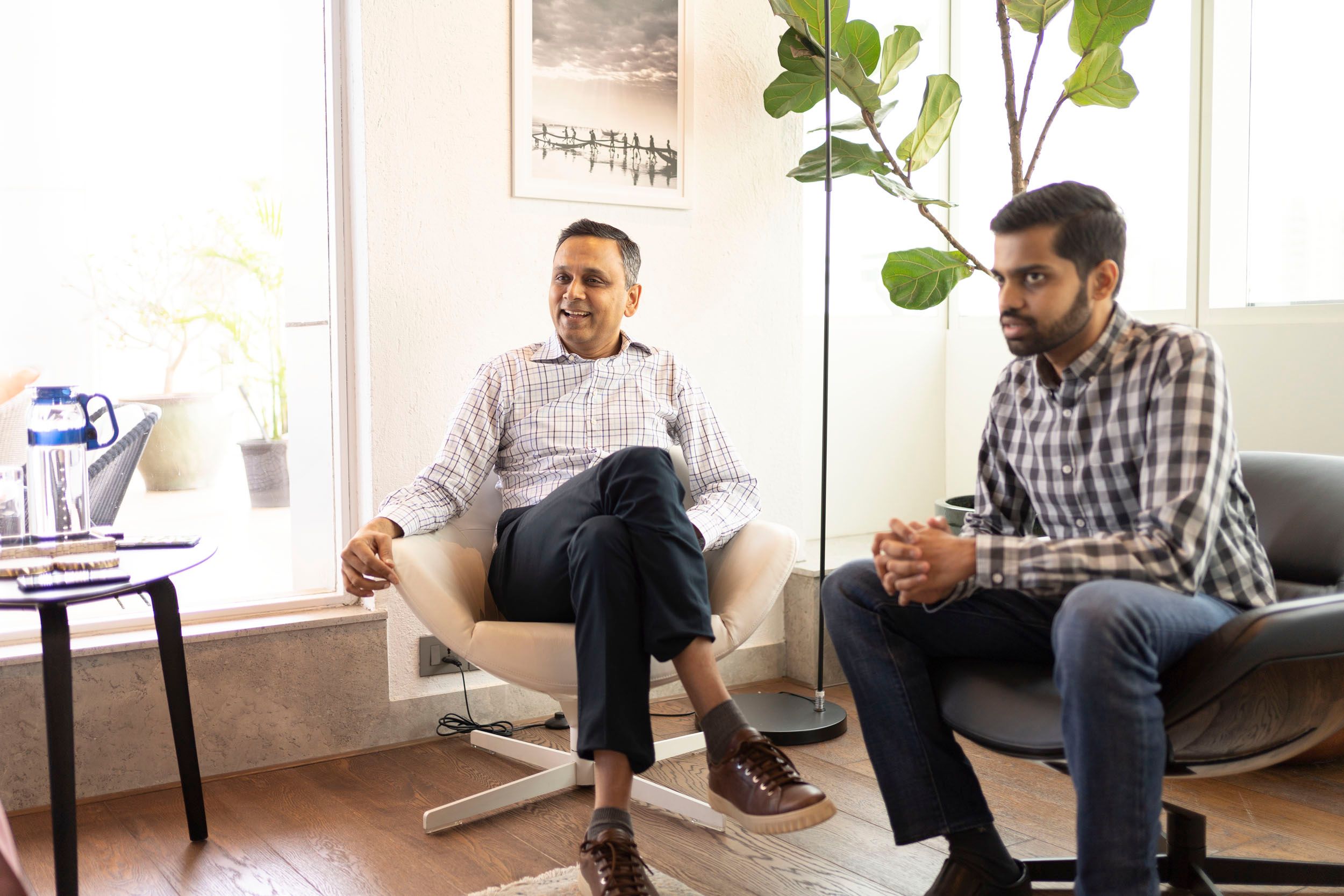
Abhay Pandey, VT Bharadwaj and Gautam Mago founded A91 in 2018 after working at Sequoia Capital India. They brought investment experience and relationships. Building an independent institution still required them to persuade people that a new name deserved attention.
Pandey described that adjustment in a 2021 Moneycontrol interview: the recognition attached to Sequoia did not automatically follow them. Their own credibility now had to build the firm’s reputation. That is a tangible early difficulty, especially in a business where access to founders, advisers and capital affects almost every decision.
“We were drawing from Sequoia. We are giving to A91.”
Abhay Pandey · November 2021
The name itself carries an Indian reference: Ashoka supplies the A, and the country calling code supplies 91. The firm’s public language emphasizes enduring businesses and patient, active partnerships. Its current website lists 20 people across investing, analysis, finance and executive support. A small firm can promise close attention; delivering it across a growing portfolio remains the daily assignment.
Three funds, one escalating assignment
A91’s first fund closed at $351 million in 2019, according to its closing counsel, Goodwin. Backers included endowments, foundations, pensions, insurers, family offices and asset managers across several regions. GPCA named IFC, LGT Capital Partners, Asia Alternatives and Adams Street Partners among the investors. The new firm was building an institutional funding base from the start.
Fund II reached a $550 million final close in November 2021. The $665 million third fund followed in April 2025. Together, the three reported closes total $1.566 billion. That arithmetic describes commitments across successive funds. It should not be mistaken for A91’s revenue, its own valuation or a current measurement of assets under management.
What changed the partners’ minds about size? In the 2021 interview, Pandey described stronger expectations for company outcomes and larger financing rounds, alongside a planned increase in investments. Their earlier estimate of an appropriate fund size had moved. The adjustment illustrates a real tension: keep investment discipline while acknowledging that the market and its financing needs have changed.
Fundraising also has its own machinery. Trilegal’s reported work on Fund III covered structuring and a multi-investor closing, with Goodwin handling international legal matters and tax advisers involved. Behind the headline number sits a collection of vehicles, agreements and obligations. This is a financial institution being assembled, not simply a cheque book getting thicker.
What $30 million buys, twice
Blue Tokai makes the investment proposition easy to picture. In January 2023, A91 led its $30 million Series B round, alongside other investors. At the time, the coffee business had about 60 stores and outlined plans to add 200 over three years. Those were expansion plans announced then, rather than a verified account of what was subsequently delivered.
The interesting detail was the customer experience. Blue Tokai began with online and business-to-business sales before opening a café. Its founders described physical locations as places where customers could try coffees and discover what they liked. By the 2023 round, cafés accounted for nearly two-thirds of revenue. A store could sell a drink and teach a habit.
For another consumer founder, that is a useful lesson to examine: distribution can help create demand as well as satisfy it. The conditions matter. More locations bring rent, staffing and operating complexity. A product that benefits from explanation may justify that expense; weak repeat demand will make expansion far less forgiving. This is an inference from the model, not a claim that every café format shares the same economics.
A few months later came another $30 million, this time invested in KaarTech, a digital transformation consultancy specializing in SAP. Founded in 2006, KaarTech was around 17 years old. The announcement described expansion across existing markets, particularly North America, and both organic growth and acquisitions. Gautam Mago and Kaushik Anand were to join its board.
The two transactions clarify what A91 sells founders. Coffee required physical expansion and brand development. Enterprise services called for market expansion, technical delivery and potentially acquisitions. The common service was equity capital paired with a continuing investment relationship. The same dollar amount could finance very different work.
Patience has to survive the board meeting
A91’s website calls its investments “Commitments, not bets.” Its pitch brings the whole firm into a relationship rather than leaving everything to one partner. These are statements of intent. Board participation, such as the appointments announced at KaarTech, makes the intention more concrete: there is a place where growth plans and management decisions can be discussed repeatedly.
Governance also appears in institutional commitments. IFC’s Fund III disclosure describes support for gender committees and a commitment to at least one woman on each investee’s board. Such provisions turn a broad aspiration into something that can be checked. They also make clear that institutional money arrives with expectations about how companies operate.
For founders considering this type of financing, the cost includes ownership sold and the obligations negotiated with an investor. There is no universal sticker price. The valuation, stake, board rights and other terms determine the bargain. A $30 million financing announcement tells readers the transaction’s size, but it does not by itself disclose the founder’s full economic cost.
At the fund-manager level, fees and a share of investment profits are conventional private-fund economics. The exact arrangement belongs in the fund agreements. The underlying job is to invest well and ultimately realize value from holdings. An attractive portfolio on a website cannot finish that job.
The money has to come back
A91’s portfolio has begun supplying examples of liquidity. Digit Insurance went public in May 2024. In March 2026, Inc42 reported roughly ₹325 crore in proceeds for A91 from a partial sale through SEDEMAC’s IPO. A public offering creates an opportunity for some shareholders to sell; it does not mean that every investor has fully exited.
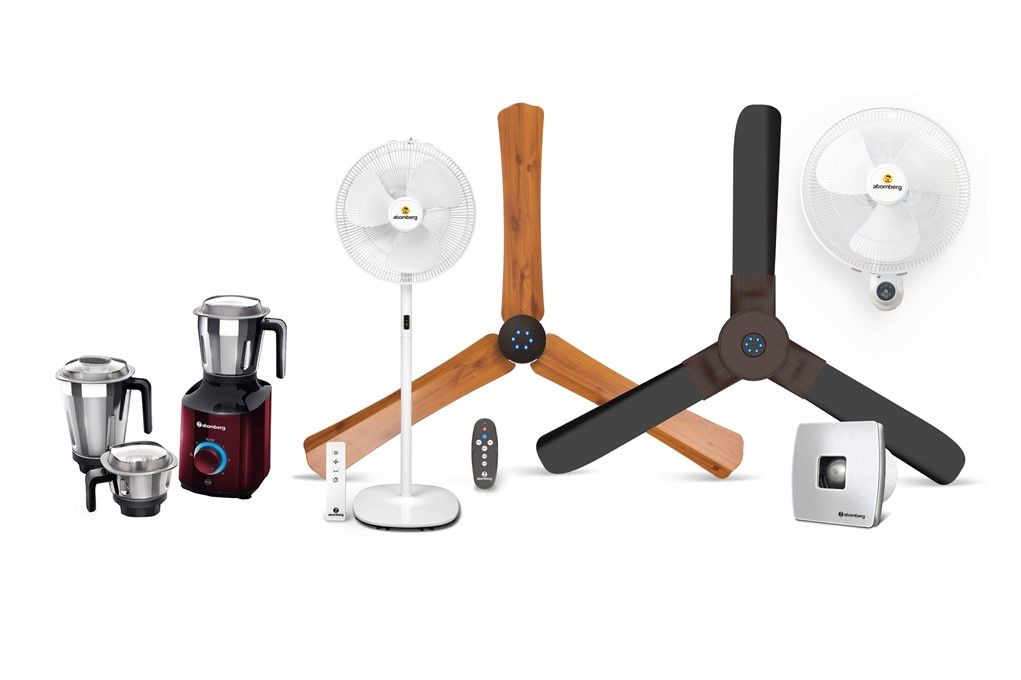
August 2026 reporting on Atomberg’s draft IPO papers put A91’s historical investment at approximately ₹143 crore and its share-sale proceeds at about ₹445 crore, with a 21.02% holding remaining at the filing date. Those reported figures describe a particular investment and partial realizations. They do not establish the net return to an A91 fund’s investors.
The distinction matters because a good company, a profitable individual investment and a successful fund are different achievements. Timing, purchase price, other holdings and fund expenses all affect the outcome. In March 2026, A91 received Venture Intelligence’s VC Fund Raise of the Year 2025 award. The title names the achievement precisely: raising the capital.
The practical lesson for a founder is to match capital to a defined job. Identify the expansion constraint, explain the economics and choose an investor whose involvement fits the company’s needs. A91’s examples point toward businesses ready to put substantial equity to work. For a company still testing whether anyone wants its product, that may be the wrong financing conversation.
A91’s argument about India is visible in ordinary purchases and unglamorous business systems. Coffee gets poured. Fans turn. Software handles a customer conversation. The investment case depends on making those businesses larger and more valuable, then finding a way for the people who supplied the money to share in the result.