A dress on a screen has an unusually easy job. It needs to look good on someone else. The difficult questions arrive later: does it fit, does it feel right, and does it go with anything already hanging in the closet? DAILYLOOK built its first business around the picture. It built its next around those questions.
- The service: a personal stylist selects up to 12 clothing items for home try-on.
- The price: $40 per box, credited toward purchases; clothing generally starts at $60.
- The catch: the fee is nonrefundable, and unwanted pieces generally need a return postmark within five days.
That distinction explains why this Los Angeles company belongs in a conversation about shopping habits as much as fashion. Its proposition is straightforward: tell someone what you need, let them narrow the field, then decide in front of your own mirror. The clothes still have to earn their place.
01 The outfit was only the beginning
When DAILYLOOK launched in 2011, the unit of shopping was a complete look. Rather than assemble an outfit from scattered product pages, a customer could buy pieces already styled together. It was an appealing editorial idea: make the answer visible before asking for the sale.
By 2013, Brian Ree later recalled, discounting and competition had exposed the weakness. Attractive combinations did not produce dependable loyalty. Each transaction depended too heavily on finding the next desirable product. His account of the response is strikingly small: an alpha test with 20 randomly selected clients, receiving hand-selected clothes in a box.
They engaged and bought more, he said. The company committed to the change. But the operational resemblance between the two businesses was deceptive. Ree told Voyage LA that the transition required different skills and processes, and layoffs of more than half the company over the following year.
“The pivot almost killed us.”
Brian Ree · founder · 2018
The useful lesson is the size of the experiment relative to the size of the decision. A modest test changed what the company thought it was selling. The expensive part came afterward, when the organization had to catch up.
02 A smaller store, selected for you
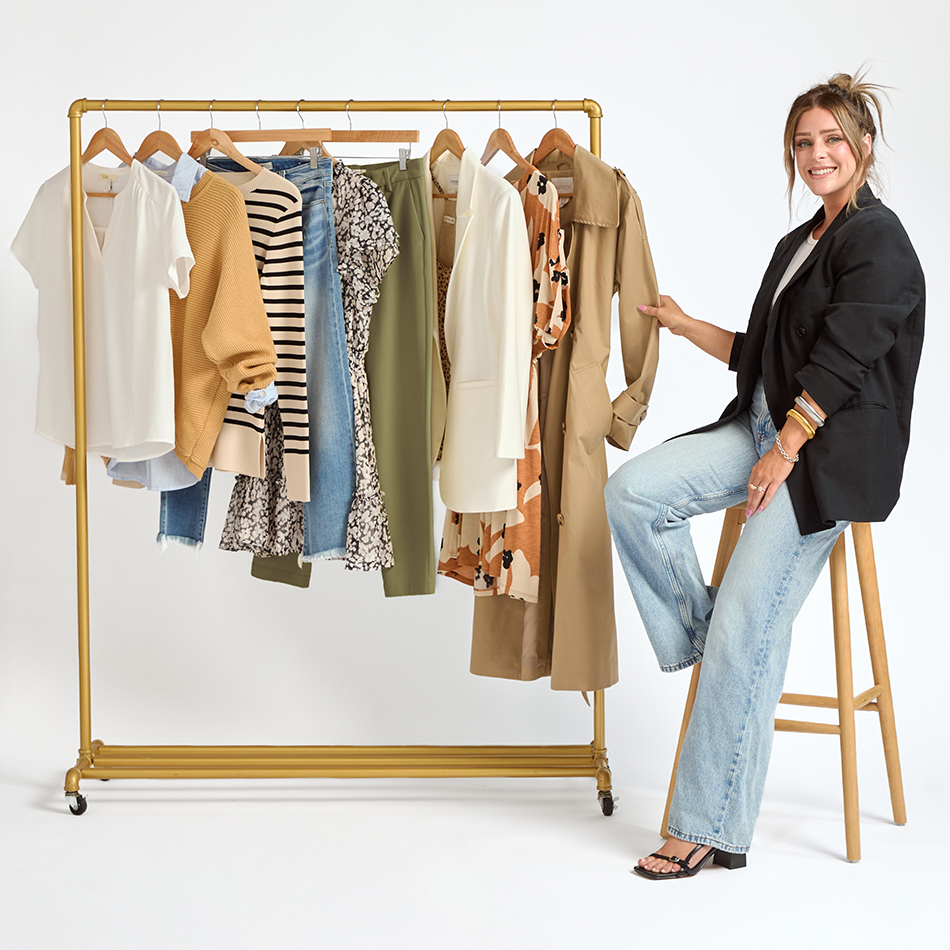
Today, a customer starts with a quiz covering size, preferences, lifestyle and budget. A stylist chooses the clothes. An online preview gives the customer 24 hours to review the selection before shipment. The advertised relationship is ongoing, with access to the stylist and feedback that can inform later boxes.
The interesting feature is where the decision happens. At home, a new jacket can meet the trousers it actually needs to accompany. A blouse can be tested under familiar lighting. Those are ordinary acts, but they answer questions a product photograph cannot. The fitting room acquires the rest of the wardrobe.
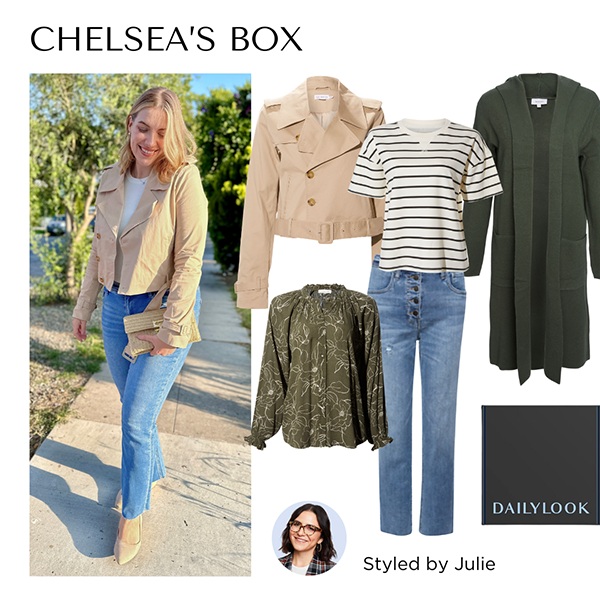
DAILYLOOK positions itself around premium contemporary clothing and professional styling. Its site names brands including Kate Spade, AG and Good American. The box service advertises women’s sizes XS-3X and 0-24; shoes and accessories shown in styling pictures are not included in the current clothing-box offering.
Stitch Fix is an obvious alternative, and its own materials also describe human judgment supported by data. So a human stylist alone is not a unique invention. DAILYLOOK’s more concrete pitch combines a dedicated relationship, a larger advertised selection of up to 12 items and a premium assortment.
03 The $40 deserves its own fitting
The economics require a little attention. This is clothing to buy, rather than rent. Each styled box carries a $40 fee, which becomes credit toward merchandise. The credit expires after 30 days. Shipping in both directions is free, and deliveries can be monthly, every other month or quarterly.
Consider one $80 item. Applying the $40 styling credit leaves $40 to pay at checkout, for $80 in total before tax. Return everything and the styling fee remains spent. Calling the service free with a purchase describes the credit mechanism; it does not make the clothes free.
There is also a clock. Unwanted pieces generally must be postmarked within five days of receipt; the company says customers can ask their stylist for an extension. Its terms authorize charges for unreturned merchandise. Anyone attracted by convenience should put the return date on the calendar before putting the clothes in the closet.
This suits someone willing to spend on clothing and delegate the search. It is harder to justify for a bargain hunter, someone who enjoys browsing, or a customer whose fit requirements exceed the available inventory. Poorly matched selections can turn the fee into a recurring disappointment. Useful feedback has to be specific: sleeves too short, waist too high, office too casual.
04 The box and the balance sheet
In 2018, Forever 21 and Upfront Ventures co-led an $8 million Series A. Upfront’s Michael Carney reported that purchases followed 80% of shipped boxes and that DAILYLOOK had been profitable for two years. Those are historical investor claims, rather than present-day performance measures, but they explain the attraction of the model.
Adore Me acquired DAILYLOOK in March 2022, citing collaboration on logistics, customer service and acquisition. Victoria’s Secret & Co. acquired Adore Me that December. In March 2026, the parent announced a strategic review of DAILYLOOK, describing it as a non-core asset while concentrating on Victoria’s Secret and PINK.
That puts another question beside the mirror: where does this service belong? Customers need clothes that work; a parent company needs a business that fits its priorities. DAILYLOOK’s history offers a practical idea worth copying: test whether changing the buying experience solves more than changing the merchandise. Then count the labor, inventory and returns required to deliver it. The outfit is the visible part. The service is everything that makes choosing it easier.
Open the next box
Explore the service, meet its stylists, or revisit the business behind the clothes.