David Rogier received the money before he had the idea. He wanted to stop investing in other people’s companies and build something himself. His boss, the investor and Stanford teacher Michael Dearing, offered roughly half a million dollars to let him work out what that something should be. It was a generous answer to a question Rogier had barely finished asking. It also left him with a rather difficult assignment: decide what deserved the chance.
Freedom did not immediately supply a business plan. With so many possible directions, Rogier felt pressure to make the opportunity count. Then someone gave him a useful restriction. Choose an idea he would still be proud to have tried if it failed. Much of the field fell away. Education remained.
That choice eventually became MasterClass, launched in 2015 with co-founder Aaron Rasmussen. The familiar proposition was an invitation into someone else’s expertise: writing, photography, music, cooking, the work behind the finished performance. Its less visible beginning was a founder trying to decide what he could stand behind when the outcome was uncertain.
A lesson worth keeping
Rogier grew up in Los Angeles, close to his grandmother Yanka. As a child, he heard her account of fleeing Europe after the Nazi invasion of Poland and rebuilding a life in the United States. The experience gave her a conviction she passed on to her grandson: possessions could disappear; what he learned belonged to him.
“Education is the only thing that someone can’t take away from you.”
His grandmother’s lesson, recalled by David Rogier
It is a different starting point from deciding that online courses look like a promising market. In Rogier’s telling, learning had a place in the family’s understanding of survival and possibility. Years later, when he needed a purpose for a company, he returned to something he had been taught long before business school.
The idea also helps explain his interest in preserving knowledge. A person’s methods can be hard to recover after the person is gone. MasterClass offers a way to record practitioners explaining how they think, make decisions and approach their work. There is an appealing impertinence in asking an accomplished adult to show the homework.
The dean picked his classes
Before he recruited instructors, Rogier was a student with opinions about instruction. At Washington University in St. Louis, where he studied political science, he told dean Delores Kennedy that he was not learning enough in his courses. Kennedy offered to select the next semester’s classes herself. He accepted. The resulting semester was among his hardest.
He kept asking her for recommendations afterward. The experience gave him a lesson about the person at the front of the room: a compelling teacher could make a field interesting even when the student had not arrived with a special attachment to it. Choosing a course meant choosing whose mind to spend time around.
He was already finding ways to have those encounters outside class. On student television, he interviewed faculty. He served as speaker of the student senate and helped students gain free access to newspapers. These were modest forms of opening a door: put a conversation on a screen, put reporting within reach, give curiosity somewhere to go.
After graduating in 2005, Rogier went on to Stanford’s Graduate School of Business, earning his MBA in 2011. There, too, he organized conversations, hosting “Lunch and Learn” sessions with people from Silicon Valley. Looking back, the interview chair seems an unusually consistent piece of office furniture in his career.
Washington University
Stanford GSB
launches
Waiting for someone to say yes
Working in venture capital gave Rogier a view of other founders’ efforts. It also made him miss building things. Dearing’s backing gave him time to search. It did not supply a shortcut through the central difficulty of MasterClass: convincing people already in demand to spend time explaining their craft to strangers.
There were cold calls and emails, long waits and unanswered approaches. The names now associated with the company can obscure how uncertain that recruitment was. Before a roster exists, each invitation asks someone to imagine a product they cannot yet inspect. A prospective instructor has to lend both time and credibility to the experiment.
Rogier’s early funding work came before the public launch, too. He raised seed and Series A financing while the service was still being built. That meant explaining the intended experience to investors before there was an established audience to point to. He was selling the possibility of a classroom whose teachers had yet to become a familiar collective.
Rasmussen joined him in building the company. In May 2015, MasterClass opened to the public. Its early instructors included James Patterson, Dustin Hoffman and Serena Williams. The breadth was part of the proposition. A reader, an actor and a tennis player might arrive through different doors, but each was being invited to study how someone practiced.
The lesson has to hold your attention
Once someone agreed to teach, another problem began. How should the class feel? Rogier looked at online courses that transferred a classroom lecture to the web and wondered why the result had to resemble a camera left running at the back of a room. The internet offered more freedom than that.
He thought about the television people willingly finished watching. Production could serve learning by making a lesson engaging enough to continue. Lighting, editing and pacing became educational decisions as well as aesthetic ones. A student at a screen can leave with very little ceremony. Nobody has to squeeze past a row of knees.
His own taste in teachers helps make sense of the approach. He remembered a high-school English teacher who challenged an unconvincing essay and an economics professor whose classes he wanted to attend. The attraction was intellectual effort made absorbing. A famous face might prompt a click; the work of teaching still had to happen afterward.
There is a practical streak beneath the polished films. Rogier has spoken about learning to value constraints during an internship at IDEO, and about bringing people from different disciplines together to develop ideas. For someone associated with celebrity instruction, he also offered an agreeably unglamorous answer when asked about overlooked innovation: spreadsheets.
Even the teachers want notes
Spending time around accomplished instructors gave Rogier a recurring surprise. They kept asking for feedback. During filming, they wanted notes between takes. After a class appeared, they returned with changes they wanted to make. Success had not removed the habit of looking for a better version of the work.
That observation gives MasterClass an interesting double life. Its public appeal rests partly on people who have already achieved something recognizable. Behind the scenes, Rogier sees them behaving like people who are still practicing. The finished reputation and the unfinished practitioner occupy the same chair.
For a founder, that is a useful example to have nearby. A company can turn its original insight into a routine and stop examining it. Rogier’s newer work asks what happens after the recorded lesson: whether a learner can ask a follow-up question, rehearse a difficult conversation or get a response shaped around a particular problem.
A question that can answer back
MasterClass On Call takes that interest into AI coaching. The service offers conversations and roleplay with AI versions of participating experts, including Chris Voss and Mark Cuban. Its attraction is situational: bring a negotiation or a business idea into the conversation and work through it, rather than waiting for the relevant moment in a recording.
Rogier has described a small but telling design problem with the voice experience. An early version answered quickly enough that users felt interrupted. Engineers introduced a pause. A product built to deliver expertise needed to learn something about manners. Even an artificial conversation benefits from letting someone finish a sentence.
He has also drawn a distinction between that use of voice and replacing instructors with generated video. In his June 2026 conversation about AI, he was cautious about video doubles and the authenticity they might lose. He wanted the technology to make possible an interaction a teacher could not personally provide to every student.
The professional education work has brought another former teacher back into the story. Chicago Booth dean Madhav Rajan taught Rogier accounting at Stanford. Their existing trust helped the MasterClass Executive collaboration move forward. In October 2026, Rajan described its first cohort as 705 people from 55 countries. The former student was now helping assemble a different kind of classroom.
Back in the interview chair
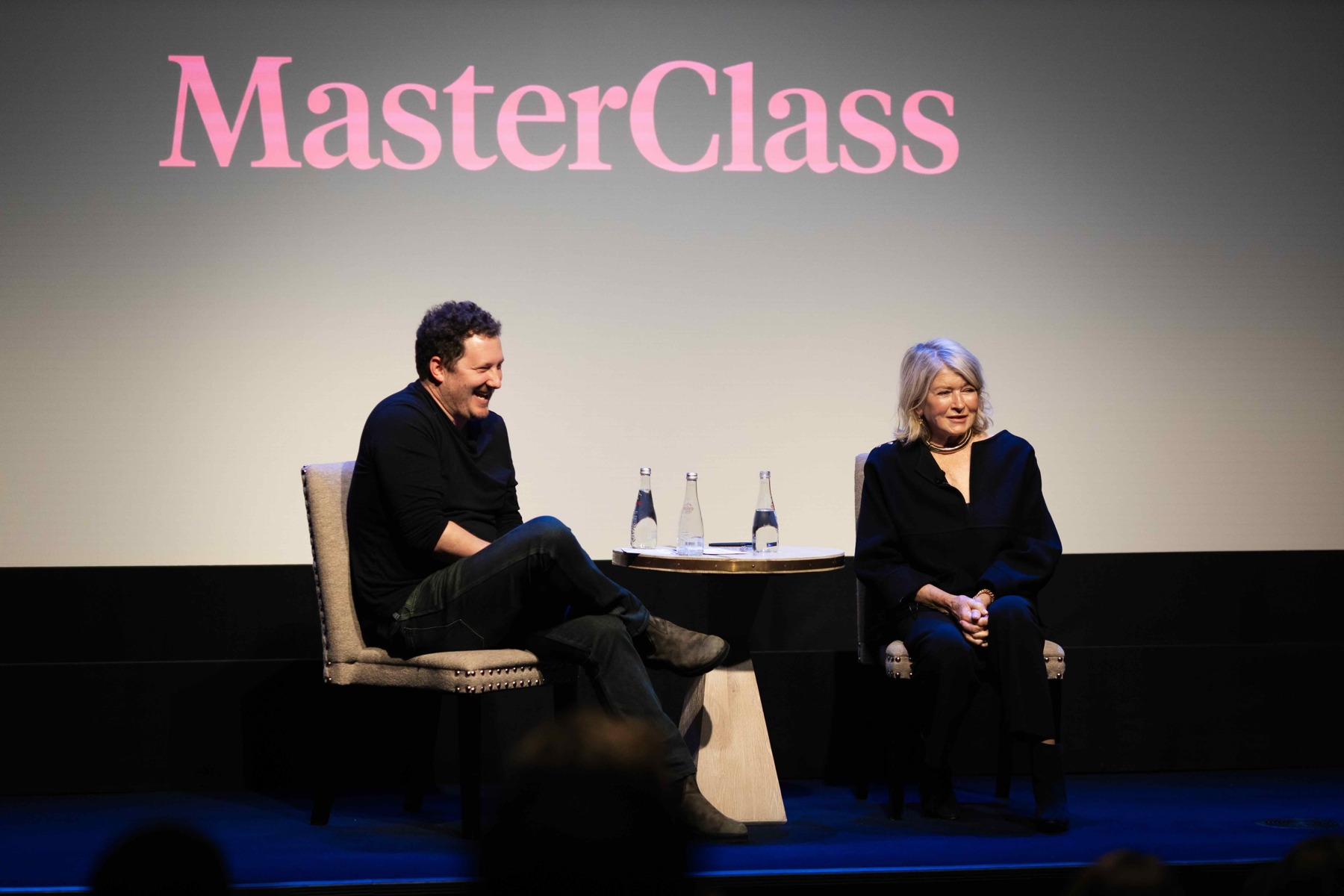
On October 6, 2026, MasterClass announced Other People’s Business, a weekly audio and video podcast hosted by Rogier. Its announced guests include Martha Stewart, Chris Voss, Daniel Negreanu and Malcolm Gladwell, with conversations ranging across influence, negotiation, poker and writing. The subjects vary; the appetite for understanding how things work is familiar.
It is a return to an activity he was doing on college television, now with a business and years of conversations behind him. Rogier has built ways to watch an expert, question an AI coach and learn alongside other working adults. He has also kept a place for the ordinary interview: one person asking another to explain.
The original assignment remains useful. Build something worth having attempted. His grandmother supplied the reason education belonged on that list. The teachers, collaborators and students have kept supplying new questions. For the founder of a school intended to continue after school ends, there is some fairness in finding that his own education keeps going.
Keep the conversation going
DAVID, IN HIS OWN WORDS