The device was loud, odd-looking, and difficult to explain. Benjamin Nazarian was thinking about business operations. Jason Wersland had brought him the invention that would become Theragun; Nazarian was developing an incubator for entrepreneurs who needed help turning a product into a company. They sat in a conference room and worked for hours on a business plan. Years later, Nazarian would say that plan had guided their first five years. The future, apparently, required a meeting.
It is a useful place to begin with Nazarian. Photographs of consumer brands tend to favour the product, the athlete, or the launch. His contribution lived partly in the less photogenic questions. How would the business operate? How would it reach customers? What would happen after someone said they wanted one? The invention already existed. A commercial operation had to be built around it.
By January 2023, when he moved from founding CEO to executive chairman, Therabody reported more than $1 billion in cumulative revenue during his tenure. It was selling in 60 countries through more than 10,000 retail doors. Those numbers describe a considerable distance from that conference room. They also make the conference room more interesting. Someone had to work out how to get from one to the other.
An unlikely set of qualifications
Nazarian came to the venture through real estate and investing. Before Therabody, much of his career had been spent as a managing partner at Omninet Capital. He had an accounting degree and a law degree, both from the University of Southern California. The California State Bar records his admission in December 1997. This was an education with plenty of room for footnotes and relatively little obvious preparation for selling a noisy handheld device.
Yet operations, finance, and legal questions were precisely the areas in which he hoped to help entrepreneurs. His proposed incubator gave those skills a new setting. Wersland was the third entrepreneur he met in that process. A side project was beginning to make demands on the main calendar.
There was an earlier education, too. Nazarian credits his father, a serial entrepreneur, with teaching persistence, hard work, and problem-solving. Those are familiar words in business biographies. Here they acquire a practical application: keep working at the problem in front of you, then deal with the next one. His career would take him from property investment to a consumer brand without making those lessons obsolete.
His recollection of the early product is agreeably unpolished: “It was loud. No one knew what it was.” He did not arrive as the sporting insider who immediately recognised his own world in the device. He arrived with experience of building businesses. That difference helps explain why the partnership became useful. The inventor and the prospective commercial partner had different work to offer each other.
Two people, different lenses
Wersland had already gone through several versions of the product before the pair joined forces. Nazarian helped give the enterprise a commercial structure. Their product launched publicly in 2016. The division of labour gave Wersland room to demonstrate it and develop relationships, while Nazarian worked on strategy, operations, and product development. The company needed both kinds of attention.
In Wersland’s later recollection, their agreement began with a handshake. Documents were signed three months afterward. He remembered Nazarian taking charge of the money and introducing structure, while the two looked at the enterprise from very different perspectives. It is a telling combination of informality and administration. The handshake got its romance; the paperwork still arrived.
The relationship also made room for argument. “I would say we actually encourage disagreement,” Nazarian said. He immediately refined the thought toward debate. Each partner could see things the other missed. The point was to challenge a decision against the interests of the company and its customers, rather than treat every difference of opinion as a referendum on the relationship.
“I would say we actually encourage disagreement.”
Benjamin Nazarian, 2021
Wersland’s account in 2026 added an affectionate detail. Their heated exchanges could end with “I love you” and an agreement to carry on. He described a rule against speaking behind one another’s backs. A company can put cooperation in a presentation. These two described something more specific: the freedom to have an awkward conversation directly with the person involved.
Nazarian has compared the problems of a growing startup to Whac-a-Mole. Resolve one, proceed to the next. It is a less elegant image than the usual upward-pointing business chart, and probably more useful. The work does not promise that a solved problem will be the final problem. It asks whether the people responsible can keep making decisions together.
Borrowing an audience, earning a customer
One early challenge was simply explaining an unfamiliar product. The company worked through people whose audiences already trusted them, including trainers and athletes. Demonstrations supplied a vocabulary that advertising alone could struggle to provide. A person who had seen the device in use could describe it to someone else. That gave the founders a way to introduce a product before its category was widely understood.
By February 2021, Therabody’s investor announcement looked rather like the guest list for several different parties. It included investment vehicles associated with Jay-Z, Kevin Durant and Rich Kleiman, Kevin Hart, and Aaron Rodgers. Individual investors included Rihanna, Daniel Craig, and Karlie Kloss. More than 100 people from sport, business, culture, and entertainment had invested. The breadth of that group tells its own story about how far the brand had travelled.
A famous shareholder can attract attention. A company still has to organise the less spectacular journey from interest to purchase. Therabody was adding distribution as well as recognisable names. In February 2021 it said its retail presence had expanded from 40 American stores to approximately 10,000 doors globally in 18 months. It also reported offices in Shanghai, London, and Dublin. The unfamiliar object now required an international business behind it.
Expansion over 18 months. The footprint grew across markets as well as stores.
Making a name with room in it
The company initially shared its name with its product: Theragun. That arrangement is convenient until a business wants to make other things. Nazarian and his colleagues spent years considering alternatives. The eventual answer emerged during a whiteboarding session, when the discussion turned toward putting “body” into the name. Therabody became the company name in 2020; Theragun remained the product name.
The practical checks are part of the charm of his account. The domain had to be available. So did the social accounts. A naming discussion can summon expansive ambitions and still end with someone checking whether a handle has been taken. Therabody was available, and the team registered what it could. The new name gave the broader business room to introduce products without asking every one of them to fit under the original device’s label.
Growth was receiving recognition as well as a new name. In 2021, Nazarian and Wersland were named EY Entrepreneur Of The Year Greater Los Angeles award winners. The award considered entrepreneurial leadership, talent management, financial performance, and other measures. For a partnership built around different skills, recognition in both names was a fitting detail.
In September 2022, Therabody announced a $165 million growth equity round led by North Castle Partners. Nazarian shared the announcement alongside news of eight new products. Hardware was now part of a broader portfolio that also included software and content. The company he was running had become a more complicated proposition than the one-product business he had helped launch.
A different chair at the table
In January 2023, Nazarian announced another change. Monty Sharma would become president and CEO; Nazarian would take the executive chairman role. In his own account, the previous year had brought 12 new products and 22 awards. The leadership change followed a period in which the range of things the business made, and the markets it served, had grown substantially.
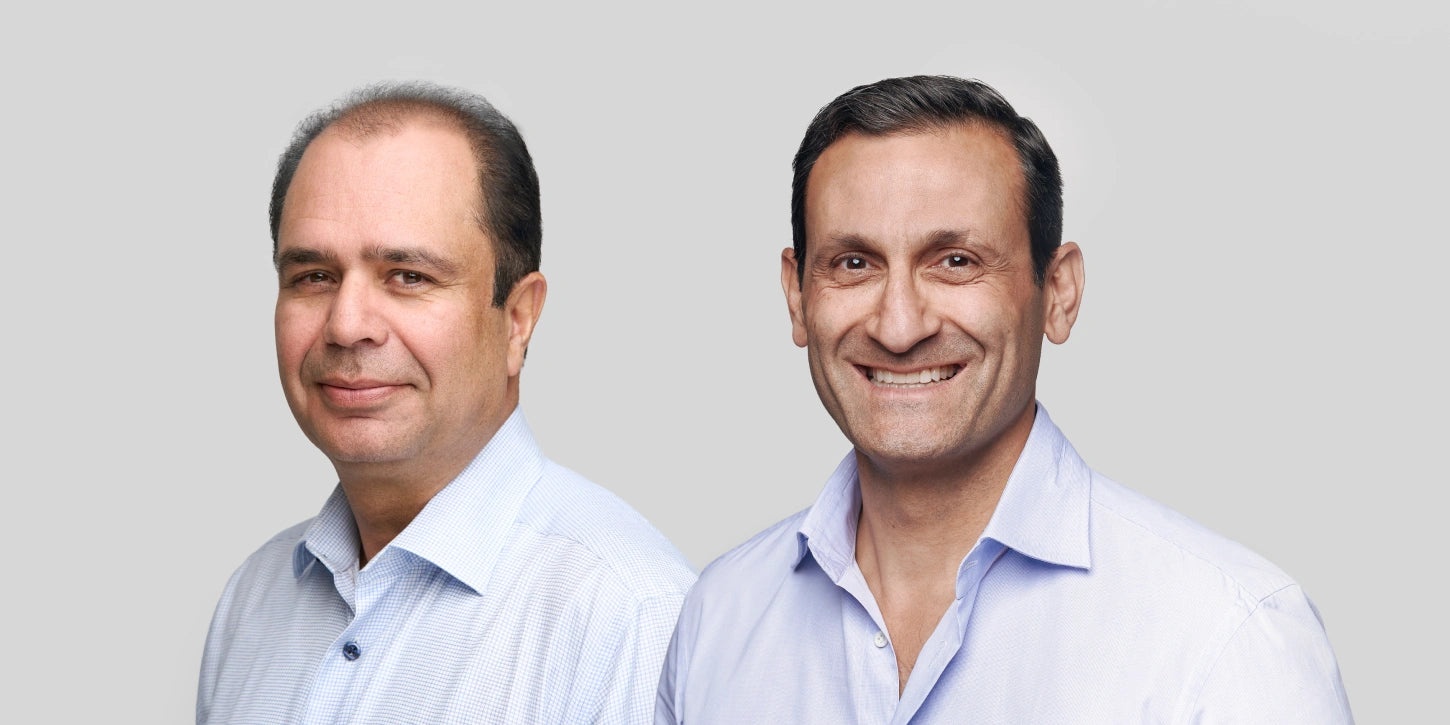
The chairman’s remit was explicit: global business strategy, business development, product development, and partnerships. Those responsibilities kept him close to the work of shaping the company’s next moves. The announcement marked a shift after roughly six years leading the commercial business, from its 2016 launch through an expansion that had taken it across product lines and borders.
His other work offers another view of the same career. Omninet continues to list him as a managing partner responsible for strategy and portfolio management. His biography includes investment-committee service, leadership roles connected with USC’s Law Center and the Independent School Alliance, and membership in the Young Presidents’ Organization. The real estate chapter remains part of his professional life.
At Nazarian Capital, where he is founder and principal, the proposition centres on helping companies manage the operating demands of growth. Business planning, expansion from direct sales into retail, marketing, and organisational scale feature prominently. The language makes sense coming from someone whose consumer-business career began with an entrepreneur seeking both investment and practical help.
That first conference-room session gives the later career a useful point of reference. Wersland brought a device that people had to experience to understand. Nazarian helped work out the enterprise that could bring it to them. The business plan was the quiet object in the room. It had quite a lot to do.
Follow the conversation
The partnership, the operating decisions, and the next chapter.
- Nazarian Capital: his work with founders ↗
- Benjamin Nazarian on LinkedIn ↗
- Therabody ↗
- Omninet’s leadership team ↗
- Behind the Brand: the founding partners in conversation ↗
- Watch: Behind the Brand on YouTube ↗
- Jason Wersland on the handshake partnership, June 2026 ↗
- The 2021 investor and retail expansion announcement ↗
- The January 2023 leadership transition ↗
- Dave Knox’s interview with Nazarian: the plan and the rebrand ↗