On Halloween in 2007, Lukasz Tracz threw a party in Tallahassee and dressed as Michael Jackson. The police arrived before the evening had properly warmed up. His friends left, assumed he had been arrested, and carried the festivities elsewhere. When he eventually reappeared, having received a noise violation, they celebrated his return. An entrepreneur’s first successful entrance need not involve a stage. Sometimes it involves persuading everyone that you have stayed out of jail.
The attendance remains a small masterpiece of promoter arithmetic. Sebastian Solano remembered roughly 5,000 people; Tracz remembered about 400. That gap is funny, but the agreement matters more: they had gathered an audience, the evening had gone wrong, and the friends had found a way to keep it going. Years later, those same instincts would help Tracz build Jeeter, the cannabis brand he leads alongside Solano.
Two sets of twins, one circle of friends
Tracz’s story began in Ziębice, Poland. He and his identical twin, Patryk, moved to the United States at nine. Their childhood in Florida included small businesses with very portable inventories: golf balls, lollipops and music CDs. Patryk later recalled that the brothers worked to help their family and sought friends who wanted to make something of themselves. Long before they could employ a marketing department, they had things to sell.
In Tallahassee, the circle expanded. Lukasz met David Solano while working at Olive Garden. David had a twin, Sebastian; Lukasz had Patryk. Two friendships became four, with Paul Campbell also joining the group that began promoting parties. The symmetry makes an excellent introduction at a dinner party. The durable friendship makes a rather more useful business asset.
Their ventures grew from house parties into nightclub events and then a touring production. Patryk described the early team’s education with refreshing specificity: they had to learn accounting, invoices and how to run a business. A crowd could approve of an evening enthusiastically while the paperwork remained thoroughly unimpressed. The young promoters were learning both kinds of audience.
An advertising education in wet paint
At Florida State University, Tracz studied marketing but did not get into the advertising program he wanted. He went looking for a practical education. In 2006, he and his friends attended a fraternity and sorority paint party. The combination of music, white clothing and bright paint offered an experience people could join rather than simply watch. It also gave the promoters a visual language that needed very little explanation.
Dayglow, later renamed Life in Color, made the crowd part of the spectacle. Tracz became its co-founder and chief marketing officer. A conventional concert places most of its visible action onstage; a paint party sends it into the audience. The people buying tickets also supplied the evening’s changing scenery. White shirts were an unusually democratic dress code, even if their prospects of surviving the laundry were poor.
“Everyone is wearing white and united as one in color.”
Lukasz Tracz, 2016
That description gives his marketing a human center. Participants could see themselves inside the event. Looking back, the paint party offers a useful way to understand his later work: build something recognizable, make participation easy, and give people a reason to remember being there. The connection is visible across his career, from concert footage to the packaging of a small retail product.
The name he refused to leave behind
A naming dispute forced Dayglow to change its identity after SFX’s 2012 acquisition. Tracz chose Life in Color, a phrase already used in the tour’s branding, and emphasized it so audiences would become familiar with it. The solution preserved a piece of what fans already knew. Renaming a business can sound like a pleasant afternoon choosing fonts. Here it meant protecting recognition accumulated over years of events.
By December 2013, the partners were preparing their first Life in Color Festival in Miami at Sun Life Stadium. Calvin Harris, Steve Aoki, Major Lazer and 2 Chainz appeared on a bill that reached beyond a single musical lane. Carnival rides, a zipline and dancing robots added to the production. For Tracz, marketing had become an exercise in arranging an entire evening, with the concert poster serving as its invitation.
The global scale followed. His marketing and brand work helped sell out more than 400 events and festivals across over 45 countries. In 2015, he was named to EDM.com’s Top 30 Under 30. Those are achievements from his entertainment career, before Jeeter. He arrived in cannabis with experience carrying an idea across cities, languages and audiences.
A dispensary shelf becomes the next venue
The friends moved toward California’s cannabis business during the mid-2010s. As David later explained, they knew the industry interested them but had not settled on the kind of company they wanted to build. They bought products from a dispensary and examined what was available. Pre-rolls caught their attention for disappointing reasons: the products and their plain packaging left room for improvement.
David’s account emphasizes two ambitions. Make a product the team liked, and give it packaging that reflected the care inside. Their college nickname for a joint, “Jeeter,” supplied the brand’s name. The word had already belonged to their conversations before it belonged to a company. In a market crowded with unfamiliar names, they chose one with a history among the people making it.
Jeeter launched in California in 2018. Early sales were slow. In 2019, the company faced a week with $35,000 in its accounts and $260,000 in payroll and mortgage obligations. Tracz and Solano put up their watches and cars to secure a $250,000 loan. The accessories bought after their earlier success became collateral for keeping the next venture alive.
The team’s subsequent growth was shared work. David developed sales relationships; Petar Dimitrov helped shape the infused product; Patryk handled marketing. Tracz’s current co-CEO role sits within that wider group. A business built by friends still needs people to do different jobs. Jeeter’s executive roster makes those divisions visible, with finance, product and sales leadership alongside its two chief executives.
The details fit inside the jar
Tracz’s explanation of his creative process begins with the shopper. The team asks what it would like to find in a store. He has said that its ideas begin before the spreadsheet, while describing an intense interest in detail. That is an intelligible combination for someone who learned marketing through live events: start with the experience people might want, then work out how to deliver it.
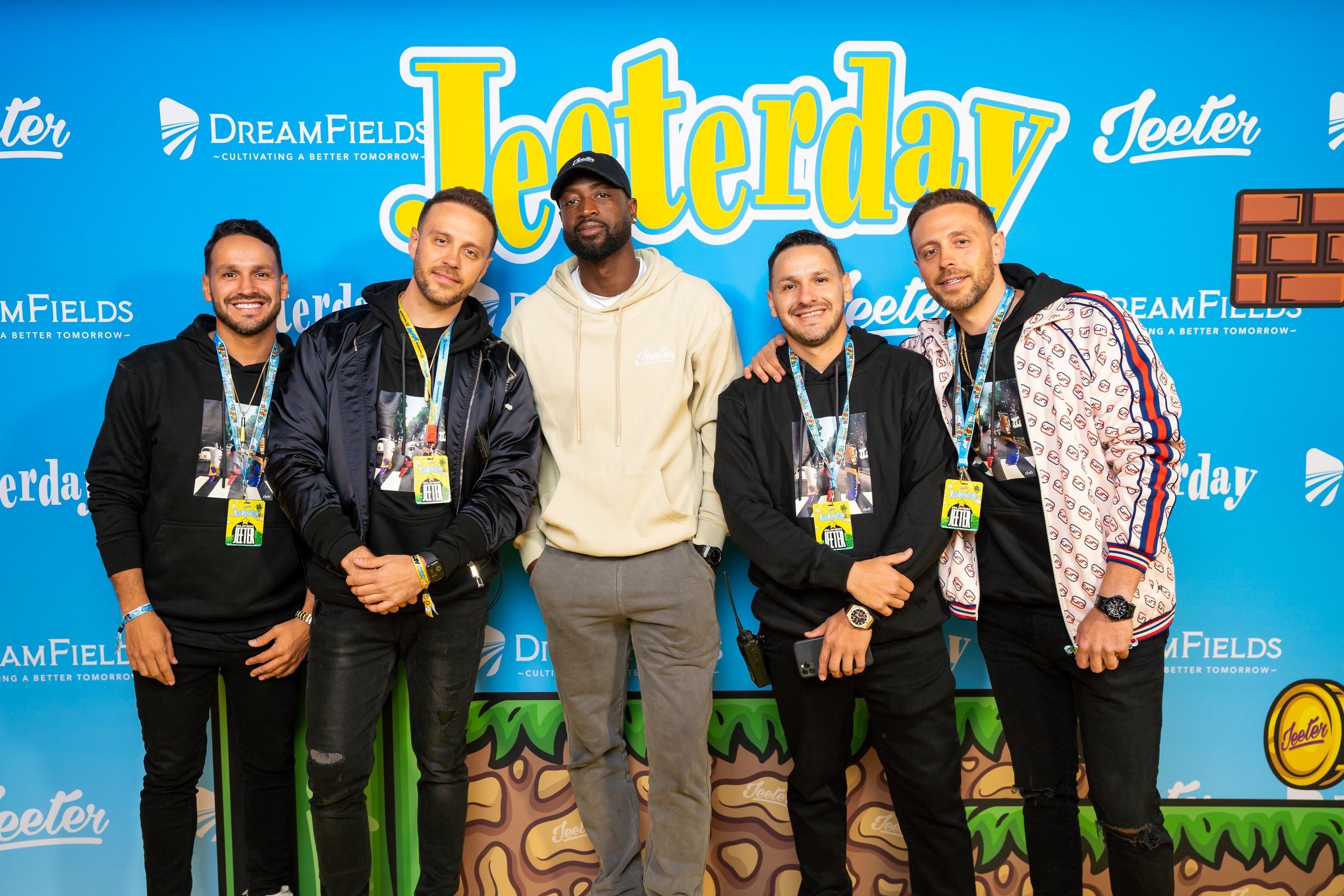
Jeeterday turned a product release into an occasion. The 2021 edition brought limited merchandise and a special release to 115 California stores, followed by a celebration featuring Ludacris and the Martinez Brothers. The entertainment connections from the team’s previous career now had a place in the new business. A jar on a shelf could arrive with its own date on the calendar.
There was also attention to what happens after a fan misses the drop. In July 2022, Jeeter announced a direct-to-consumer delivery platform in California. Tracz explained that customers had asked for access to products difficult to obtain in stores, including releases associated with long lines. Delivery would let them order from home and schedule an arrival window. The promoter’s interest in gathering an audience had acquired a practical companion: making the purchase easier.
Crossing a border, keeping the recognizable bits
In February 2024, Jeeter announced its Canadian debut through Ontario’s wholesale system, with retailer orders opening on February 27. The launch included a Baby Jeeter infused multipack and a Jeeter Mart pop-up modeled on a corner market. Tracz and Solano described the international expansion as a milestone. The new country brought another retail setting for the same interest in presentation, familiarity and occasion.
The brand’s scale also needs careful reading. A 2025 industry ranking using 2024 retail data put Jeeter first by pre-roll revenue in its measured U.S. markets. Its shares of revenue and units were quite different. That distinction helps explain why a brand’s position cannot be reduced to how many packages it moves. Product mix and price help determine what those packages add up to.
The movie ambition finally gets a script
In January 2016, Tracz spoke about wanting to produce and direct a major film and said he was preparing to move to Los Angeles. That aspiration gives his subsequent work another dimension. Concerts had already taught him about image, music and timing. Film offered a place to arrange those elements into a story that could travel without moving a production truck from one venue to the next.
In February 2025, Jeeter teamed with National Lampoon on a comedy short, The Jeeter Potluck. Former football players Ricky Williams and Calvin Johnson Jr. played neighbors arriving at a big-game gathering with a misunderstanding about the “pot” they were meant to bring. The premise was cheerfully economical: two athletes, one invitation, and a word doing rather more work than its host intended.
Tracz and Solano’s joint announcement connected the collaboration to their childhood hopes of acting or making movies. Comedy, they said, had always been their favorite genre. The project linked a commercial brand to an older creative ambition. It gave their interest in entertainment a concrete form, with performers, a premise and a release on Jeeter’s YouTube channel.
That June brought another short-film collaboration, this time with Kevin Smith and Jason Mewes as Jay and Silent Bob, accompanying the Bluntman’s Chronic release for National Donut Day. Tracz described nostalgia as part of the brand’s identity. Familiar characters gave the release a ready-made cultural reference; the new film let those characters participate rather than merely lend their names.
Meanwhile, the business kept entering markets. Jeeter launched in New York in September 2025, more than two decades after the friendships behind it began. Tracz’s work now stretches across manufacturing, retail and entertainment, with his earliest partners still part of the picture. The scale has changed enormously. The pleasure of making something with people he knows remains easy to recognize.
“Our goal is not to sell this company - our goal is to keep this company forever.”
Lukasz Tracz, 2024
Forever is an ambitious deadline for any chief executive. For Tracz, it also describes a preference: continue building with this company and this circle. The college promoter who wanted people to join the party has found a business with enough moving parts to keep him occupied. There are products to refine, stores to enter and, at last, films to make. One hopes the invitations are clearer than the potluck’s.