The question came before the impressive job title. A fashion blogger had attracted a brand’s attention. There might be a paid post, a lookbook, an appearance. What should she charge? Raina Penchansky, who knew the fashion business from the inside, became someone these women could ask. Their audiences were already there. The commercial arrangements were still being worked out.
Looking back in 2026, she described those early exchanges as a kind of informal advising. She had been accustomed to brands speaking down to consumers. Here were women talking directly with readers who came back because they liked their judgment. Penchansky saw future editors and media businesses in people who were still figuring out how to invoice.
That is a useful place to begin her story. Digital Brand Architects, the company she co-founded and leads, grew around the idea that an online personality could become a business. Before the organization charts and product teams came the rather ordinary problem of deciding what someone’s work was worth.
A career with an early exit
Penchansky left college at nineteen, during her sophomore year, and began a career in public relations. When she discussed that decision on Second Life in April 2018, the subject was the willingness to move before having a completely settled plan. Her route into leadership began with an exit from the route she had been following.
There is an easy temptation to turn such a decision into advice for everyone. Her subsequent career offers a more interesting lesson about her particular experience: she kept accumulating practical knowledge. The later leap into digital talent had a working life behind it. She had learned how brands communicated, how launches were put together, and how a personality could change the meaning of a product.
A Miami native, she worked on film premieres and awards campaigns, then product launches for names including Juicy Couture and Jimmy Choo. Edelman PR and Saks Fifth Avenue were among her stops. In 2002 she joined Coach, where her work included global communications strategies for celebrity initiatives. Fashion had supplied both the training and the people who would make the next chapter possible.
Moving from Coach to creators meant changing which party she was helping build. The skills remained recognizable: positioning, collaborations, events, and the patient work of giving a business a coherent identity. The client could now be someone with a blog rather than a company with a communications department.
“We’re specialists in a world of generalists.”
Raina Penchansky, 2018
When the business sounded like a joke
DBA dates its founding to 2010. Its premise was to manage emerging online voices as individual talent. The word “blogger” could still suggest a hobby to someone signing an advertising budget. Penchansky was asking that person to see a professional relationship, with an audience and commercial value attached.
By 2016, she was describing the resistance plainly. People had laughed at the idea that an influencer would be paid. Meanwhile, competition for representing these personalities was increasing, and established Hollywood agencies were moving into the same territory. A proposition dismissed at the beginning had become a market others wanted to enter.
Her explanation of the appeal was specific. People sought out an influencer partly to see what she wore and used. A recommendation fitted into the relationship readers already had with her. The audience’s interest supplied the context. A brand could buy access to that context, but it could hardly manufacture the entire relationship overnight.
Fashion made the shift especially visible. Taste was the product being demonstrated every day. The person assembling an outfit had become someone readers trusted to assemble a point of view. Penchansky’s job put a business structure around that trust. A charming photograph could open the conversation; the contract still required someone who knew what to ask.
Joins Coach
DBA is founded
UTA acquires DBA
DBA CEO and UTA Creators co-head
The infrastructure behind the photograph
In February 2019, United Talent Agency acquired DBA. At the time, DBA had more than fifty employees and represented more than 140 influencers. Penchansky continued leading the company, with Reesa Lake and Vanessa Flaherty among its management partners. DBA retained its identity and operations under the UTA umbrella.
The deal also included DBA’s interests in Digital Brand Products and Dear Media. Those businesses made the underlying ambition easier to see. Digital Brand Products helped develop merchandise and licensed products. Dear Media, launched in 2018, provided an audio business. An online following could support something with shelves, episodes, production schedules, and repeat customers.
By 2026, Penchansky’s responsibilities included co-heading UTA Creators alongside Ali Berman and Oren Rosenbaum, while remaining DBA’s CEO. Management and agency work retained distinct roles, supported by shared capabilities in areas such as partnerships, product development, and analytics. To the audience, a creator might remain a familiar face on a phone. Behind that face, the work had become a collection of interlocking businesses.
There is something quietly comic about the distance between the finished post and the machinery required to make a career from it. The internet favors the appearance of effortlessness. Lasting businesses tend to require rather a lot of effort, much of it conducted away from the camera.
partnershipsConsumer
productsAudio +
publishing
A conceptual map of the avenues DBA has helped develop, rather than a formula for every creator.
A five-year question in a one-day feed
Penchansky’s advice to would-be creator businesses begins further out than the next sponsored post. In 2023, she urged them to think about the business they wanted in five years. Her questions were about purpose, growth, and the commercial element of the work. Passion could begin a project. It still needed an explanation of what it was becoming.
For brands choosing a partner, she emphasized a creator’s point of view, knowledge of their audience, and engagement. A follower count was one input. Understanding the person’s judgment required a conversation. She also warned that partnerships encounter difficult patches, making shared values useful long after the first enthusiastic meeting.
That advice carries the experience of someone who has worked on both sides of a marketing relationship. The brand wants results. The creator wants to retain a voice worth listening to. A collaboration has to survive those two sets of expectations. Otherwise, a successful introduction can become an expensive misunderstanding.
Her focus on women’s businesses runs through the work. In 2022 she wrote about helping women build across platforms and keeping them positioned for opportunities on whatever came next. The point was broader than a particular app: ownership and commercial opportunity should travel with the person. A platform can change its rules much faster than a founder can change her plans.
Making room for more than the obvious names
DBA’s mentorship program began in 2021 to support Black micro-influencers with practical knowledge for growing their online businesses. Penchansky publicly shared the announcement of the following year’s cohort and expressed enthusiasm for the program. Here the questions that had once arrived informally from bloggers became part of an organized effort to help more people build careers.
The company also expanded into golf. In August 2022, DBA acquired Digital Golf Collective, whose founders Jess McAlister and Sean Guerrero continued running its daily operations while reporting to Penchansky and finance executive AD Rastogi. The move brought creators such as Tisha Alyn, Ryan Rustand, and Cassandra Meyer into DBA’s roster.
Golf may seem a long walk from fashion blogs. The connection is a recognizable audience gathered around someone’s knowledge and personality. A specialist community has its own language and expectations. Managing the business means learning those particulars. Penchansky welcomed the founders’ approach to the niche and the opportunities it could create for clients.
Yes, she also organized the party
The public record has a more personal scene, too. In September 2017, Penchansky threw an engagement party for her friend Mandy Moore. There was bridal emoji pictionary, a detail that gives the occasion a welcome escape from the vocabulary of brand strategy. Friends attending included Sarah Gibson Tuttle, Ashley Streicher, Minka Kelly, and Susan Kelechi Watson.
Moore had described Penchansky as a close friend years earlier. In 2015, she shared photographs from a Halloween Horror Nights outing and said their friendship had lasted nearly twelve years. These are glimpses of a relationship maintained across time, rather than another professional introduction to put on a list.
A party game is a small thing to place beside an acquisition. It is also a useful reminder that a career in relationships belongs to a person with relationships beyond the career. The communications executive who knows how to bring people into a room can also bring them together for someone she loves. The occasion does not need a business model.
Fifteen years later, still looking ahead
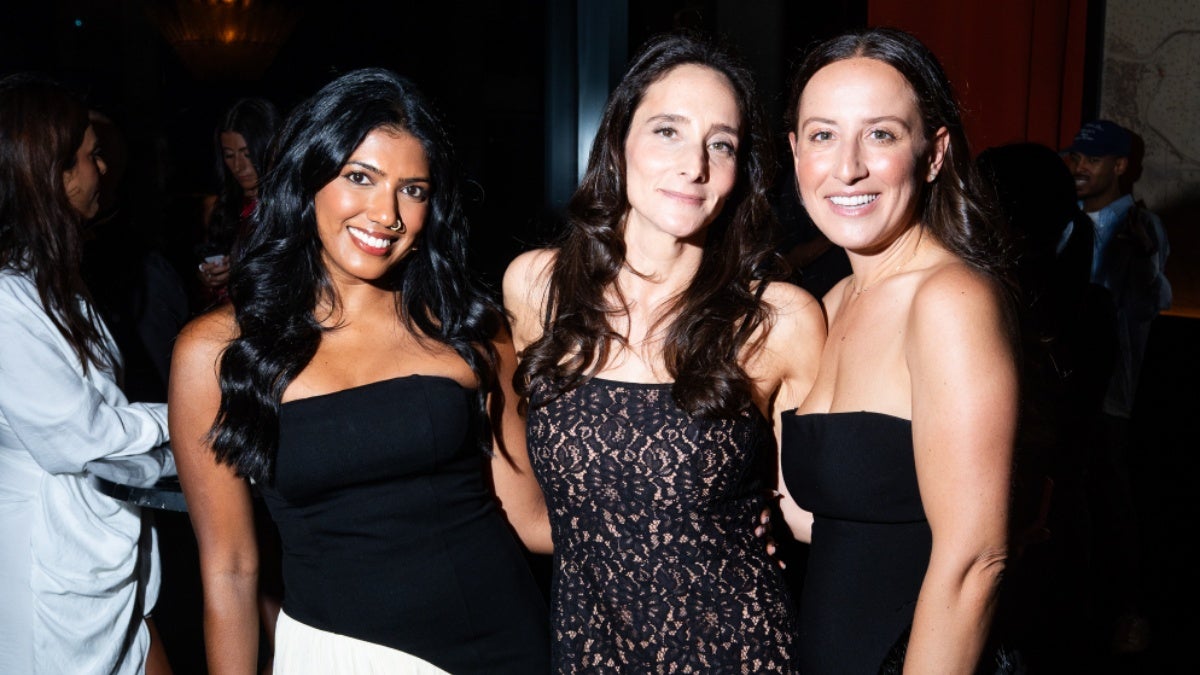
At DBA’s fifteenth-anniversary celebration in September 2025, Penchansky remembered the early reception in seven words: “Year one, people laughed at us.” Around her were creators celebrating a company whose roster included Patrick Starrr, Aimee Song, and The Home Edit. The joke had acquired a considerable amount of paperwork.
She was still looking toward what came next: more specialized creators, a larger role for long-form YouTube, and room for even shorter material. Her view allowed several formats to grow together. The connection between a person and an audience remained the useful constant.
Her 2026 Decoder conversation with Berman returned to the practical work of making creator careers durable. The questions now involved products, platforms, and the organizations behind them. At the Variety Business of Creators Summit at CES, her listed topic was the power of the creator brand. The subjects had grown; the early question about building a business was still recognizable.
Penchansky’s career makes that question feel wonderfully concrete. A woman starts publishing. People return. A company wants her attention. Someone has to help turn the moment into a livelihood, and the livelihood into something with a future. She has spent her working life learning what happens after the audience arrives.