A creator's career can change while everyone else is sleeping. A video catches, the follower count rolls upward, brands arrive bearing free products and urgent subject lines, and suddenly a bedroom production has acquired the administrative demands of a small company. The public sees the leap. Nick Keller works on the landing.
Keller is the founder and CEO of Insight Media, the Los Angeles talent management company he started in 2022. His own public profile is economical. It says that he is building a full-service management business for lifestyle, fashion and beauty creators. The agency's profile is louder, full of campaign images, retail collaborations and fashion-week footage. This imbalance is apt. A manager in the creator economy is successful when somebody else's name grows larger.
The useful word in his title is not media. It is insight. A promising account is obvious only after it becomes obvious to everybody. Keller's work begins earlier: noticing that a particular voice, taste or relationship with an audience might travel, then deciding which opportunities can carry it without flattening it. Plenty of people can count followers. The manager has to read the direction of travel.
He noticed the account before the mall did
Demetra Dias offers the clearest public glimpse of Keller at work. Her fashion videos on TikTok had begun to surge when he reached out and signed her to Insight Media's roster. Her clips were direct and familiar: outfits, shopping hauls and the small daily theater of getting dressed. The audience grew into the millions. Keller handled the commercial arrivals, from gifting to sponsorship deals, while the teenager at the center of the operation continued school and considered how much of her life she wanted online.
That last detail is the one a spreadsheet misses. A young creator is not merely an advertising surface. She is a person living through the consequences of being recognized in public, asked to perform on schedule and invited to make financial decisions at internet speed. Management in that setting is part negotiation, part sequencing and part refusal. There is always another deal. The harder question is whether it belongs.
“We manage for longevity, not volume.”Insight Media's stated approach
“Longevity over volume” is Insight's neatest sentence. It sounds almost impolite in an economy built around abundance. More posts, more formats, more channels, more collaborations: the feed is a machine that wakes up hungry. Yet volume is a poor substitute for direction. A creator can be busy enough to miss her own career.
A roadmap in an industry addicted to the next swipe
Insight says every creator gets a roadmap covering platform position, the mix of ways she can earn and the following two years. Two years is not a heroic planning horizon in most businesses. Online, it feels almost archaeological. Platforms change their habits, audiences acquire new ones, and a single week can turn an unknown person into someone with a rate card.
Keller's proposition is that speed makes planning more necessary, not less. A brand partnership should do more than fill a month on the calendar. It can introduce a creator to a retailer, establish credibility in a category or test whether an audience's affection extends to a product. The individual deal matters. Its position in the sequence matters more.
attention
partnerships
public stages
career
This is where the vocabulary of influence begins to look like the vocabulary of a conventional company. There are products to develop, retail relationships to maintain, terms to negotiate and operations to run. Insight describes helping creators move from the face of a campaign to the name on its label. It also works with creator-owned brands, taking responsibility for strategy and the unphotogenic mechanics that move an idea toward a shelf.
The phrase “name on the label” contains a subtle transfer of power. In a standard endorsement, the creator lends familiarity to somebody else's object. In a co-designed collection, her taste becomes part of the object itself. The audience is no longer being told only what she likes. It can inspect what she helped make.
The feed leads to a fitting room
Dias's collaboration with Aéropostale made that progression literal. What began with the visual language of her room and her outfit videos became a 57-piece collection in 2025. The launch traveled through an app, a website, a meet-and-greet and physical stores. A preference that once appeared inside a vertical video ended up hanging from a rail.
For Keller's agency, the achievement was less a single splash than a chain that held. A creator's point of view had to remain legible through design meetings, samples, fittings, contracts and a national rollout. Every link introduced another party and another opportunity for the original idea to become generic. Taste looks effortless in a post. At retail scale, it requires project management.
A familiar creator, a collection, a stage, a polished campaign and a moment worth sharing.
Negotiation, timing, approvals, deliverables, payment, positioning and the next decision.
This is the quiet joke of the creator economy: spontaneity has an astonishing amount of paperwork. A good campaign feels natural because the unnatural parts have been handled elsewhere. The contract does not appear in the dance. The payment schedule does not join the outfit montage. The calendar remains discreetly outside the frame.
Sometimes the next platform is a room
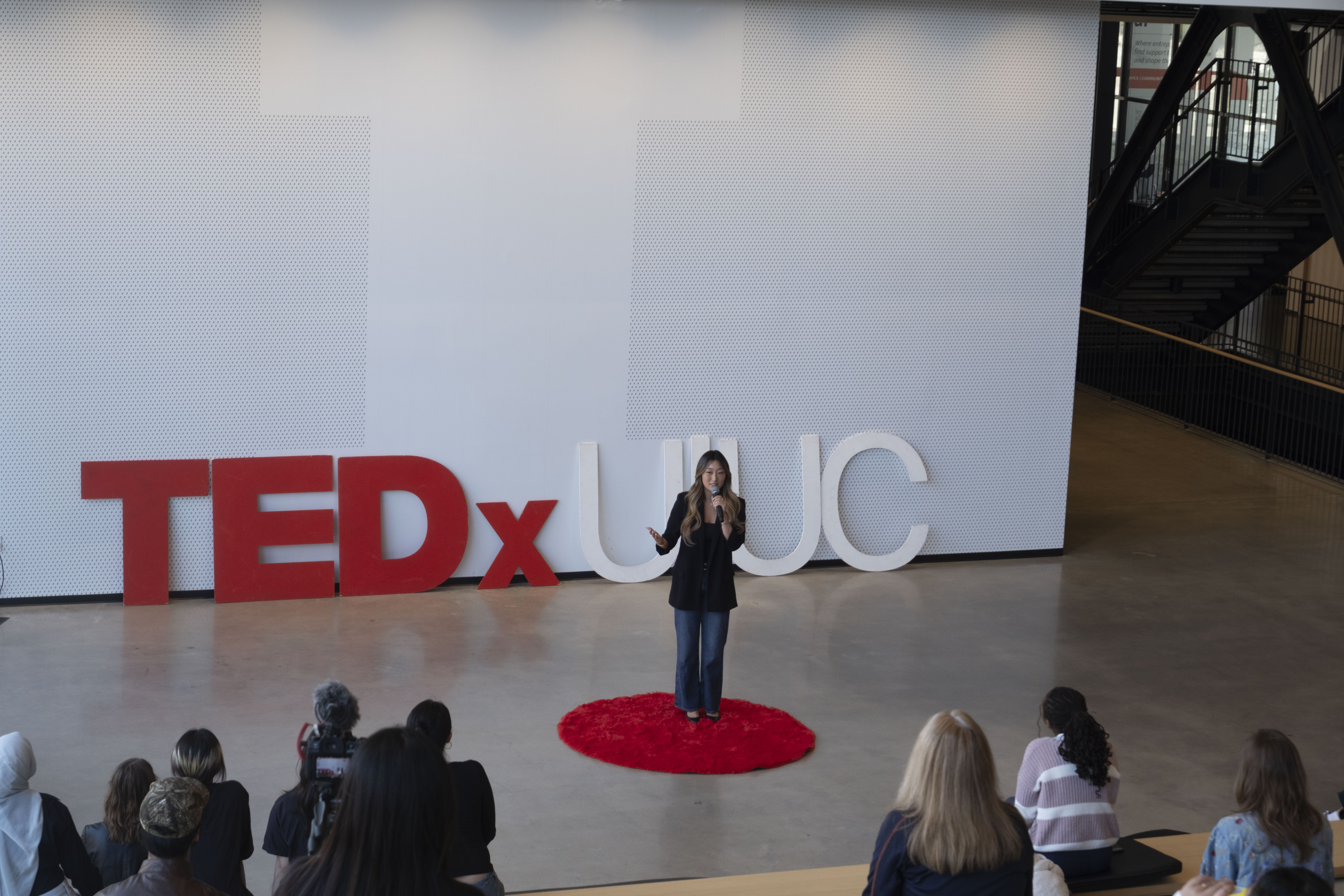
Insight's public work with Paige Taylor broadens the idea further. In April 2026, Taylor appeared at TEDxUIUC. A speaking engagement asks for something different from a social post. The audience does not swipe away after three seconds; it sits in chairs. The creator has to carry a narrative across a room, without the grammar of edits, captions and trending audio.
For a manager, this sort of move is valuable precisely because it does not resemble the last one. Careers acquire strength through range. A creator who can hold attention in a video, participate in a product and speak to a live audience has more than reach. She has options. Keller's agency says it worked on speaker placement and narrative development for the appearance. The job was to make a new setting feel coherent with the person who entered it.
The agency's portfolio now stretches across fashion weeks, retail capsules, brand trips, events and creator businesses. Its website claims more than 900 campaigns and over 100 annual activations. Those are company figures, useful less as trophies than as evidence of repetition. Talent management is learned in the recurrence: the second negotiation, the fiftieth calendar collision, the hundredth occasion when enthusiasm must become a deliverable.
The advantage of staying off camera
Keller studied at Texas A&M University and moved through work in Austin before building Insight in Los Angeles. Beyond that, he has left comparatively little autobiography in public. There is no grand founder mythology to distract from the enterprise. The restraint suits the profession. His clients trade in visibility; he trades in judgment.
Judgment is difficult to package because its best results look inevitable. Of course that creator belonged with that retailer. Of course the collection fit her audience. Of course the speaking engagement was a natural next step. “Of course” is what people say after somebody has made a series of uncertain choices successfully.
Insight was recognized as a runner-up in the Breakthrough Creator category of the 2025 Creator Agency Awards, a program that reported more than 21,000 votes across over 300 agencies. It is a useful marker for a young firm, though Keller's more interesting test will take longer. The agency has promised careers that outlast volume. Such promises cannot be measured in a launch week.
The creator owns the voice. The brand owns the brief. Keller works in the sentence between them.
There are tensions built into that sentence. Brands want certainty; audiences can detect calculation. Creators need income; too many deals can make each one mean less. A manager is paid from opportunity but earns trust by advising against the wrong opportunity. The work depends on knowing when a larger check carries a smaller future.
Keller appears to be building Insight around that balancing act. The firm calls itself high-touch, emphasizes a selective roster and offers infrastructure for creators to track deals, earnings and schedules. None of this is as photogenic as a capsule launch. It is also what allows one to happen without the career around it coming apart.
After the applause, a calendar
The internet likes origin stories because they fit inside a post. The first viral video. The first million followers. The first package arriving at the door. But a career is made largely of middles: the years after discovery, the negotiations after the introduction, the Tuesday after the launch party. Keller has chosen the middle as his workplace.
It is a practical ambition. Insight wants creators to scale beyond content and into long-term careers. That can mean a retail line, a company, a stage or simply a better arrangement of work. The form changes with the person. The manager's task is to keep the person visible inside the machinery built around her.
A post will still disappear down the feed. That is what feeds do. A good decision, however, can lead to another good decision. It can become a collection, a business or a room full of people prepared to listen. Keller's wager is that attention becomes durable one carefully arranged consequence at a time.