There is a peculiar instant in modern sports when a person stops being an athlete and becomes, briefly, an entire media company. It might happen at the medal podium. It might happen during a celebrity three-point contest. It might happen because a cornerback has suffered the indignity of becoming a meme in the middle of a game. The crowd sees a moment. A marketer sees inventory. Distinction Agency sees the narrow space between those two things - and tries to keep everybody from ruining it.
The Orlando firm represents athletes and creators, finds brand partners, runs campaigns, produces live experiences and handles public relations. Its public roster travels from the NFL and WNBA to Olympic volleyball and UFC, then makes a sharp turn into sports-media accounts such as NFL Memes and NBACentral. On the buyer side are names such as State Farm, Coach, Hologic, the NHL and Netflix. This is not an accidental assortment. It is a picture of the modern sports audience: part fan, part follower, permanently holding a phone.
The mismatch that started it
Alexander Onaindia launched Distinction in Miami in 2018 after working around the Miami Dolphins, Edelman and other agencies. The irritation was easy to describe. Two YouTube creators could command roughly the same attention, yet one had representation and a proper rate while the other accepted free merchandise. Audience had become a business asset faster than many creators had learned to price, package or protect it.
Distinction supplied the missing commercial structure: representation for talent, selection for brands and the human negotiation required to make a collaboration feel less like rented enthusiasm. Jonathan Lubic co-founded the business and served as president. In 2023, Onaindia bought the remaining equity and became sole owner; Lubic left the president role. By that announcement, the agency said it had worked with more than 200 athletes, creators, brands and sports properties.
“If you put yourself in the room, do good work, and build a reputation, things will happen.”Alexander Onaindia
The live moment is only Act One
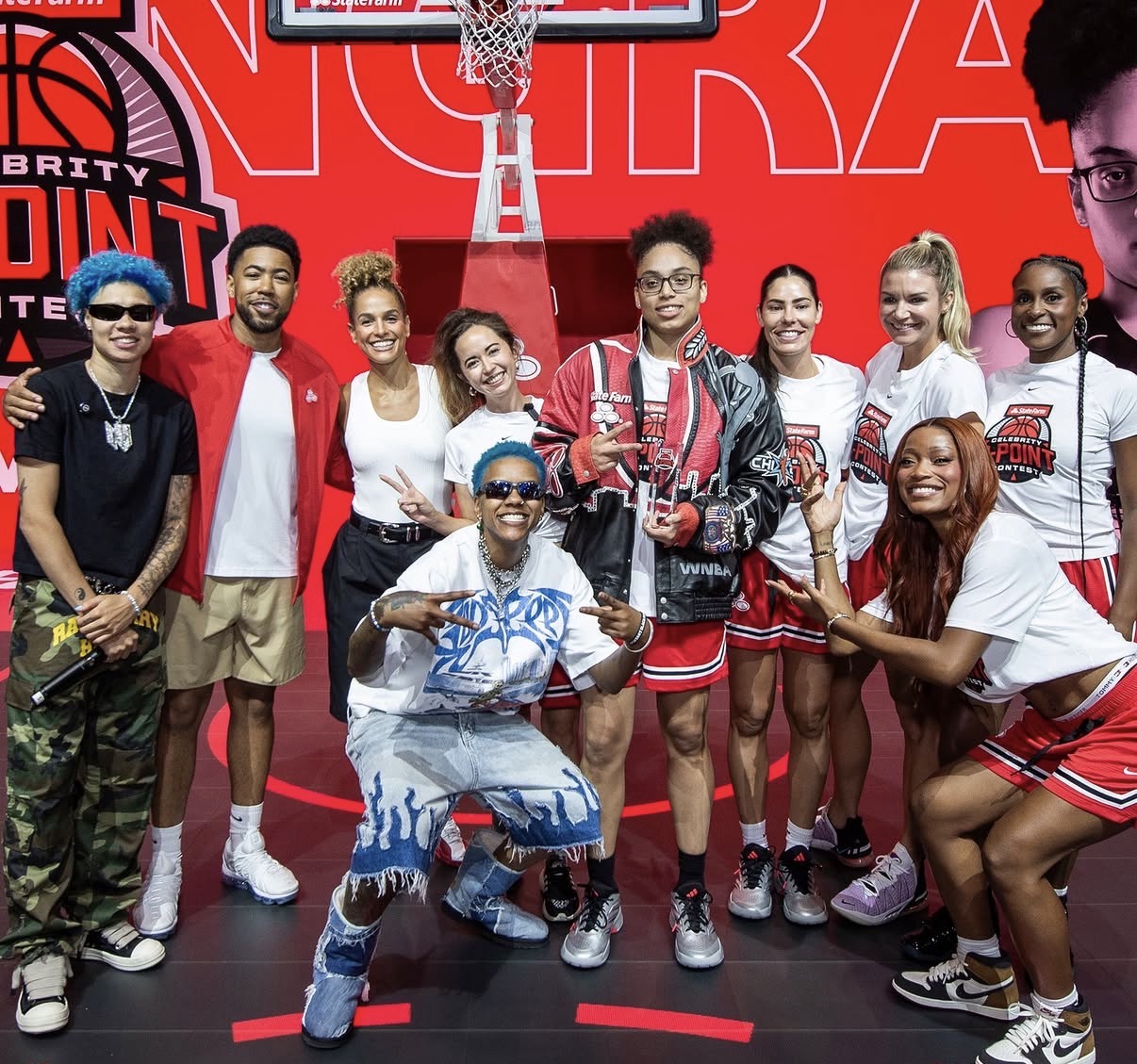
Consider Allie Clifton, a former college basketball player and sports broadcaster. Distinction secured her a place in State Farm’s Celebrity 3-Point Contest. She finished second, ahead of Kelsey Plum and behind Olivia Miles. A conventional activation could have ended there: appear, shoot, post, invoice.
Instead, the agency carried the event into Road Trippin’, the basketball show Clifton co-hosts, and distributed the idea across podcast, YouTube, Instagram and X. Distinction reports 239,000-plus additional impressions and 4,947 podcast downloads. The revealing word is additional. The appearance created the raw material; the campaign architecture created the afterlife.
additional impressions reported across the campaign extension
podcast downloads - less fleeting than a scroll-by view
That same instinct appears elsewhere. Distinction linked creator Aliyah Funschelle with Coach around a New York Liberty game, then brought her back to moderate a conversation with Breanna Stewart. It helped Hologic pair WNBA player Erica Wheeler’s personal story with a cervical-cancer prevention campaign. It placed hockey creator Jacob Kalashnikoff at the NHL Heritage Classic and worked with Netflix on a youth event during NBA All-Star Weekend. The product is never just “athlete plus logo.” It is a reason for the athlete, the audience and the setting to belong in the same sentence.
The first failure was too much menu
Young agencies often mistake possibility for positioning. Distinction did too. Onaindia has said that the firm struggled early by trying to do everything for businesses. Once it narrowed the service list to the work it did best, revenue rose sharply. The lesson is almost offensively plain: a company can become easier to buy when it offers less.
The pandemic supplied the less glamorous lesson. Creative work, events and campaign ideas had occupied the foreground; forecasting and financial health had not. That period pushed the agency toward what Onaindia later described as greater operational maturity. A good story may win the client. A forecast keeps the people who must deliver it employed.
Choose for fit
Start with content style, personality and audience - not a follower total floating free of context.
Give the story a reason
A launch, a live event or a genuine personal connection gives the creator something worth saying.
Build the second touch
Avoid the lonely sponsored post. Design follow-through across formats where the audience already knows the talent.
A roster is not a vending machine
The agency’s most useful distinction is between reach and fit. It says the first thing it evaluates in a potential client is content style, followed closely by personality and shared goals. Onaindia compares the courtship to friendship or dating. The metaphor is playful, but the economics are serious. A creator who dislikes the product will make expensive content that feels cheap.
Distinction also resists the advice that every creator should conquer every platform. A short-form specialist may be better served by improving Reels, TikTok and YouTube Shorts than by maintaining six mediocre outposts. This is the part readers can steal: define the audience behavior, select the native format, decide what success means - impressions, sales, a code, a tracked link - and only then choose the personality. Most disappointing campaigns reverse that order.
Where the company sits
This puts Distinction between old sports representation and software-led influencer marketplaces. A traditional agent may treat endorsements as one line beside the playing contract. A marketplace can locate creators at scale. Distinction sells something less automated: judgment, access, packaging and continuity. Its business model is services-based - brand campaign work, events, PR and talent representation - although it does not publish rates or deal economics.
Its next frontier is visible in Onaindia’s interest in creator-owned businesses and intellectual property. Brand deals rent a creator’s attention. A product, podcast or media property can let the creator own the thing being built. For an agency, that demands more than negotiating posts; it means helping talent choose businesses that can survive changes in an algorithm.
The conditions matter
The method loses force when the connection is cosmetic, when a brand insists on language no creator would naturally use, or when a campaign ends after one isolated post. It also changes in regulated categories such as betting and alcohol, where creative freedom must yield to tighter legal review. Authenticity is not permission to ignore compliance.
The $50,000 viewing job
One of Distinction’s newer projects turns its method into a near-perfect cartoon. Austin Franklin was selected, from thousands of applicants, as one of FOX One’s Chief World Cup Watchers. The assignment: watch all 104 matches of the 2026 tournament live in 4K from a viewing cube in Times Square, make real-time content and receive $50,000. On paper, this sounds like a stunt invented during a long lunch.
But it works because the absurdity is the communication device. Franklin’s genuine interest in football gives the job credibility; the cube makes it visible; the 104-match ordeal creates a repeatable story; FOX, Indeed and social distribution supply reach. It has a person, a place, a constraint and a scoreboard. In other words, it behaves like entertainment before it asks to be considered advertising.
This is what Distinction actually does. It searches for the human logic inside a commercial arrangement, then gives that logic enough surfaces to travel. The agency calls its ideal a “triple win” among brand, talent and agency. The audience is conspicuously absent from the phrase, yet it remains the silent judge. If viewers enjoy the story, the three wins are possible. If they sense the machinery first, nobody gets the point.
Continue the conversation