There are two clocks in the influencer business. The first is the clock everybody can see: a product arrives on Tuesday, a video goes up on Friday, a performance report lands the following week. The second clock is mostly hidden. It measures sketches, revisions, licensing calls, production delays and the faintly absurd number of decisions required to turn a personality into a product. Ponte Firm, the Austin talent-management company, has decided that the second clock is where the interesting work happens.
Its cleanest example began with creator Audrey Peters and the Paris fashion house Olympia Le-Tan. The collaboration took roughly 18 months to make. Then it sold out. A normal sponsorship starts with something already manufactured and asks a creator to introduce it to an audience. This project started with an audience and asked what ought to exist for it. One is distribution. The other is development.
That difference explains Ponte more usefully than the usual agency vocabulary. The firm represents creators, negotiates partnerships and advises on content. But founder and CEO Shana Davis-Ross talks about a larger job: moving talent into products, publishing, television, live programming and, sometimes, equity. Ponte's product is not merely access to a famous face. It is the machinery that helps a face become a business.
The missing middle of influence
Davis-Ross came to this conclusion from the brand side. Before Ponte, she worked around fashion and media, including Oscar de la Renta, Vogue and WWD, and later in influencer strategy. She watched large talent agencies favor people who were already large. The economics were tidy: established creators brought immediate deal flow. Yet the career-building work that makes someone established had to happen somewhere else.
So Ponte went looking in the middle. Davis-Ross began with micro-influencers, including Kit Keenan when Keenan had around 30,000 followers. As those clients grew, their friends asked for the same representation. The inbox filled. By 2024, The Wall Street Journal reported that Ponte managed roughly 80 creators. By 2026, a group including Keenan, Peters, Jully Patel and Abigail Lin represented more than 74 million followers across platforms.
“The journey of getting from point A to B is just as important.”Shana Davis-Ross, founder and CEO
This is not altruism dressed as strategy. Ponte earns a percentage of what its creators make through deals and partnerships. Helping a small business become a larger one is quite literally the business model. The incentives can still favor volume, but the firm argues for patience because a creator with products, publishing options and durable brand relationships has more ways to earn than a creator waiting for the next brief.
A manager in the organic aisle
The least glamorous part of Ponte's model may be the most important: managers talk with clients about what they post when nobody is paying them. Organic content tells brands what kind of commercial work will feel believable. Paid work, in turn, can finance the experimentation that improves the organic feed. Ponte stays in both conversations.
That makes the company different from a broker who appears when a contract does. Its managers advise on platform positioning, daily posting, brand fit and longer-term opportunities. The firm also tells creators to cycle good content across Instagram, TikTok and YouTube when it makes sense. An audience on one platform is not identical to an audience on another; the same creative investment can make more than one trip.
Two clocks, one creator
The first thing that fails is usually fit. Davis-Ross has described brands moving quickly, contacting many creators and asking for work that does not resemble what those creators normally make. The result may satisfy a calendar and still miss the audience. Researching a creator costs time at the beginning. Skipping the research costs credibility at the end.
Ponte's intake filter follows the same logic. Follower count is not the only test. The firm looks for creators who are already producing some revenue and understand their side of the business. That condition matters. High-touch development works when the client wants to operate a company, not simply receive attention. A creator who dislikes long-form video should not start YouTube because a trend report said so. A creator who does not believe in a young company should not accept equity because equity sounds sophisticated.
The percentage is only half the price
Ponte's exact commission is not public, but the shape of the exchange is clear: the firm takes a percentage of partnership income, and the creator gives up a measure of speed and unilateral control in return for negotiation, coordination and a broader opportunity set. Sometimes the visible price belongs to the audience. Peters once sold “Euro Summer” merchandise at $125 for a sweatshirt and $85 for sweatpants. Both sold out.
For a brand, the expensive version is not always the larger creator fee. It is the custom object. Sketching and manufacturing an Olympia Le-Tan collection puts real money and calendar risk behind the relationship. The cheaper alternative is a completed product, a post date and a short measurement window. The slower version works only when the creator's taste can improve the product and the audience wants more than an endorsement.
The useful part to steal
Study the creator before writing the brief. Match the format to what already feels natural. Reuse strong work across distinct audiences. Reserve equity for brands you genuinely want to help build. Most of all, give the relationship enough time to produce something neither side could make alone.
A network disguised as an agency
Roughly 90 percent of Ponte's new talent comes through referrals, according to Davis-Ross. That statistic describes more than recruiting. It means the roster itself is an acquisition channel, a quality filter and a source of creative combinations. The annual Ponte summit makes the hidden graph visible: creators meet one another, exchange ideas and find opportunities that do not originate with a manager's pitch deck.
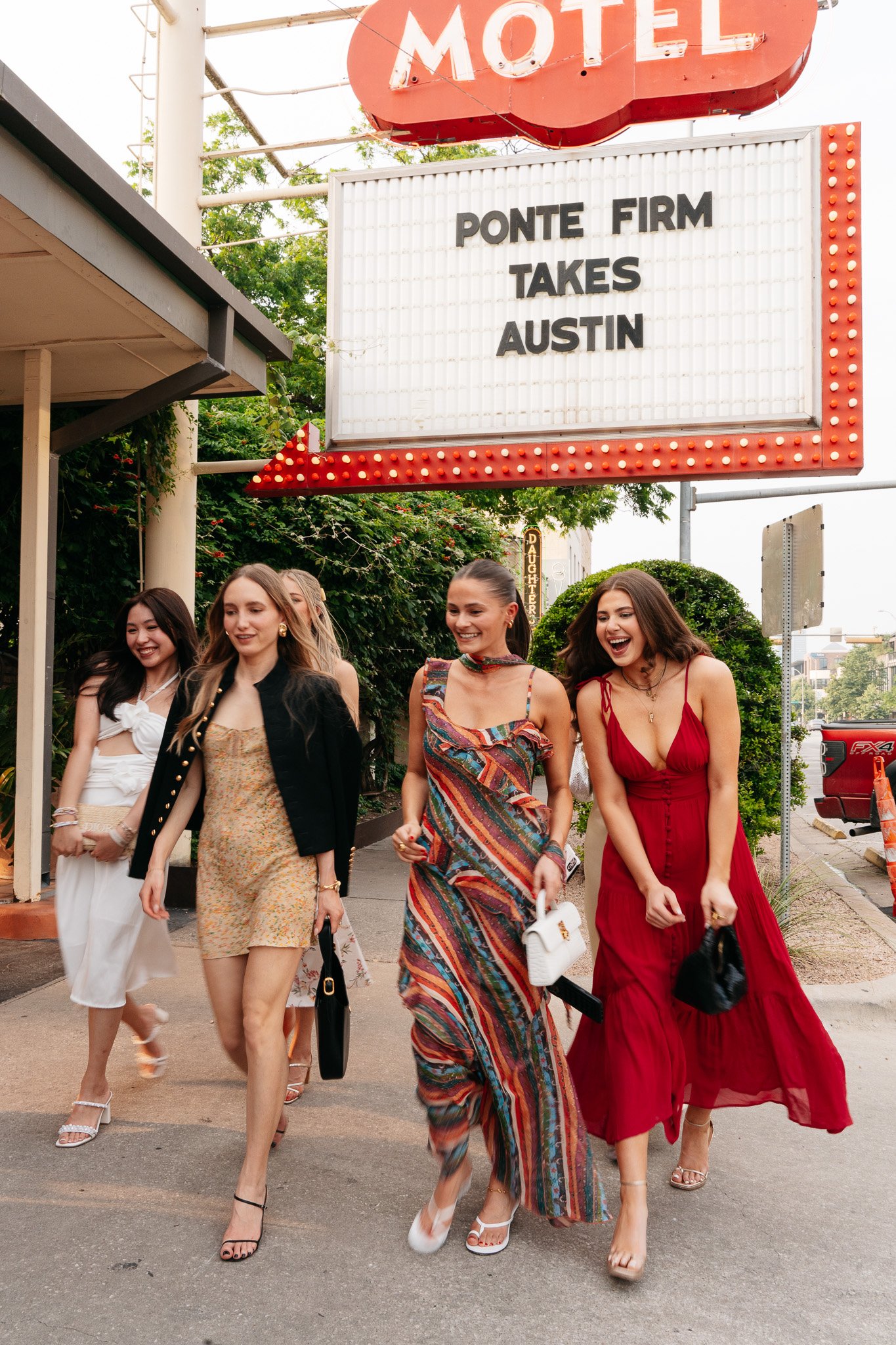
The firm has learned to stage that network in public. Its 2024 Influencers Unlocked gathering in Austin combined a panel on entrepreneurship and creator investment with partners including INNBEAUTY PROJECT, Wella, FabFitFun and ELEMIS. Elsewhere, Ponte has worked across relationships involving Chanel, Dyson, Target, SKIMS, Tiffany & Co. and Expedia. The service sits in the middle: part talent agency, part strategy consultancy, part business-development office.
That position has limits. The model depends on creators who already show commercial fluency, brands willing to do their homework and managers capable of staying close without sanding off what made the creator interesting. Referral-heavy systems can also reproduce the narrowness of the network that feeds them. The remedy is not more indiscriminate scale. It is a wider, more deliberate idea of who gets referred.
Still, Ponte has identified the structural fact of modern influence: a creator's audience may begin on a platform, but the career cannot safely end there. Algorithms change. Formats cool. Sponsored posts blur together. A licensed product, a book, a show or an owned company creates another route to the customer. The bridge in Ponte's name is not only between brand and influencer. It is between this week's feed and whatever can survive it.
The real question is not how much a post can earn. It is how many futures one audience can support.
The 18-month collaboration matters because it reverses the impatient logic of the medium. Social platforms reward what is newest. Ponte's bet is that management should reward what lasts. Sometimes that means a quick campaign. Sometimes it means a flat fee instead of equity. And sometimes it means waiting through the sketches until the post is no longer the product at all.