Three is a peculiar number on which to build an agency. It is too small to impress anyone in a pitch deck. It does not look like reach. It looks, at first glance, like restraint. At Dopamine Studios, a London talent-management and creator-marketing company, it is the typical maximum number of creators assigned to one talent manager. In an industry that can treat a roster like an airline treats seats, the empty space is the product.
The premise is simple: a creator does not need another person forwarding offers. A creator needs someone with enough time to notice the half-formed podcast idea, the book hidden in a run of posts, the live format that could become a television job, or the recurring audience question that might become a product. Those opportunities are obvious only after somebody has paid sustained attention. Attention does not scale neatly.
The agency designed as a correction
Melanie Kentish founded Dopamine Studios after more than 17 years around entertainment, social media and influencer marketing. She had worked with ITV, Sky, Netflix and the BBC, led influencer work at Sky, and spent time at the creator agency Gleam. She also had an earlier, modest life as a creator herself. That last credential matters. It taught her that building a community is work, that making a repeatable format is hard, and that she preferred the control room to the stage.
The company she announced in 2023 read like a list of things she wanted to repair: restrictive contracts, unpaid goodwill, careless digital environments and a tendency to confuse the largest possible roster with the best possible service. Dopamine would represent creators, but it would also help brands design creator-led work. The two sides were meant to inform each other. Creators would get a manager who understood the pressures inside a brand; brands would get an agency that understood why a person with a community cannot behave like rented media space.
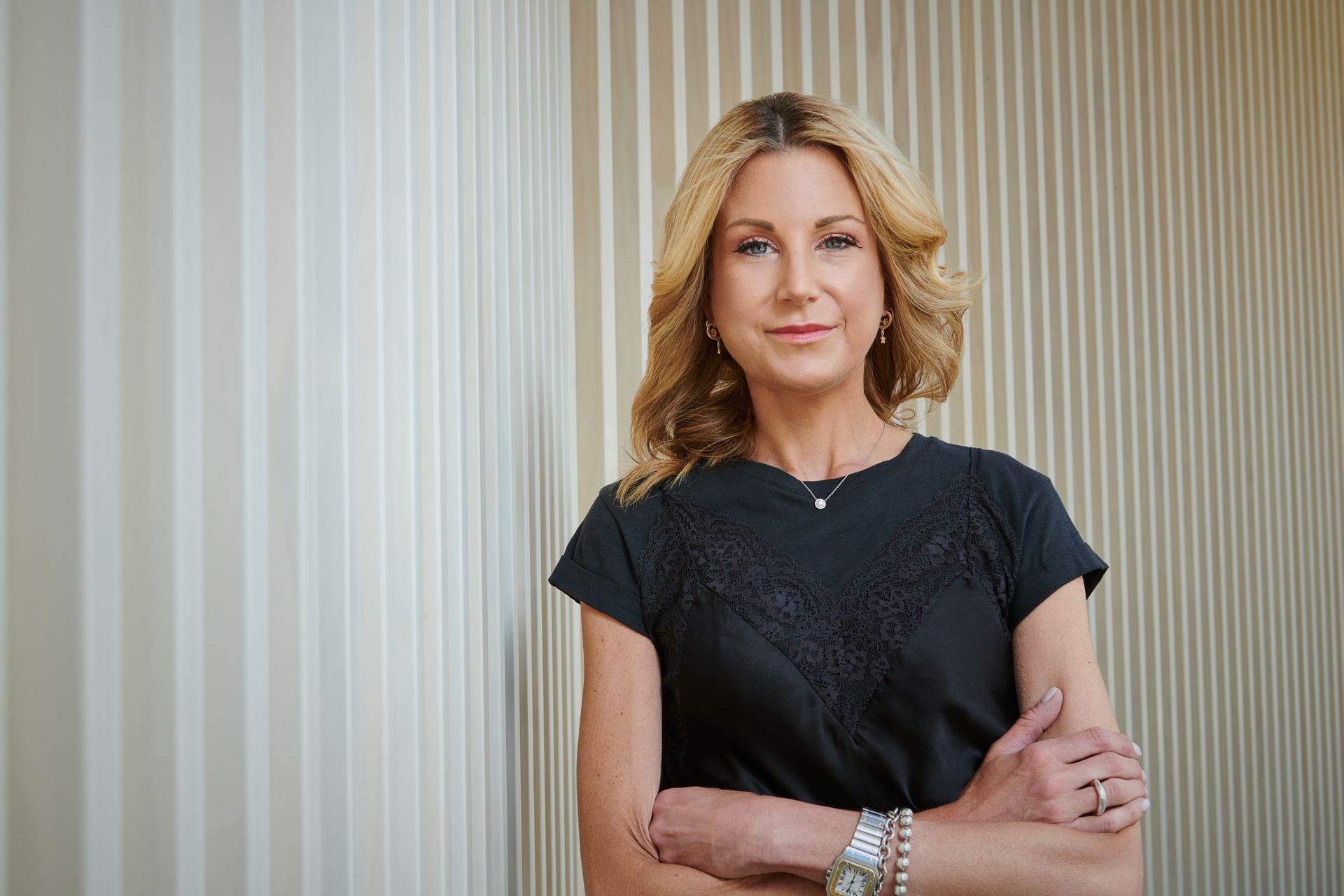
“Creators can't pay their bills with goodwill. They need to be fairly remunerated for the services they are offering.”Melanie Kentish
Two customers, one translation problem
Dopamine Studios serves two customers who use the same vocabulary and often mean different things. To a brand, “authentic” can be a line in a brief. To a creator, authenticity is the reason an audience returns. The agency sits between them. On the talent side, it handles audience and content strategy, commercial partnerships, monetisation and media training. More unusually, it works on intellectual property: publishing, podcasts, broadcast, products and licensing. The desired outcome is not a busier posting calendar. It is a career with more than one engine.
On the brand side, the menu runs from audits and landscape analysis through casting, contracting, ambassador programmes, campaign delivery, social listening and reporting. A brand can hire the company for the whole route or for a stretch of it. There is no public rate card; the work is scoped as an agency service. The business therefore earns through creator representation and commercial deals on one side, and brand strategy, execution and advisory work on the other.
The clearest proof of the brand-side system is ITV Insiders. Launched in April 2024, the programme gathered more than 100 UK creators across interests, demographics and regions. They received programme access, previews, paid campaign opportunities and a dedicated Creators' Summit. This was not the old celebrity trick of putting a famous face beside a logo. It was an attempt to make creators part of ITV's marketing machinery - close enough to commissioners, producers and programmes to create informed work rather than generic enthusiasm.
What failed first was the volume logic
The founding insight was not that influencer marketing had failed. It was that an agency could succeed on paper while its service became thin. Add creators, add managers slightly later, repeat. The immediate casualty is not revenue but observation. A manager with too many names can process an inbox; that manager cannot reliably spot a new piece of IP, shape a long-term position and still know when a client needs protection rather than another deal.
Dopamine's answer is expensive by design. Limit the load. Choose talent for the change they might make, not merely the money they might generate. Prefer engagement and fit to a blunt follower count. Ask whether the creator actually likes the product. In Kentish's framing, the boutique size is not a phase to race through but permission to operate by different rules.
That idea travels well beyond talent management. A consultancy could cap projects per strategist. A medical practice could reserve unscheduled time. A software team could limit concurrent migrations. The useful move is not copying the number three. It is identifying the resource customers value but cannot inspect - attention, judgement, recovery time - and placing a public constraint around it.
The price of staying small
A capacity limit creates its own hard conditions. It works when each relationship can produce several forms of value: brand partnerships today, a podcast or book tomorrow, a product or broadcast format later. It also requires clients willing to pay for strategy and patience. If the buyer wants the cheapest thousand posts, if the creator wants only a quick deal, or if the economics depend on carrying dozens of low-touch accounts, the model becomes a handicap. Depth is valuable only when somebody values what depth produces.
The second condition is trust on both sides. Representing creators while advising brands can be useful because the agency understands both rooms. It can also create tension whenever their interests diverge. Fair pay, transparent contracting and the willingness to decline poor-fit work are not decorative values in that structure; they are load-bearing. Remove them and the two-sided model begins to look like a conflict with nice typography.
There are signs the model can travel. Dopamine added a dedicated creator-marketing lead, Tasha Harris, after her four years at Sky. Its ITV work expanded into paid campaigns. In 2026, its Code of Silence work reached the ITV bCreator Awards shortlist for lifestyle creator marketing, while several represented creators appeared elsewhere on the shortlist. These are not proof of an inevitable empire. They are evidence of something more appropriate to the thesis: a small agency becoming consequential without pretending that size is the consequence.
The number behind the numbers
Creator marketing is surrounded by numbers that arrive already polished: views, reach, impressions, follower growth. Dopamine Studios has chosen a rougher number as its most interesting one. Three does not measure an audience. It measures a promise made inside the agency - the amount of human attention available before the next client arrives.
That promise will become harder, not easier, if the company grows. New managers must learn the judgement, not simply inherit the ratio. Brand programmes must become larger without turning creators into inventory. Successful talent may need more specialised help while still feeling personally known. The limit does not solve these problems. It makes them impossible to hide.
And that may be the neatest thing about the three-creator rule. Most corporate values become softer under pressure. A capacity constraint becomes more visible. The fourth name has to go somewhere. Every time it appears, Dopamine Studios must decide whether its operating thesis is a principle, a marketing line or an invitation to hire another person. Growth usually asks a company what it is willing to add. This model asks what it refuses to subtract.