The first Theragun looked less like the future of wellness than something confiscated at airport security. At three in the morning in 2008, Los Angeles chiropractor Jason Wersland bent a blade on a Makita jigsaw, wrapped the end in a dish towel and electrical tape, and pressed it against his injured body. It was loud. It was rough. It also gave him relief that ordinary vibration had not.
That improvised tool was an answer to a brutally specific problem. A motorcycle crash the previous year had left Wersland with a nine-millimeter disc bulge in his neck, no health insurance and, by his telling, $84 to his name. Treatment depended on somebody else being available. He wanted warmth, massage and pressure when the pain arrived, not at the next appointment.
Today Therabody sells polished descendants of that jigsaw: triangular massage guns, pneumatic compression boots, LED face masks, heated goggles, electrical muscle stimulators, hot-and-cold wearables and a palm-cooling device. The hardware talks to an app with guided routines and an AI recovery coach. Its buyers range from physical therapists and professional teams to runners, desk workers and people who simply woke up with a stiff neck.
01 / What actually happenedThe product was the demo
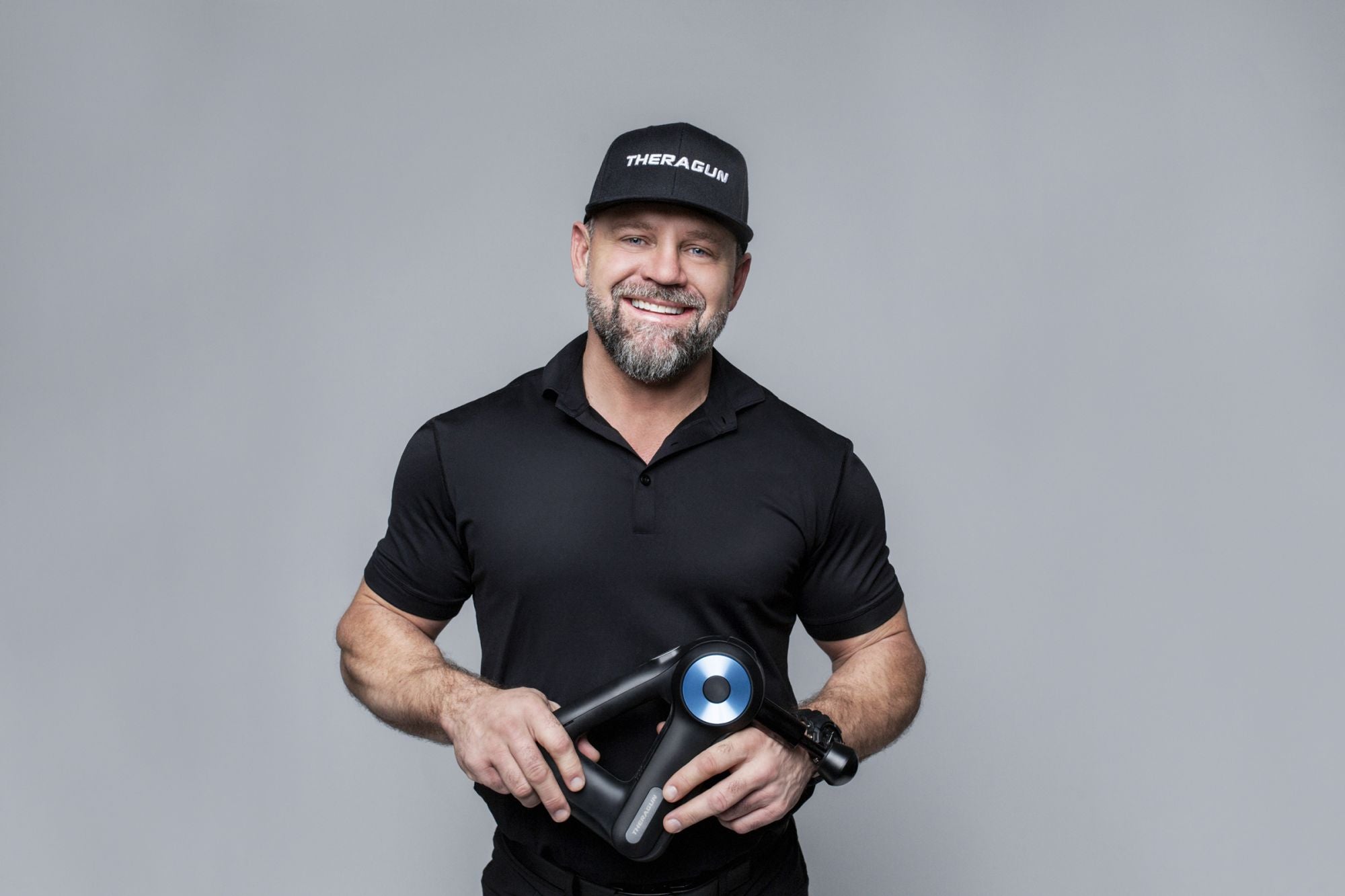
Therabody’s origin gets compressed into a neat accident-to-invention anecdote. The untidy middle matters more. Wersland says he went through five prototypes and three bad partner relationships between 2008 and the 2016 commercial launch. He carried early versions into his chiropractic practice, watched how patients and practitioners used them, and adjusted variables including speed, depth, force, attachments and grip.
The feedback loop was physical and immediate. There was no need to explain an abstract benefit in a slide deck; a therapist could try the device on a shoulder and react. Elite training rooms followed through the same one-person-at-a-time motion. Wersland recalls demos that eventually reached Real Madrid. Long before celebrity investors made the cap table glamorous, practitioners made the object credible.
“Real users can tolerate ugly. They do not tolerate useless.”The practical lesson from Therabody’s prototype years
Benjamin Nazarian helped turn the treatment-room invention into a commercial business in 2016. The company was profitable in its first fully operational year, according to Therabody, and reported that 2020 revenue tripled from the year before. Distribution grew from 40 U.S. stores to roughly 10,000 retail doors worldwide in 18 months. By late 2022, the company said it had generated more than $1 billion in cumulative revenue.
What did the invention cost? There is no reliable public ledger for the five prototypes, and the founder’s $84 anecdote describes his finances on the crash day, not a startup budget. The visible cost was time: eight years before a commercial unit. The corporate cost arrived later and at a different scale. Therabody raised an undisclosed strategic round from more than 100 athletes and entertainers in 2021, then $165 million in growth equity led by North Castle Partners in 2022. It earmarked that capital for hardware, software, services, content and international growth. In 2024, it separately pledged more than $10 million for research.
That chronology guards against a seductive misreading. Capital did not discover the problem. It accelerated a machine that already had product-market evidence, profits, retail distribution and a famous silhouette. Founders copying Therabody should not begin with a celebrity investor spreadsheet. They should begin with the equivalent of the treatment room: the smallest place where a demanding user can try the thing, disagree with it and make the next version better.
02 / The bigger betFrom a gun to a body
The name Theragun was both gift and trap. It described a famous product so well that it left little room for anything else. In 2020, the company renamed itself Therabody and began making a portfolio rather than a sequel. It acquired RP Sports for pneumatic compression technology, launched connected fourth-generation Theraguns and pushed into electrical stimulation, facial care, sleep and temperature treatment.
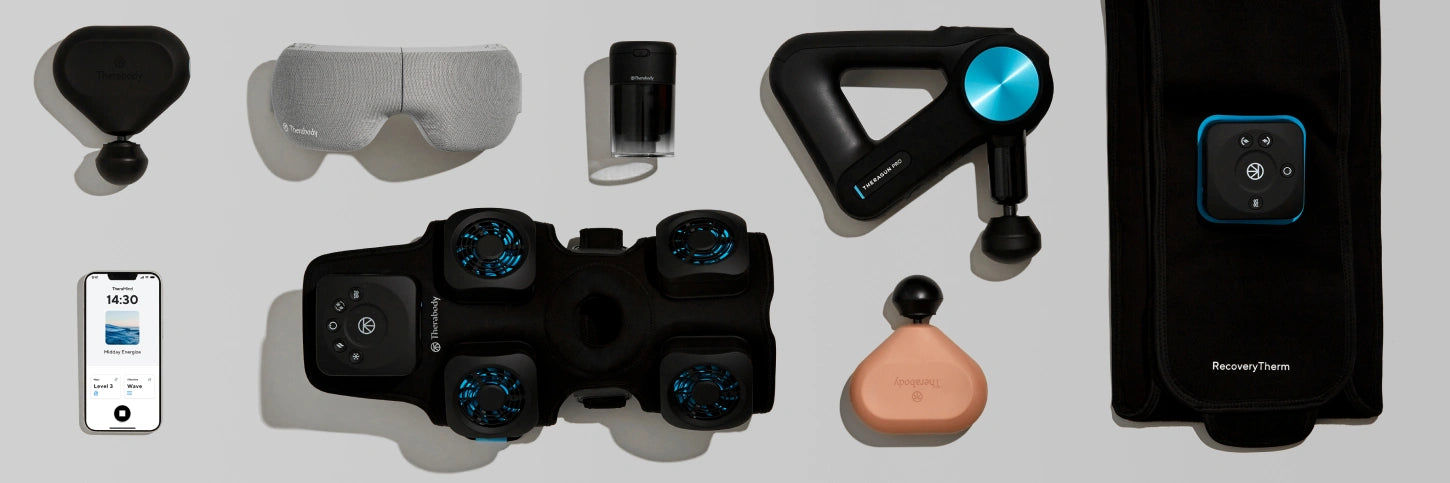
This is not random adjacency. Each new device tries to preserve the same promise: bring a treatment once associated with a clinic, spa or professional sideline into a repeatable home routine. JetBoots compress the legs. SmartGoggles add heat and massage around the eyes. TheraFace products apply percussion, microcurrent or LED light to beauty. CryoTherm Palm, launched in June 2026, uses palm cooling during training and heat exposure.
The app is the connective tissue. Basic routines tell a buyer where to put the device and for how long. Coach by Therabody, announced in beta in 2025, goes further: it interprets goals, feedback and data from services including Garmin, Apple, Google and Strava to recommend recovery. This gives a one-time hardware purchase a chance to become a recurring behavior, and gives Therabody a reason to remain present after the cardboard box disappears.
The revenue model is correspondingly plain, even if the products look futuristic. Therabody primarily sells premium devices and accessories through its own ecommerce operation, branded shops, major retailers, international distributors and professional channels. Corporate gifting, hospitality, sports and medical relationships add more doors. The free app supports the sale rather than replacing it with a mandatory subscription. Each satisfied Theragun owner is also a plausible buyer of boots, goggles or a face device, so portfolio breadth raises the value of the customer without requiring another brand introduction.
03 / Why it is differentProof is part of the product
A massage gun is no longer exotic. Hyperice competes directly at the premium end; Bob and Brad, Ekrin and RENPHO offer capable alternatives, often for less. Foam rollers, massage therapists and stretching compete for the same job without resembling a Theragun at all. Therabody’s defensible difference is therefore not merely a motor. It is a stack: recognizable industrial design, professional adoption, education, app routines, sports visibility and a growing research program.
In 2024, the company pledged more than $10 million to research and partnered with the American College of Sports Medicine. A scientific advisory board covers physical therapy, performance, women’s health and dermatology. The NWSL partnership supplies devices to players while supporting work on women athletes. A collaboration with Garmin aims to examine how recovery affects performance at a scale that isolated product trials cannot.
That investment does two jobs. It can improve products, and it can make premium prices easier to defend. Current products cover a broad range: a simple Theragun Relief has recently listed around $160, SmartGoggles around $220, and compression or beauty devices can climb several hundred dollars higher. Buyers are not paying only for components. They are paying for confidence that the routine is sensible, the device is usable and the brand will still support it.
Customers also buy different versions of the same emotional outcome. An athlete calls it readiness. A clinician calls it an at-home protocol. A beauty customer calls it radiance. A frequent traveler calls it relief. Therabody sits where consumer electronics, fitness equipment and personal care overlap, a useful position because budgets can come from several drawers. It is also an uncomfortable position because the standards shift by category. A gym gadget can survive on feel; a pain or skin claim invites harder questions.
04 / The copyable bitSteal the sequence, not the gadget
The lazy lesson is “build from personal pain.” Plenty of personal pain produces products nobody else needs. The sharper Therabody lesson is to choose a problem that can be demonstrated, improved and vouched for by high-trust users. Its earliest customers did not merely purchase; they diagnosed the product in public.
This playbook fails under clear conditions. The benefit cannot be felt or measured quickly. Expert users do not have incentives to trial the product. The object is a commodity with no meaningful design or service advantage. The category is tightly regulated and informal iteration risks harm. Or the founder mistakes famous users for evidence. Therabody’s approach worked because a live demo compressed the sales argument into minutes and because the product improved through use.
The company’s next chapter is harder than its first. A rough jigsaw only had to beat waiting for treatment. A modern Theragun must beat cheaper guns, older habits and the drawer. Therabody’s answer is to surround the object with research, software and more objects. Whether that becomes a coherent operating system for self-care or a crowded shelf of premium electronics will depend on the same thing that settled the first prototype: what happens when somebody actually uses it.