A clinical kit in a cardboard box, and a job at the other end
Somewhere in America right now, a box is arriving on a doorstep. Inside: a blood-pressure cuff, a few practice supplies, the unglamorous hardware of a healthcare career. The person who opens it has a full-time job, maybe kids, and no spare two years to sit in a community-college classroom. In about four months, they will be certified to work in a clinic. That box, and the software that came with it, is Stepful.
Stepful is a New York company that trains people for entry-level healthcare jobs - medical assistant, pharmacy technician, surgical tech - and then helps them get hired. It calls itself the largest online medical-assistant school in the United States. The programs run online, on a phone if that's all you've got, with live classes twice a week and an AI that notices when you go quiet.
It is, in other words, vocational school rebuilt for people who were locked out of vocational school. The waiting list for the old version was measured in semesters and student debt. Stepful measured it differently.
The shortage nobody could hire their way out of
Here is the inconvenient arithmetic. The American Hospital Association projects the U.S. will be short roughly 3.2 million allied-health workers, nurses, and mental-health professionals by 2026. Hospitals responded the way employers always do: they posted more jobs, raised wages, poached from each other. None of that creates a single new trained worker. It just moves the existing ones around at higher cost.
The founders looked at that and saw something the job boards missed. The bottleneck wasn't recruiting. It was the pipeline feeding it. Traditional training was too slow, too expensive, and too inconvenient for exactly the people most likely to fill those roles - career changers, adults with jobs, communities that community colleges weren't reaching.
That distinction sounds academic until you notice almost no one was building on the supply side. Plenty of startups promised to help hospitals fill shifts faster. Stepful decided to manufacture the workers in the first place.
An operator, a product lead, and the engineer who taught Siri Italian
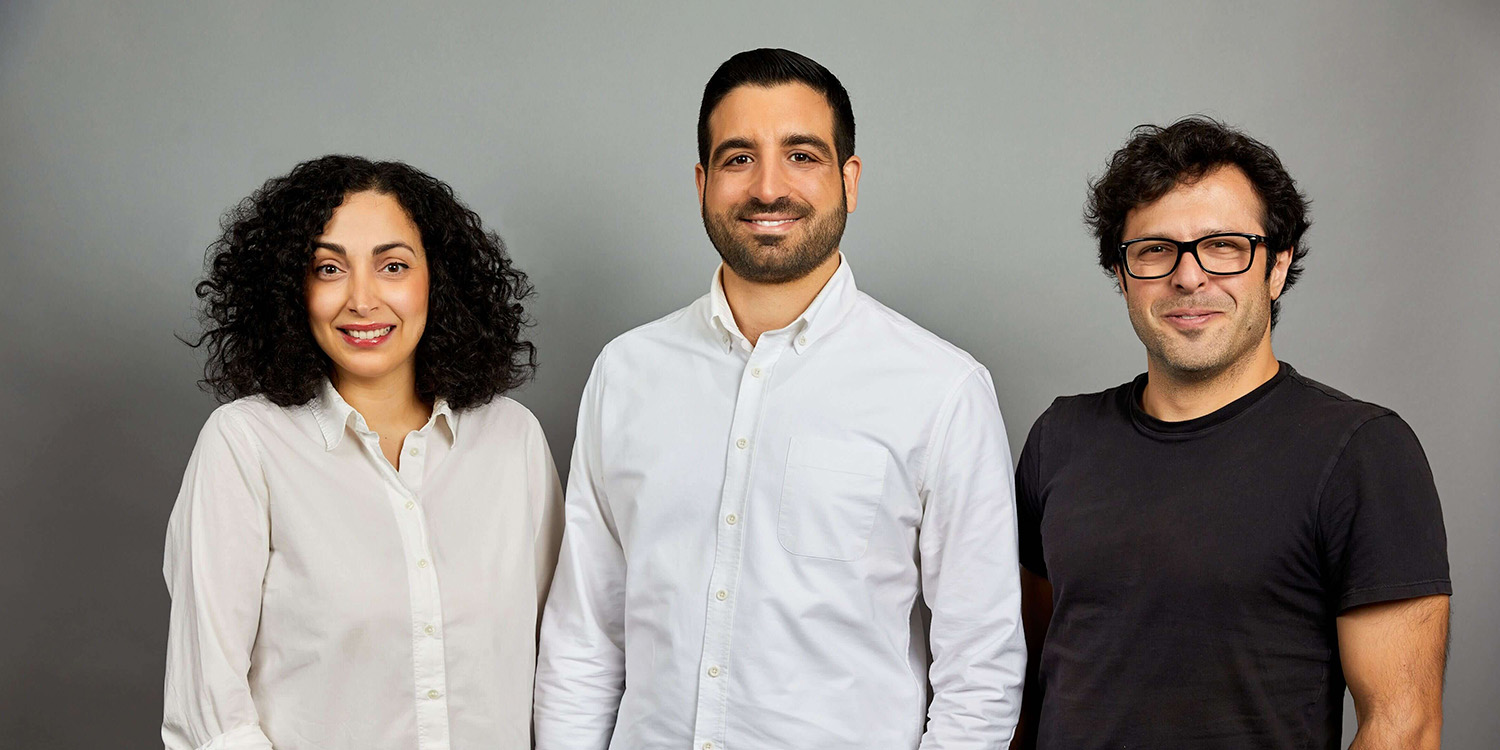
The founding team is an odd, specific mix - the kind that only makes sense in retrospect. Carl Madi, the CEO, spent a decade scaling operations at consumer companies that grew very fast and very chaotically: Uber, Handy, Amino Apps. Tressia Hobeika had built online learning at Udacity and Triplebyte, where she helped reskill and place more than 200,000 job seekers into tech roles. Edoardo Serra was an Apple engineer for nearly ten years and oversaw Siri's global expansion, including its Italian-language version.
Their bet, in 2021, was that consumer-grade operations, real instructional design, and serious engineering could be pointed at a stubbornly analog industry. Vocational training had been run like a public utility for decades. They proposed running it like a product.
It started small - 50 students in year one. Reach Capital led a $7.5M seed; Y Combinator was in the room. The first cohorts were less a business than a hypothesis: would people actually finish?
Asynchronous when it can be, human when it has to be
The design choice that matters most at Stepful is also the least flashy. Students learn on their own schedule - mobile-friendly, self-paced - but attend mandatory live classes twice a week, 90 minutes each, with an actual instructor and a cohort of actual classmates. The asynchronous part respects that adults are busy. The synchronous part is what keeps them from quitting.
An AI layer watches for the early signs of someone falling behind and sends a nudge. When the nudge isn't enough - and it often isn't - a human coach steps in. That escalation ladder, software first and people second, is how Stepful claims a roughly 90% completion rate in a category where online courses are infamous for people drifting away.
Medical Assistant (CCMA)
~4-5 months toward the NHA CCMA exam. Mailed clinical kit, live classes, simulations, mock exams, clinical hours, job coaching.
Pharmacy Technician
Online prep for PTCB-CPhT certification, covering pharmacy calculations and pharmacology basics.
Specialized Tracks
Surgical technologist, patient care tech, dental assistant, medical admin, and pathways toward licensed practical nursing.
Job Coaching
8 weeks of mock-interview workshops, 1:1 coaching, resume help, and curated local full-time openings.
Notice what the product doesn't end with. It doesn't end with a certificate. It ends with clinical hours arranged through partner clinics and a curated list of real local jobs. The certificate was never the point. The paycheck was.
How a 50-student experiment became a workforce engine
The first cohort
Founded in New York. Fifty students enroll. The question is simply whether anyone finishes.
$7.5M seed
Reach Capital leads, with Y Combinator, EO Ventures, and Company Ventures. The hypothesis gets funded.
$12M Series A
AlleyCorp Impact leads as enrollment and the employer business both start to scale.
$31.5M Series B
Oak HC/FT leads, joined by YC, Reach, AlleyCorp and others. Projected enrollment crosses 30,000.
#1 EdTech in the U.S.
Named the top EdTech company in America, and top 10 globally, on TIME's World's Top EdTech Companies list.
The numbers that made investors stop arguing
Growth stories are cheap. This one has a shape that's hard to fake: 50 students in 2021, a projected 30,000+ enrollees in 2024. That's the curve that turned a seed-stage experiment into a $31.5M Series B led by Oak HC/FT, with Y Combinator, Reach Capital, and AlleyCorp following on. Total raised to date sits north of $68 million.
Enrollment, by the year
And the customers stopped being only individuals. Health systems - Providence, Ohio State University Physicians, Johns Hopkins All Children's Hospital - started using Stepful to build their own pipelines, training staff they could then keep. A network of roughly 8,000 partner clinics and hospitals handles the clinical-hours side. That B2B turn is what makes Stepful less a school and more an end-to-end workforce supplier.
Who gets to have a healthcare career
Strip away the funding rounds and the keyword soup, and the mission is narrower than it sounds. Stepful trains people who were largely shut out of the old system - adults without college degrees, career changers, low-income and underserved communities - and routes them into jobs that pay and tend not to disappear. The $28 billion healthcare-training market is the size of the prize. The shortage is the reason it exists.
There's a quieter version of the same idea on the employer side. If a hospital can train its own medical assistants instead of bidding against three other hospitals for the same scarce hire, the whole system gets less zero-sum. More trained people is the only move that helps everyone at once. It is, conveniently, also Stepful's business model.
The box on the doorstep, three years later
The shortage isn't going away by 2026. The wages are still rising, the shifts are still unfilled, and the job boards are still busy moving the same people around. What's changed is that there's now a supply-side answer running at scale, with the completion numbers and the employer contracts to suggest it works.
Go back to that cardboard box on the doorstep. Three years ago, the person opening it would have been told the path was two years and twenty thousand dollars away, if they could find a seat at all. Now the box is the path. They open it on a Tuesday, and by spring they're certified, placed, and on a clinic floor. The crisis is too big for one company to fix. But the box keeps showing up, and the line at the other end keeps getting shorter.