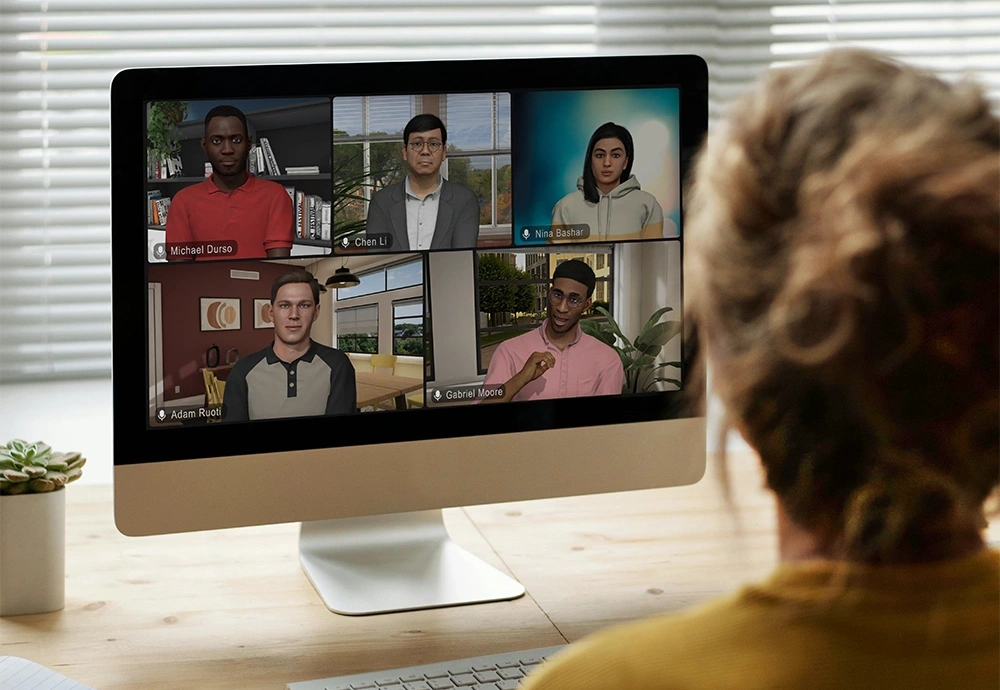
A practice gym for the conversations you keep dodging.
On a Tuesday morning, somewhere inside a Fortune 500 leadership program, a mid-level manager logs into a video window. On the other side is a polite, slightly tired-looking employee named "Alex." Alex is animated. Alex is also, technically, not real - the avatar is rendered by software, but the voice, hesitations, and small offended pause when the manager interrupts? All of that is a human being in a Mursion studio, breathing through a headset.
This is what Mursion sells. Not a tool. A practice room. The kind of place where you can flub a layoff conversation, mishandle a diversity complaint, butcher a sales objection, and nobody quits over it.
Soft skills are hard, and most training pretends otherwise.
Corporate learning has a dirty little secret: most of it is content delivery. Watch the module, click "next," answer the quiz, get the certificate, forget everything by Friday. The skills that actually decide whether a manager keeps a team together - listening under pressure, naming bias without shaming, holding a hard line without humiliating someone - those are exactly the skills you can't learn from a video.
The traditional fix was role-play. The traditional reaction to role-play was a quiet shudder. Asking two colleagues to "pretend" through a feedback conversation usually produces something between a sitcom and a hostage negotiation. Either nobody takes it seriously, or somebody does, and now there's residue.
Mursion's founders looked at that gap and saw an opening. If you could give a learner a stranger, a stakes-feeling scenario, and a do-over button, you could finally make practice both safe and uncomfortable enough to matter.
Two people, one improbable wager.
In 2015, Mark Atkinson, a serial education-technology entrepreneur, partnered with Arjun Nagendran, a post-doctoral researcher at the University of Central Florida's Institute for Simulation and Training. Nagendran's work on robotics and virtual humans had quietly produced something unusual: a way to puppet computer-generated characters with a single human operator. One actor could become five avatars. One studio could become a casting agency.
Atkinson brought the go-to-market instincts; Nagendran brought the patents and the pipeline. Together they made a counterintuitive call - in an industry already chasing fully autonomous AI tutors, they would build a platform where a real, breathing person remained in the loop. The phrase "human-in-the-loop" was years from becoming fashionable. Mursion just called it the only way to make practice feel real.
The bet looked stubborn at the time. Today, it looks early.
Atkinson and Nagendran incorporate Mursion in San Francisco.
From Dow to T-Mobile to United Airlines to Ericsson.
Across six rounds; backers include Leeds Illuminate and New Markets Venture Partners.
A studio-shaped company: behavioral scientists, engineers, and actors.
What is actually happening on the screen.
A Mursion session is shorter than you'd think. Usually 30 minutes. A learner gets a scenario brief - say, you're a regional manager and one of your store leads has been accused of favoritism. You join a session. You see a small set of avatars in a conference room. You start talking.
On the other end, in a Mursion studio, a Simulation Specialist - typically a trained improv actor with hours of coaching on the scenario - is voicing the avatar in real time. They listen, react, push back, sometimes throw an unscripted curveball. The conversation happens. The conversation ends. A debrief follows, with AI-assisted analytics on what was said, how it was said, and what got missed.
The platform now stretches across leadership, sales, customer service, K-12 teacher prep, and clinical communication for healthcare. The scenarios change. The mechanic doesn't.
A short timeline of an awkward idea getting taken seriously.
Who's actually paying for the practice room.
The customer list is the part that quiets skepticism. Dow built an inclusive leadership program around Mursion simulations. T-Mobile, United Airlines, Best Western, and Ericsson have rotated managers through the platform. Universities use it for teacher preparation. Healthcare systems use it for standardized-patient training, where the cost of a real-world fumble is measured in something more than awkwardness.
The pattern is consistent: organizations that pay for Mursion are usually the ones that have already tried the other thing. The webinar. The off-site. The dusty role-play handbook. They come to Mursion because the alternative was failing quietly.
Where the practice happens.
Mursion's scenarios cluster across a handful of high-stakes domains. Approximate distribution by use case.
Illustrative share of customer deployments. Real numbers vary by year and probably by mood.
Make the soft skills repeatable.
Mursion's stated mission is not modest: turn the most human parts of the workplace - leadership, empathy, communication, conflict - into things you can practice on purpose. Treat them as muscle, not personality. Schedule the reps. Measure the gains.
The supporting belief is that performance assessment in this domain has been mostly vibes. Mursion's analytics layer tries to do better - tracking what was said, what was avoided, what changed across attempts. The platform integrates with learning management systems, reports back ROI metrics, and quietly normalizes the idea that interpersonal skill is data, not destiny.
Whether the data is fully there yet is a fair question. Whether the question is worth asking at all - that part Mursion appears to have settled.
The human-in-the-loop turns out to be the moat.
For a while, it looked like Mursion's reliance on live actors might be a weakness. Big AI players were promising avatars that could converse autonomously, indefinitely, at near-zero marginal cost. Why hire a roomful of improv-trained specialists when a language model could do the job for free?
Then the language models started talking, and everyone discovered they had things to say but very little they actually meant. Tone collapsed. Stakes evaporated. The very thing that makes practice useful - the sense that another consciousness is on the other end, capable of being surprised, hurt, or persuaded - turned out to be hard to fake. Mursion's "old-fashioned" human-in-the-loop architecture suddenly looked less like a constraint and more like a strategic decision made five years ahead of schedule.
The interesting question now is not whether AI replaces the Simulation Specialists. It's how much of the orchestration, scenario generation, analytics, and coaching AI can absorb so the specialists can do more of what only humans do well. That's the next chapter, and Mursion seems to be writing it slowly, on purpose.
That Tuesday morning, revisited.
Back to the manager and "Alex." The thirty minutes end. The manager closes the laptop. They got two questions wrong. They interrupted at minute four. They recovered at minute eleven. The debrief flags both, gently. Tomorrow there is a real conversation with a real direct report about a real conflict, and the manager walks into it having already been there once.
That's the whole product. Not virtual reality. Not artificial intelligence. Rehearsal. The oldest performance technology there is, finally available on a corporate calendar invite.
Where to find Mursion
- Website: mursion.com
- LinkedIn: linkedin.com/company/mursion
- Twitter / X: @MursionInc
- Facebook: facebook.com/MursionInc
- Press archive: mursion.com/press
- Crunchbase: crunchbase.com/organization/mursion