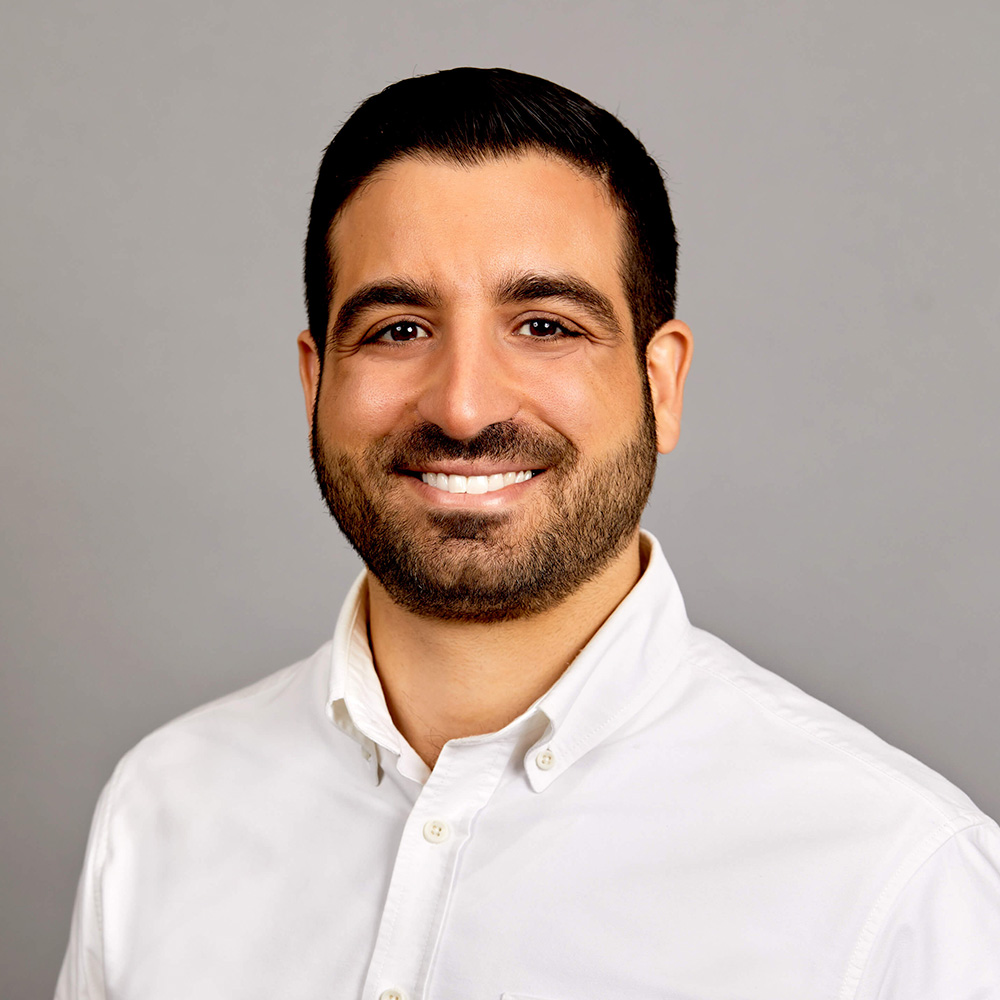
A growth operator walked into healthcare and refused to leave.
The resume looks like a scavenger hunt through the consumer-startup canon: Uber, Airbnb, Handy, Amino Apps. At Handy, Carl Madi ran a roughly $75 million profit-and-loss line and personally moved more than 100,000 people into gig work. That is the part most people lead with. It is also the least interesting thing about him.
The interesting part is what he did with that muscle. Madi is the co-founder and CEO of Stepful, a New York company that trains people for healthcare jobs - medical assistant, pharmacy technician, surgical tech, patient care - in a matter of weeks rather than years. Think of the coding-bootcamp model, pointed away from software engineers and toward the people who take your blood pressure. He started it in 2021 with Tressia Hobeika and Edoardo Serra, and ran it straight through Y Combinator's Summer 2021 batch.
By early 2025, TIME ranked Stepful the number one EdTech company in the United States and put it in the global top ten. The company trains roughly 13,000 students a month. Its graduates pass the NHA CCMA certification exam at an 87 percent clip, about ten points above the national average. None of those are vanity metrics. They are the whole thesis.
This funding supports our mission to make healthcare training more accessible while addressing the U.S. shortage of healthcare workers.
The detour through unicorns
Madi earned his MBA at Wharton, finishing in 2017, and went straight into the deep end of consumer scale. At Amino Apps - a social media startup backed by GV and USV - he ran international expansion out of Manhattan. Then came Handy, where as global head of the direct-to-consumer business he learned the unglamorous mechanics of two-sided marketplaces: how to acquire workers, vet them, place them, and keep them. Uber and Airbnb rounded out the apprenticeship in operations at planetary scale.
Most people who collect that resume go start another app for ordering things. Madi noticed something else. The hardest problem in those marketplaces was never demand. It was supply: finding qualified people, fast, and giving them a reason to stay. Healthcare, it turns out, has the same problem, except the stakes are a hospital floor instead of a clean kitchen.
What Stepful actually does
The American healthcare system is short on frontline workers and long on people who would happily do those jobs if the on-ramp were not so steep. Traditional programs are slow, expensive, and frequently disconnected from whether a graduate ever gets hired. Stepful compresses the timeline. Its cohort-based, online programs blend interactive coursework, AI-powered practice and feedback, and hands-on externships placed through a network of more than 8,000 healthcare sites.
The outcomes-based model is the point. Stepful does not get paid to enroll students; it wins when students finish, certify, and get placed. Completion sits around 75 percent. Pass rates run above the national benchmark. The company partners with health systems including Ohio State University Physicians and Johns Hopkins All Children's Hospital to build pipelines that funnel directly into open roles. For a learner, that means a clear line from "no clinical background" to "certified and employed" - often in a couple of months.
Stepful does not win when you enroll. It wins when you get hired.
The money, and the believers
Investors have been steadily upping their bet. An early round of $7.5 million led by Reach Capital, with Y Combinator, EO Ventures, and Company Ventures, gave way to a $12 million Series A. Then came the $31.5 million Series B led by Oak HC/FT, with Reach Capital, AlleyCorp, SemperVirens, Company Ventures, Green Sands, ECMC Group, Intermountain Venture Fund, Cedar Pine, and Y Combinator along for the ride. All told, roughly $68 million has flowed in to scale the AI-powered training engine.
The cap table reads like a who's-who of people who care about workforce outcomes rather than flashy consumer metrics. That is fitting. Stepful's customers are not just students; they are the health systems desperate for staff and the frontline workers chasing economic mobility. Madi has built a company where those interests line up instead of fight.
The operator's tell
There is a quiet consistency to Madi's career. Every job was about moving large numbers of real people from one state to a better one - unemployed to earning, untrained to certified, stuck to mobile. He marked Stepful's fifth anniversary by sitting down with his co-founders to retell the founding story in public, a small act of transparency from a company still very much in the middle of its run.
He keeps a low personal profile. No torrent of hot takes, no founder cult of personality. The work does the talking: a pass rate, a placement, a hospital that suddenly has the medical assistants it needed. In an industry that loves to photograph surgeons and gleaming machines, Madi has quietly gone after the part nobody puts on a brochure - the workforce that keeps the whole thing running. That is the strange, specific bet. So far it is paying off.