The Profile
Paperwork.
Solved.
Private equity subscription documents once moved at the speed of FedEx. Thick packets, wet signatures, faxed attestations - the mechanics of committing capital to a private fund looked almost identical in 2019 to how they looked in 1989. That was the gap Anduin Transactions was built to close, and it's the gap Eliot Hodges wakes up every day to widen.
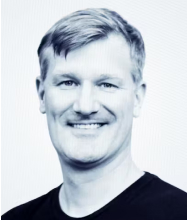
Hodges arrived at Anduin with an unusual credential for a fintech CEO: he'd already watched enterprise software get made from the inside, at three different speed levels. First came Palantir, where he joined early and built out marketing, partnerships, and business development - the connective tissue work that founders rarely want to do but can't avoid. Then Blend, the mortgage-tech company that brought him further into financial services workflows. Then Anchorage, the A16Z-backed crypto infrastructure firm, where as Head of Growth he helped launch two digital asset businesses before institutional crypto was a consensus play.
When Joe Lonsdale - Palantir's co-founder and Anduin's chairman - came calling, Hodges was happily embedded in the world of crypto infrastructure. The pitch was simple: private markets in 2021 held $12 trillion in assets under management. Preqin projected $23 trillion by 2026. And the operational experience of moving capital into those markets was still, fundamentally, a document problem masquerading as a financial one.
"Once they transact on Anduin, they don't want to go back."- Eliot Hodges, CEO of Anduin Transactions
He joined. Did extensive due diligence. And within two years, the platform he leads had onboarded 170+ client funds, 12,000+ investors, and $16B in assets. By 2024, those numbers had grown to 510+ funds, 27,000+ investors, and $55B in capital raised globally. The company's net promoter score - typically a metric reserved for consumer apps - sits just a few points below Apple's. In B2B fintech, that's not a benchmark. It's a statement.