In the early days of Inspire, Patrick Maloney picked up the phone. So did other members of the young company’s leadership team. They spoke to customers every day, trying to work out what people understood, what they liked and where the business was making life harder than it needed to be. Before there were nuclear fleets in his professional future, there were household questions on the other end of a line.
The company had launched in 2014 with an awkward assignment: look fresh enough to challenge established energy businesses, yet dependable enough to be trusted with the electricity bill. A promising logo could only do so much. Talking to customers helped the team hear its own proposition without the flattering acoustics of a startup office.
Eventually the volume outgrew those personal conversations. The team invented a customer support persona, Kale Reed, to answer emails. Employees were called Avengers. The early cast thus included a clean energy founder, a fictional correspondent and an office full of nominal superheroes. Even electricity retail could tolerate a little theatre.
Today Maloney is co-founder and CEO of CIV, the investment firm, and co-founder and chairman of The Nuclear Company. The distance between answering a customer’s question and helping organise nuclear development looks enormous. His career becomes easier to understand when viewed through the work between those two points: finding a way for an energy business to reach people beyond the people who already believe in it.
The electricity bill gets a rewrite
Maloney’s education was at the University of Pennsylvania, where he earned a bachelor’s degree. His earlier energy work included co-founding Independence Energy and serving on the founding team of Energy Plus. Both businesses were acquired by NRG. Those experiences gave him a working familiarity with a category whose customers generally want the service to succeed quietly.
Inspire grew out of a dissatisfaction with all the talk about the utility of the future. Maloney heard executives describe a connected home running on clean energy; he wanted a company that could offer the experience. He launched from an incubator in 2014, during a difficult period for cleantech startups. His proposed route was a consumer technology business, starting with the way a household bought and managed power.
The idea was ambitious, but its front door was deliberately familiar: a subscription. Customers could pay a personalised flat monthly price. Their existing utility still delivered the electricity, while renewable energy credits from wind and solar matched their usage. The distinction matters. Inspire changed the purchasing relationship without requiring a household to build its own power station.
The subscription also changed the commercial arithmetic. A seller earning more whenever a customer consumes more has a reason to welcome another kilowatt-hour. Under Inspire’s flat monthly model, lower consumption could improve the company’s economics. Energy management and rewards could then serve the customer and the business together. For Maloney, the bill was a place to redesign incentives, rather than merely a document to make prettier.
That is a useful way to read this stage of his career. The innovation was partly in choosing what a customer should have to think about. A household could be interested in clean power without wishing to become an amateur energy trader. The proposition gave that interest a recognisable commercial form.
“The way to make it happen is to build it from scratch.”Patrick Maloney, 2018
A buyer big enough to change the scale
In June 2018, Maloney won EY’s Greater Los Angeles Entrepreneur Of The Year award in the Cleantech & Renewable Energy category. It was a regional award, presented at the Beverly Hilton, and recognition of the business he was building. Inspire was also a certified B Corporation, and had appeared among Fortune’s 2017 best small workplaces. The company was trying to make its internal organisation part of the proposition too.
Christine Ponzio, who joined as vice president of people, described her interview with Maloney as a reason to take the job. She highlighted his vision, his willingness to embrace vulnerability and authenticity, and his interest in a culture driven by performance. That is a colleague’s assessment, rather than a personality test, but it offers something a transaction announcement cannot: a glimpse of what working with him was meant to feel like.
By July 2021, Inspire served approximately 235,000 residential customers across eight states and Washington, DC. Shell announced an agreement to buy the business. The relationship already had history: Shell Energy North America had supplied energy to Inspire since 2017. The buyer was joining a company it knew, with a digital customer business it wanted to expand.
The acquisition closed on September 15, 2021. Inspire became a wholly owned Shell subsidiary and retained its brand. Maloney welcomed the prospect of extending clean energy access through the larger company. The outcome put a young consumer business inside a much older energy organisation, pairing the interface Inspire had built with a buyer operating at a different scale.
A sale is a clean event on a career timeline. It is less tidy as a description of a founder’s work. The company continues, employees continue, customers still receive bills. The decision changes who can carry the business into its next phase. Maloney’s subsequent career would place him on the other side of a related question: which founders should receive capital, and which missing businesses should be created?
The pause between companies
Maloney has spoken about seeking mentors throughout his life and about building a culture of “we” at Inspire. After selling the company, he discussed sabbaticals with an emphasis that is almost inconveniently practical: allow enough time. A stimulating setting alone, he argued, can become another distraction if there is no sustained opportunity to reflect.
He described travelling alone in unfamiliar cultures as useful to him, with diversity of thought more significant than a particular destination. There is an appealing lack of itinerary in that preference. A founder accustomed to organising other people’s work allows room for circumstances he has not arranged.
His professional relationships have also travelled across chapters. Jeff Rosenthal nominated him for UCLA’s 2020 Pritzker Emerging Environmental Genius Award, for which Maloney was a nominee. Rosenthal later became a CIV co-founder. A connection that once appeared on an environmental award biography subsequently appeared in the founding team of an investment firm.
Maloney’s current affiliations include Conservation International’s global leadership council and YPO LA. Alongside the company roles, these put him in communities concerned with conservation and executive leadership. The pattern is a career spent building organisations while maintaining relationships beyond any single one of them.
An investor with a builder’s calendar
CIV formally announced its inaugural fund’s close in April 2025, with more than $210 million in capital commitments. Maloney founded the firm with Rosenthal and Abhijoy Mitra, previously a general partner at Coatue. Its backers included StepStone Group, Brown Advisory, Gwynne Shotwell and Fred Wilson. The number describes money committed to a fund, rather than Maloney’s personal wealth or the budget of a nuclear plant.
The firm combines investments in existing companies with creating businesses itself. Early investments included Senra Systems, Base Power, Crux and Verse. CIV also co-founded and seeded The Nuclear Company. For Maloney, company formation had become something he could do alongside other founders, as well as something he had done as a chief executive.
That arrangement changes the work. Investing requires choosing among teams already in motion. Building a company requires deciding that a problem deserves an organisation before one is available to invest in. CIV has made room for both. Its involvement in nuclear development is a concrete example of that second route, with Maloney occupying the chairman’s seat.
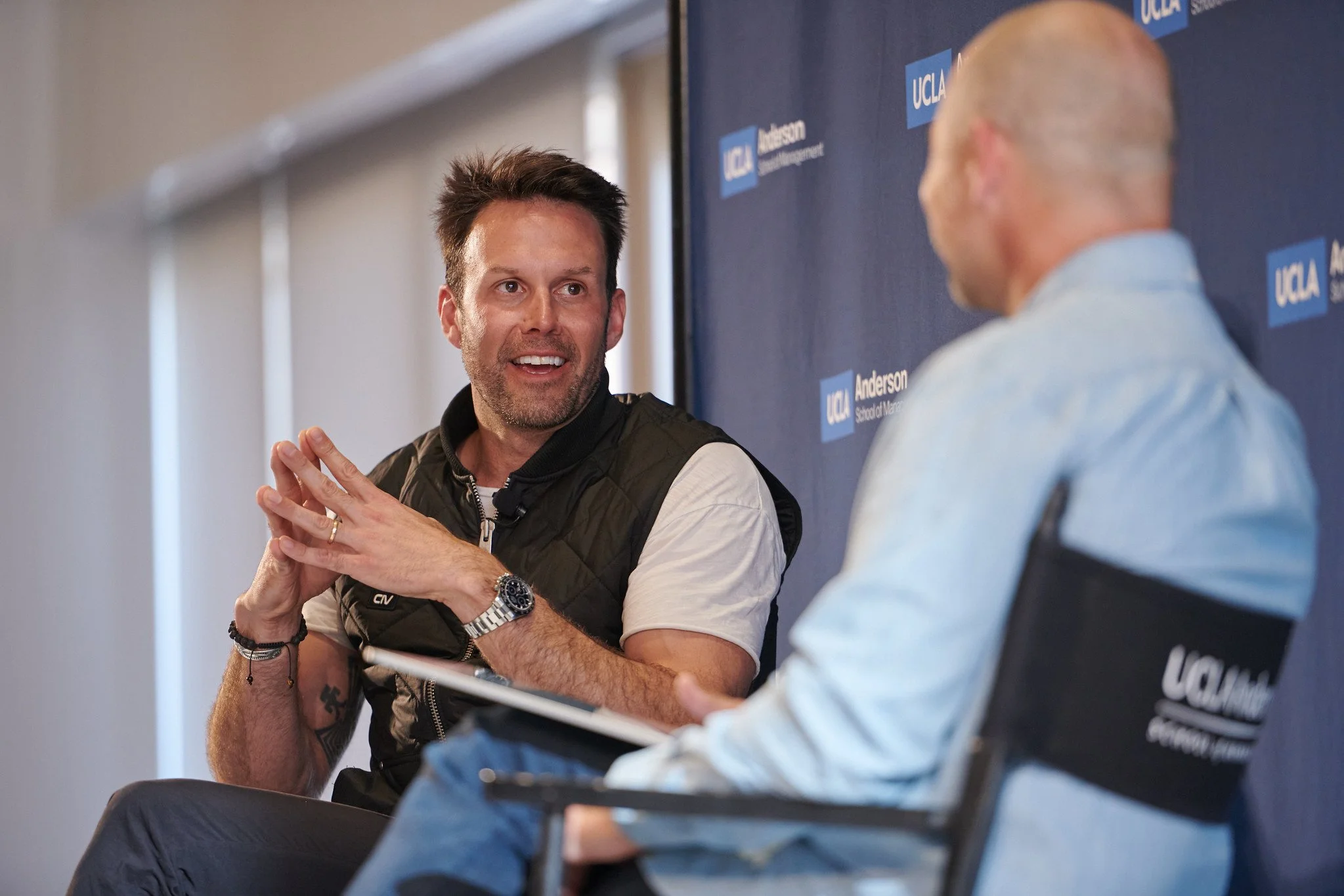
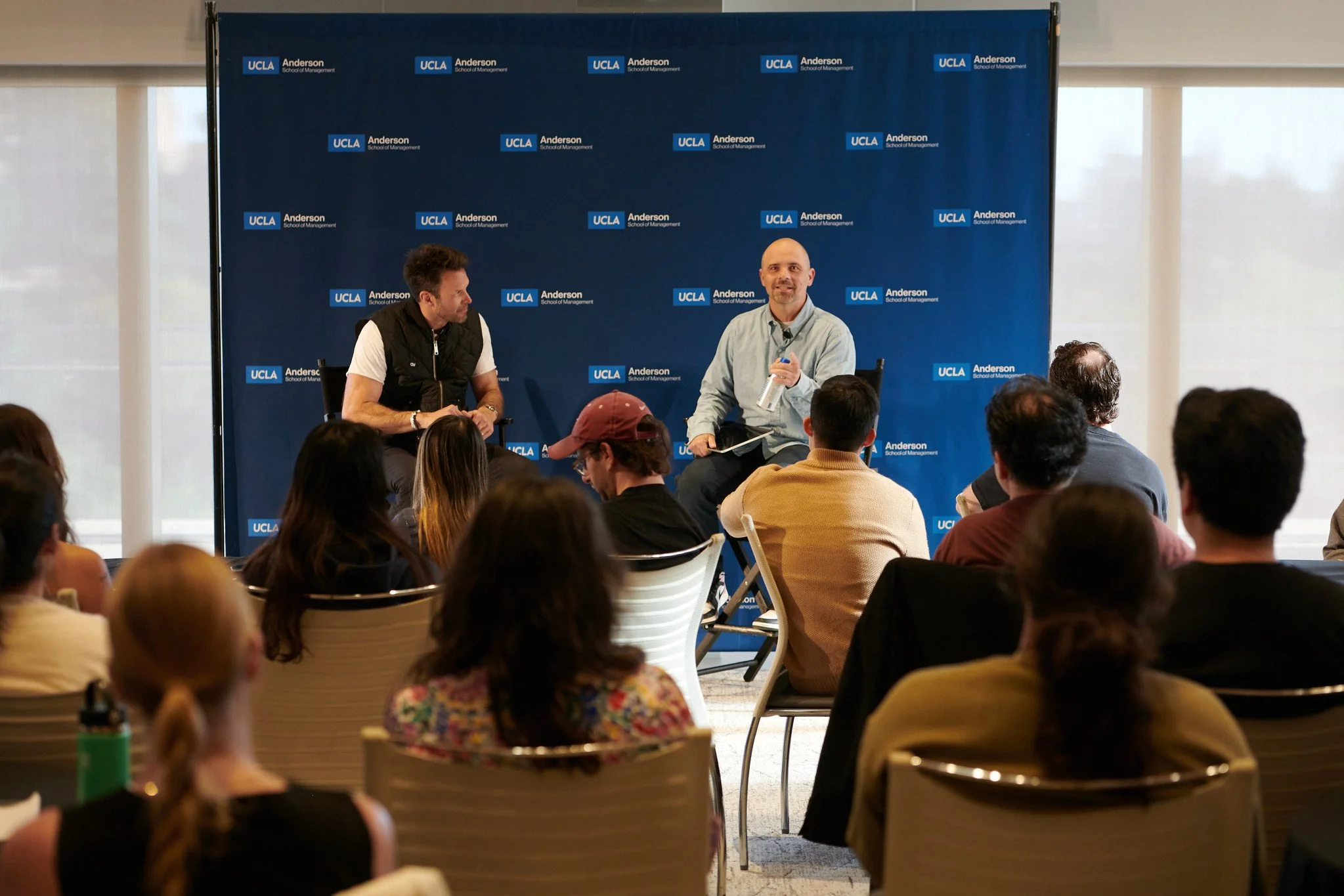
At a live UCLA conversation in April 2025, he was explicit about the division of responsibility at the nuclear venture: “I very much know I am not the CEO.” Jonathan Webb holds that role. Kiran Bhatraju, another co-founder, had known Maloney at Penn. The company brings together relationships, separate professional histories and a project that requires each participant to know which job is theirs.
The reactor is only part of the assignment
The Nuclear Company emerged publicly in July 2024 with an initial ambition to develop a six-gigawatt fleet in the United States. Its approach centres on deploying proven reactor technology repeatedly. The plan makes construction, coordination and financing central to the business. Six gigawatts was a development ambition, rather than electricity the startup had already put on the grid.
CIV’s account of the venture ties its formation to rising demand from AI, manufacturing and broader electrification. Repeating a design across a fleet is intended to bring discipline to costs and delivery. The phrase “design once, build many” has the pleasing economy of a workshop instruction. Executing it requires a rather longer conversation.
One such conversation involves people who have already operated and built nuclear plants. The company appointed former Southern Nuclear chairman and CEO Stephen Kuczynski to chair its fleet-scale working group. Maloney emphasised the experience and connections Kuczynski brought. A founder can assemble the organisation; the organisation still needs people who recognise the practical consequences of its decisions.
In June 2025, The Nuclear Company and Palantir announced a partnership to develop a Nuclear Operating System, or NOS, on Palantir’s Foundry platform. Their stated aims included tracking materials, adapting schedules to site constraints, using digital twins to follow progress and helping review regulatory documentation. These were proposed tools for the construction process, with performance to be demonstrated in use.
By September, Webb was preparing to demonstrate the software at Palantir’s AIPCon. That month the company also hired Hernando A. Madroñero to lead deployment of its first fleet. He had led design and construction engineering for Vogtle units 3 and 4. Vogtle veterans Glen Chick and George Koucheravy joined in leadership roles too. The staffing decisions gave the deployment thesis a specific human form: people with experience of the work being asked to organise the next attempt.
Maloney’s part in this story is distinct from theirs. He is the entrepreneur and investor helping establish a business around a construction problem. The chairman’s role connects the venture to capital and company building; engineering and delivery require their own leaders. Keeping those responsibilities visible makes the ambition more intelligible.
Back to the person on the other end
In November 2025, Maloney joined a Bloomberg New Economy Forum discussion in Singapore about energy demand and AI, alongside Emily McAteer and Josephine Wapakabulo. His argument placed electricity supply among the limits on an economy increasingly built around computing and robotics. The household customer had become part of a much wider question about who gets enough power to participate.
Across these chapters, the scale changes more dramatically than the underlying habit. Inspire asked how a consumer could adopt clean energy through an ordinary purchase. CIV asks where investment and company formation can support industry. The Nuclear Company asks how a known technology can be deployed with a repeatable construction process.
There is something quietly revealing about starting this story with a telephone. The founder had to hear the person who would live with his product. Now the organisations are bigger, the counterparties more numerous and the lead times longer. The same obligation survives: a plan has to make sense to the people expected to use it, fund it and build it. The electricity, eventually, must arrive.