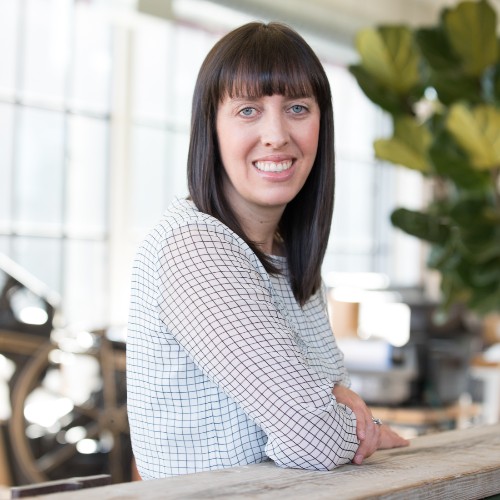
She came to pack boxes and stayed to build a $300M company. The co-founder who knows every corner of Minted - from holiday shipping floors to Series E boardrooms.
Mariam Naficy started Minted in 2007 in a San Francisco attic, originally incorporating it as "PaperLove, LLC" while she figured out the name. She hired one person in those early months - a Stanford MBA student fresh from stints at The Boston Consulting Group and eBay's corporate strategy team. That person was Melissa Kim.
Kim came in as Director of Finance and Strategy. She also packed boxes during the holiday rush. Three years in, Naficy made a call: she gave Kim the co-founder title. Not from the beginning, but earned - a recognition that the financial backbone of Minted, the strategic scaffolding that kept the company standing when the media dismissed its model, had been Kim's work.
That early model - crowdsourcing design from independent artists, then letting consumer voting surface the best work - was a strange bet in 2007. Minted's first design challenge attracted 66 entries. The critics weren't kind. But Kim understood numbers, and the numbers told a different story than the press.
Today, Kim runs Minted as sole CEO - a nearly 20-year-old company on track to post $300 million in revenue in 2026 with double-digit year-over-year growth. The community of independent artists that started with 66 challengers now exceeds 15,000 creators worldwide.
Three years ago or so, we made the decision to really focus intensely on the premium end of the market.- Melissa Kim, Revenue Brew, April 2026
That premium bet is not accidental. In a market crowded with cheap personalization and algorithm-churned stock art, Kim read the room differently. She saw that the people who buy handmade letterpress wedding invitations and foil-pressed holiday cards are not shopping on price. They're shopping on meaning - and they'll pay for it. Minted's three pillars (wedding, holiday, wholesale) are all now growing at double-digit rates simultaneously.
The wholesale story is particularly sharp. Minted grew its wholesale business by 31% in 2025, breaking into Target, Whole Foods, Williams-Sonoma, and H-E-B. That's a company that figured out how to compete with Hallmark and American Greetings - and win shelf space by being different rather than cheaper.
The most underappreciated thing about Minted's strategy is where its marketing budget doesn't go. Kim has built what she calls an owned-channel marketing approach - and the centerpiece isn't an ad campaign. It's the card itself.
When someone receives a Minted wedding invitation or a foil-pressed holiday card, that physical object circulates. It sits on a refrigerator. It shows up in family photos. It travels to someone's apartment 2,000 miles away. "Virality is really powerful," Kim has said, noting that combining that organic reach with a relentless focus on design quality makes the strategy work at scale.
The retention engine is equally counterintuitive. Minted offers genuinely free tools - address books, wedding websites, digital invitations - that function as what Kim describes as "very high-quality leads for a paid product." The free product earns trust. The premium product converts it.
Virality is really powerful - the combination of the inherent power of virality with a relentless focus on quality of design makes our owned-channel strategy successful.- Melissa Kim, Revenue Brew, 2026
On AI: Minted partnered with Sierra to deploy AI customer service agents. The results - 65%+ issue resolution rates - reflect Kim's view that AI has become "central to Minted's long-term innovation strategy." The tech stack isn't grafted on for optics. It informs marketing, engineering, and product teams simultaneously.
Kim sees a clear growth path without major expansion into new categories: "We see the opportunity to have double-digit growth even without meaningfully expanding the segments we're going after." The confidence isn't bluster. It's arithmetic.