A shipbuilder has a paycheck and a problem. The money is his; the time required to collect it belongs to the working day. Mechanics Bank’s history recounts a practical response during the war years: meet the shipbuilders at the docks. There is a useful business idea hiding in that small scene. The bank made itself useful by moving closer to the customer’s routine.
- Built around relationships. The name came from Richmond’s industrial workforce.
- Expanded by acquisition. HomeStreet brought a four-state branch footprint in 2025.
- Still choosing its business. The bank sold specialist operations in 2026 while adding trust capabilities.
That story now has a much larger setting. Mechanics serves households, businesses and wealth clients across California, Oregon, Washington and Hawaii. The interesting question is whether the convenience of a familiar banker can survive the machinery required to run a larger institution. Mechanics has spent the past decade buying the opportunity to find out.
01 / THE NAMEA bank named for its customers
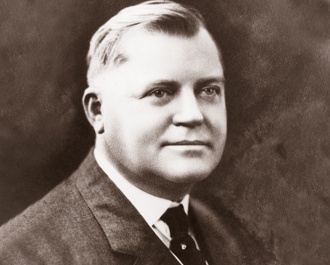
The original setting was a vacant Richmond storefront near 3rd Street and Macdonald Avenue in 1905. The bank’s name reflected its association with workers at Standard Oil and the Santa Fe Railroad. Founder E.M. Downer’s institution grew alongside the surrounding economy. Its identity was attached to people who earned, saved and borrowed in the same place.
Today, the product range follows a customer through quite different financial problems. There are everyday deposit accounts and home loans; working-capital and equipment finance for businesses; commercial lending and treasury services; private banking, investment management and trust administration. A customer can arrive needing somewhere to deposit a paycheck and eventually need help transferring an estate.
That breadth places Mechanics between several alternatives. National banks offer extensive networks. Credit unions and other community banks compete for local relationships. Specialist advisers compete for wealth clients. Mechanics’ proposition combines personal service with a range of banking capabilities. Whether that combination is valuable depends on the customer’s geography and needs.
02 / THE EXPANSIONThe storefront acquires a coastline
Ford Financial Fund became the bank’s majority owner in 2015. California Republic Bank followed in 2016, Scott Valley Bank in 2018. The transaction that changed the proportions arrived in 2019: Mechanics acquired Rabobank, N.A.’s retail, business banking, commercial real estate, mortgage and wealth businesses for approximately $2.1 billion. The combination had 144 branches and more than $17 billion in assets.
Then came HomeStreet. Announced in March 2025 and completed that September, the all-stock combination extended Mechanics into the Pacific Northwest and Hawaii. At closing, the bank described 166 branches and more than $22 billion in assets. The announced pre-transaction equity values were $300 million for HomeStreet and $3.3 billion for Mechanics. Those figures describe the deal’s valuation, rather than a cash bill.
- 2016California RepublicSouthern California
- 2018Scott ValleyNorthern California
- 2019Rabobank, N.A.Broader California network
- 2025HomeStreetPacific Northwest + Hawaii
The legal structure supplied another benefit. HomeStreet’s public holding company survived and became Mechanics Bancorp; Mechanics Bank survived as the operating bank. Carl Webb said the merger offered the opportunity to become a publicly-traded bank holding company
. A larger branch network was part of the transaction. A new corporate platform was another.
03 / THE FRICTIONThe deal before the deal failed
HomeStreet had tried a different route first. Its proposed merger with FirstSun failed to secure the necessary regulatory approval and was terminated in November 2024. The later merger filing records an earlier twist: HomeStreet had passed over a Mechanics cash offer in January 2024. Once the FirstSun route closed, the available choices changed. Mechanics returned to the conversation.
This matters because a plausible strategy still needs permission and execution. Mechanics’ own integration carried costs: its parent disclosed $5.9 million in non-recurring acquisition and integration expenses in the second quarter of 2026 alone. Management said the HomeStreet integration was substantially complete that July. Neither a signed agreement nor a new sign above a branch finishes the work.
The purchase gives you a larger footprint. Customers decide whether it gives them a better bank.THE CUSTOMER TEST
04 / THE DAILY WORKUseful is a collection of small things
Consider a business waiting for customers to pay. Mechanics offers lockbox processing for receivables, remote deposit capture, ACH services and account reconciliation. Positive Pay helps identify suspicious checks and unauthorized ACH activity. These are unglamorous tools with a clear purpose: reduce the time and exposure involved in moving money through a business.
For an owner buying equipment or premises, the bank also offers conventional lending and SBA programs. Published SBA 7(a) uses include business acquisition, working capital and real estate; 504 financing focuses on fixed assets. Credit approval and program rules still apply. A relationship may help a banker understand a business. It does not remove the lending criteria.
The business model connects those services. Deposits help fund loans and investments; the bank earns an interest spread and collects fees for services including treasury management and wealth administration. Keeping customers’ operating accounts can therefore matter beyond the monthly checking fee. Routine usefulness supports the relationship, and the relationship supports the funding base.
05 / THE NEXT CHOICEGrowth also means deciding what to sell
In 2026, Mechanics sold its Fannie Mae delegated underwriting and servicing business to Fifth Third for approximately $126 million. In September it sold approximately $417 million of remaining performing indirect auto loans near book value. Meanwhile, a new Delaware trust subsidiary added complex trust planning and administration. The larger bank was actively choosing where to concentrate.
Its community promise has measurable obligations, too. Enhanced goals developed with Rise Economy include more than $3 million in annual direct donations, alongside lending and investment commitments. For anyone copying the strategy, the useful lesson is practical: solve recurring customer problems, assess each acquired activity and make commitments specific enough to check. Expansion still depends on regulatory approval, capable integration and customers finding the service worth keeping.
Take a closer look
Explore the products, the company’s updates and a walkthrough of its business banking tools.